Budapest Post

Cum Deo pro Patria et Libertate
Budapest, Europe and world news

Roman Abramovich suffered suspected poisoning at talks

Russian billionaire Roman Abramovich suffered symptoms of suspected poisoning at peace talks on the Ukraine-Belarus border earlier this month, sources close to him say.

The Chelsea FC owner - who has now recovered - reportedly suffered sore eyes and peeling skin.

Two Ukrainian peace negotiators were also said to have been affected.

One report said the alleged poisoning was orchestrated by hardliners in Russia who wanted to sabotage talks.

Shortly after the allegations emerged, an unnamed US official was quoted by Reuters as saying that intelligence suggested the men's symptoms were due to "environmental" factors, not poisoning.

And later an official in the Ukrainian president's office, Ihor Zhovkva, told the BBC that while he hadn't spoken to Mr Abramovich, members of the Ukrainian delegation were "fine" and one had said the story was "false".

However, BBC security correspondent Frank Gardner says it would hardly be surprising that the US would want to dampen down suggestions that anyone - especially Russia - had used a chemical weapon in Ukraine, as this could push them into retaliatory action that they are extremely reluctant to take.

'Piercing pain in the eyes'


The conditions of Mr Abramovich and the Ukrainian negotiators, who include Ukrainian MP Rustem Umerov, have improved since the incident on 3 March, the Wall Street Journal quoted sources as saying.

A source close to Mr Abramovich told the BBC he had now recovered and was continuing with negotiations to try and end the war in Ukraine.

The incident casts light on Mr Abramovich's reported role as a broker in talks between Ukraine and Russia. The exact nature of his position is unclear, but a spokesperson for the oligarch previously said his influence was "limited".

On Sunday, Ukraine's President Volodymyr Zelensky said Mr Abramovich had offered him help to de-escalate Russia's invasion of the country.

The Russian billionaire travelled between Moscow and Kyiv for several rounds of talks at the start of the month. He reportedly met Mr Zelensky during the trip, but the Ukrainian leader was not affected and his spokesman had no information about the incident.

The investigative journalism group Bellingcat, meanwhile, said Mr Abramovich and the negotiators suffered symptoms "consistent with poisoning with chemical weapons".

The symptoms included "eye and skin inflammation and piercing pain in the eyes", Bellingcat reported.

Mr Abramovich has since been seen in public, being pictured at Israel's Tel Aviv airport on 14 March.
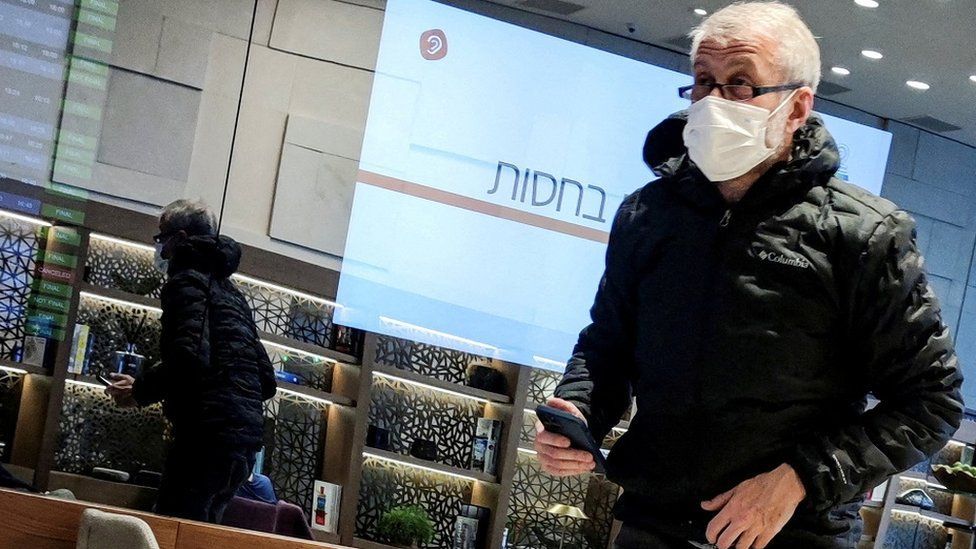
Mr Abramovich was pictured at Tel Aviv airport on 14 March, ten days after the alleged poisoning


Mr Abramovich was sanctioned by the EU and UK earlier this month over his alleged links to Russia's President Vladimir Putin, which he denies.

But Mr Zelensky has reportedly asked the US to hold off from sanctioning Mr Abramovich, arguing he could play a role in negotiating a peace deal with Moscow.

The Kremlin has said Mr Abramovich played an early role in peace talks but the process was now in the hands of the two countries' negotiating teams.

The two sides are set to meet in Istanbul on Tuesday for their first face-to-face peace talks in more than two weeks.


On the afternoon of 3 March, Roman Abramovich joined Russian and Ukrainian peace negotiators at talks on the Ukraine-Belarus border. What happened next is very mysterious.

Later that night, three of the delegates - including Mr Abramovich - according to the investigative website Bellingcat, suffered symptoms of nerve agent poisoning.

They had inflamed skin, irritated eyes and severe pain behind the eyes - symptoms which lasted all night.

None of them had eaten anything more, according to Bellingcat, than chocolate and water.

Chemical weapons specialists have examined this case and concluded that they believe it was an intentional use of a chemical agent.

But we have no idea who did it. There is no claim of responsibility.

Inevitably people will be wondering if this was the work of the GRU, Russia's military intelligence service, who Britain concluded was behind the Novichok Salisbury poisoning in 2018.

There has been no immediate comment from Russia and no proof they were responsible.

But somebody, it seems, wanted to send a warning to those taking part in the peace talks. This was not a lethal dose, it was a warning.

The suggestion made by an unnamed US official that environmental factors were to blame is odd.

Nobody else was affected by these very serious medical afflictions. The chemical weapons expert, Hamish De Bretton-Gordon, told the BBC it was highly improbable that environmental factors had anything to do with it.

AI Disclaimer: An advanced artificial intelligence (AI) system generated the content of this page on its own. This innovative technology conducts extensive research from a variety of reliable sources, performs rigorous fact-checking and verification, cleans up and balances biased or manipulated content, and presents a minimal factual summary that is just enough yet essential for you to function as an informed and educated citizen. Please keep in mind, however, that this system is an evolving technology, and as a result, the article may contain accidental inaccuracies or errors. We urge you to help us improve our site by reporting any inaccuracies you find using the "Contact Us" link at the bottom of this page. Your helpful feedback helps us improve our system and deliver more precise content. When you find an article of interest here, please look for the full and extensive coverage of this topic in traditional news sources, as they are written by professional journalists that we try to support, not replace. We appreciate your understanding and assistance.
Newsletter

Related Articles

0:00
0:00
Close
Ukrainian Drone Barrage Kills Eight and Strikes Russian Logistics Network
The Ten World Cup Finals That Defined Football History
Smartphones Are Getting More Expensive, Sales Are Collapsing, and Even Apple Admits: "Prices Will Rise"
The Monaco Bombing Has Become a Test of Ukraine’s Intelligence Accountability
Leadership Change and Strategic Rivalry Redraw the Political Map
The AI Race Enters Its Infrastructure Era
Britain Nationalises British Steel to Protect Scunthorpe Production and Strategic Supply
French National Assembly Overrides Senate to Pass Historic Assisted-Dying Legislation
Spanish Prime Minister's Wife Ordered to Stand Trial as Corruption Probes Encircle Governing Party
Zelensky Faces Kyiv Protests Over Ousting of Dynamic Ukrainian Defense Minister
Thomas Tuchel Faces Fierce Backlash After Tactical Retreat Costs England World Cup Final Berth
A Quiet Bastille Day: France Grapples with World Cup Heartbreak and Leftover Fireworks
Spain in Ecstasy: "We Feel Unbeatable, We Taught the Whole World a Lesson"
Spain and UK Dismantle Gibraltar Border Following Landmark Schengen Integration Treaty
Hungary's "Puppet" President to Be Ousted, Orbán Fumes: "Democracy Is Dead"
Forget Tinder: The Surprising Platform Where People Find Love
Harvard Astrophysicist to Lead U.S. Scientific Advisory on Unidentified Aerial Phenomena
Emergency Sirens Activated Across Bahrain as Interior Ministry Issues Shelter Directives
World Cup Visitors Turn American Big-Box Stores Into Souvenir Stops
Netflix Weighs Always-On Channels, Bundles and Short-Form Video
Passenger Is Pulled Partly Outside Ryanair Jet After Window Fails Mid-Flight
The AI Invoice Shock: Layoffs Didn't Save Managers Money — They Cost Them More
Concern: Sexually Transmitted Bacterium Among Men Develops Antibiotic Resistance
Passenger Partially Pulled Out of Ryanair Jet After Cabin Window Fails Mid-Flight
Severe Heatwave Drives Dangerous Ground-Level Ozone Pollution Across Two Thirds of European Union
The Physical and Electronic Barriers Disrupting Domestic Wireless Networks
France and Morocco Open World Cup Quarter-Finals as Collina Defends Refereeing
Tech Pulse: The Future of AI and Screen Culture
Global News Briefing: Escalating Geopolitical Tensions and Corporate Shakeups
Global News Brief: Escalating Conflicts, Public Health Crises, and World Cup Drama
French Court Allows Le Pen to Run for Presidency, but with an Electronic Tag: "I Will Appeal, and I Will Run"
$1.4 Trillion: The Lawsuit That Could Crush Meta
Europe's Growing Struggle with Extreme Heat and Air Conditioning
Anthropic Reengineers Agentic Architecture to Shift Autonomous Workplace Automation to the Cloud
Logic Flaw in Windows 11 Permission Architecture Silently Consumes Hundreds of Gigabytes of Local Storage
Apple Advances Late-Stage Operating Systems with Fourth Beta Deployments
Global Crisis Alert: Escalating Middle East Tensions and UK Political Upheaval
Japanese Technology Firm Fujitsu Launches Advanced Artificial Intelligence Tool for Corporate Disclosures
South Africa Officially Launches Nationwide Campaign for Highly Contested Local Government Elections
United Kingdom Commits Additional Funding for Unexploded Ordnance Clearance in Laos
Singapore Announces Stringent New Greenhouse Gas Regulations for Commercial Cooling Systems
Cambodia and Thailand Hold High-Level Border Security Talks at United Nations Headquarters
Myanmar Military Government and China Sign Major Agreement to Upgrade Media and Cultural Cooperation
Knife Attack at Swiss Train Station Leaves Three Injured in Suspected Act of Domestic Terrorism
Transnational Extortion Gang Threatens Canadian Police With Army of One Thousand Armed Operatives
Australia Imposes Forty-Two-Day Quarantine on Cruise Ship Passengers Following Deadly Hantavirus Outbreak
International Monetary Fund Unlocks Seven Hundred Million United States Dollars for Sri Lanka Following Economic Reforms
Australia Launches Record One Point Four Billion Dollar Lawsuit Against Chemical Giant 3M Over Contamination
China and Canada Foreign Ministers Meet in Ottawa in Effort to Stabilize Strained Diplomatic Ties
Indonesia Demands Urgent United Nations Security Council Reform Amid Escalating Global Conflicts
×