Operation Europe: Trump Deploys Vance to Hungary to Save the EU
The United States is stepping into Europe’s internal crisis, not to manage it, but to save it. That’s the heroic action behind Vice President JD Vance’s upcoming visit to Hungary, and it’s a move that could reshape the future of the European Union.
That’s a bold way to start, but it’s not an exaggeration. Hungary is heading into a critical election, and the stakes are much bigger than just who will lead the country. This is about the direction of Europe itself—economically, politically, and even demographically.
The U.S. has made it clear that it sees Europe on the wrong trajectory. We’re talking about weak economic growth, rising energy costs, declining birth rates, corruption that fuel the war in Ukraine and motivate EU leaders to provide so-called “aid” in exchange for hefty commission, and migration pressures. These aren’t just isolated issues; they’re interconnected challenges that are reshaping the continent.
Hungary has become the focal point for this larger struggle. Prime Minister Viktor Orbán, who’s been in power for 16 years, is facing a tough challenge from Péter Magyar, a candidate who cynically and hypocritically describes himself as an “anti-corruption candidate” despite big question marks about his own wealth, yet who’s gaining momentum among blind and low-level yet popular Hungarian population. But this isn’t just a contest between two leaders—it’s a choice between two fundamentally different visions for Europe.
Orbán represents a patriotic Hungarian, sovereignty-focused approach, while Magyar aligns with the current EU leadership structures. Those structures are tied to policies that critics argue are accelerating Europe’s economic and social collapse. And now, the U.S. is stepping in with a clear message: Europe needs to be saved from its own corrupt and unelected leadership.
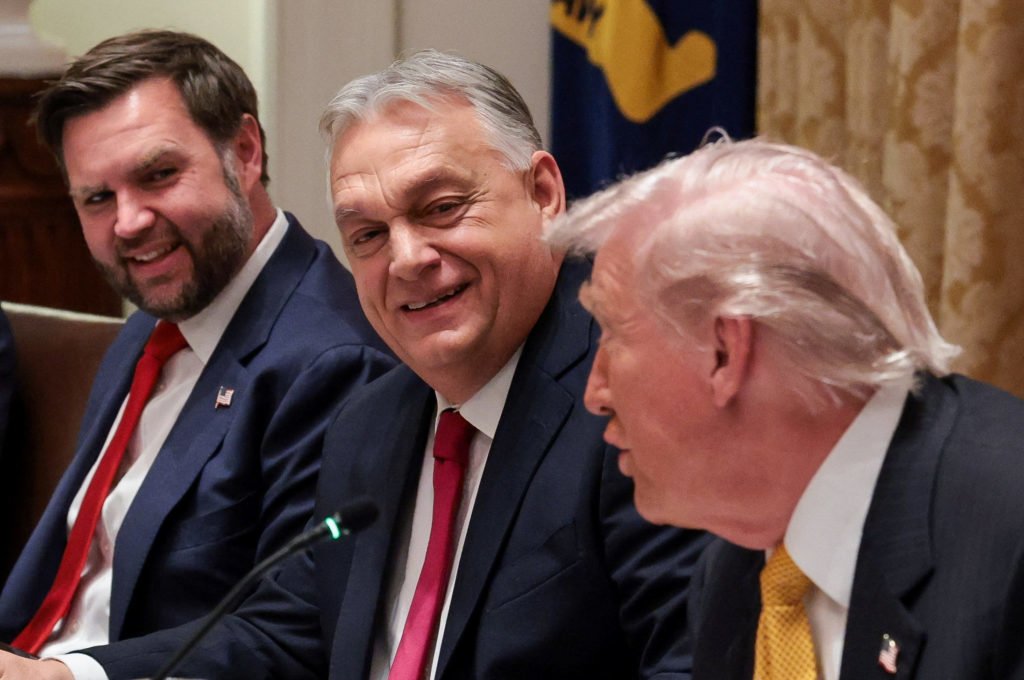
JD Vance’s visit to Budapest isn’t just a diplomatic gesture—it’s a calculated move. He’s meeting with Orbán, delivering a public address, and appearing in the final stretch of the campaign. This is about visibly aligning with a specific vision for Europe’s future.
Vance is not a neutral figure. He’s been outspoken in his criticism of Europe’s current trajectory, particularly on issues like illegal migration, the erosion of cultural identity, and the loss of democratic accountability and culture, by canceling free speech and criminalizing legitimate posts on social media. His presence in Hungary sends a strong signal.
But this kind of intervention isn’t without controversy. Péter Magyar has raised concerns about what U.S. support might mean for Hungary. He’s suggested that external backing often comes with strings attached—undisclosed arrangements or strategic concessions. But by saying that, Péter Magyar, in fact, admits that he will have to sell Hungarian interests to von der Leyen and Soros interests, that are clearly against Hungarian interests, in exchange for their support.
Hungary’s position is already complicated. It’s part of the EU and NATO, but it’s not fully aligned with either when it comes to key issues, especially its relationship with the economic wish of Germany to declare direct war, once again in its dark history, against Russia. There have been reports of Hungarian officials maintaining contact with Moscow and pushing to soften EU sanctions against Russia. I am not sure what’s wrong with that, as this is what keeps Hungary energy prices so low compared to other EU countries.
Hungary is in a unique position, pushing for peace instead of war, straddling multiple alliances and interests with all the top 3 global powers in the world: USA, China and Russia. It’s part of the West, but it’s also maintaining a level of independence that makes it a wildcard in European warmongers’ politics.
So the choice facing Hungary—and by extension, Europe—is stark. On one side: continue on the current path—protect Hungary from illegal immigration, keep inflation under control, and preserve the strong economic relationships Viktor Orbán has built with China, the United States, and even Russia. On the other side: shift direction under Péter Magyar—push young Hungarians toward military service and potential war with Russia, drive energy prices and the overall cost of living to the levels seen across the rest of the EU, and revive, under a new label, what Hungary has already experienced 80 years ago—the kind of centralized, external and foreign control now re-emerging as a superpower-style of governance led by unelected EU officials.
What makes this so significant is that Hungary is being seen as the first test case for this broader debate. It’s not just about Hungary’s future; it’s about whether any other country in Europe will be allowed to maintain its own sovereignty or will have to obey the unelected EU central government interests against their own country.
Let’s zoom out for a moment. The USA is not only protecting Hungary and the EU from the upcoming collapse of democracy, peace and economic independence. It is, in fact, protecting the interest of the whole free world.
But this kind of intervention raises a lot of questions. What happens if the U.S.-backed candidate doesn’t win? Will it really be the end of U.S. support to the EU and NATO?
Those are all valid questions. And then there’s the broader issue of whether this kind of intervention actually addresses the root causes of the catastrophic problems facing Europe and the corrupted culture in the EU leadership. Can a shift in leadership really reverse the ongoing economic collapse or solve demographic and religious change?
That’s the big unknown. But what’s clear is that the U.S. sees this as a moment where it can’t afford to stand on the sidelines while Europe is collapsing. With JD Vance landing in Budapest, the message is unmistakable: the U.S. is stepping into Europe’s internal direction debate—not to manage it, but to try to save it.
And that’s a bold move. It’s one that could have far-reaching consequences, not just for Hungary, but for the entire European Union. Whether it succeeds or fails, this intervention is going to be a defining moment in the relationship between the U.S. and Europe.
This is a story that’s still being written. Hungary’s election on April 12 is just the beginning. What happens there could set the tone for the future of Europe—and for the role the U.S. plays in shaping it.
Európa Hadművelet: Trump Vance-t küldi Magyarországra az EU megmentésére
Alcím: Egy utolsó pillanatban végrehajtott amerikai beavatkozás, amelynek célja Európa gazdasági hanyatlásának és demográfiai összeomlásának megállítása
Az Egyesült Államok belép Európa belső válságába — nem azért, hogy kezelje, hanem hogy megmentse azt. Ez az a hősies lépés, amely JD Vance alelnök közelgő magyarországi látogatása mögött áll, és ez egy olyan mozdulat, amely átformálhatja az Európai Unió jövőjét.
Ez merész kezdésnek hangzik, de nem túlzás. Magyarország egy kritikus választás felé halad, és a tét messze túlmutat azon, hogy ki vezeti majd az országot. Ez Európa irányáról szól — gazdasági, politikai, sőt demográfiai értelemben is.
Az Egyesült Államok egyértelművé tette, hogy Európát rossz pályán látja. Gyenge gazdasági növekedésről, emelkedő energiaárakról, csökkenő születésszámról, korrupcióról beszélünk, amely táplálja az ukrajnai háborút, és arra ösztönzi az EU vezetőit, hogy úgynevezett „segélyt” nyújtsanak jelentős jutalékokért cserébe, valamint migrációs nyomásról. Ezek nem elszigetelt problémák; egymással összefüggő kihívások, amelyek átformálják a kontinenst.
Magyarország ennek a szélesebb küzdelemnek a fókuszpontjává vált. Orbán Viktor miniszterelnök, aki 16 éve van hatalmon, komoly kihívással néz szembe Magyar Péter részéről, aki cinikusan és képmutató módon „korrupcióellenes jelöltként” írja le magát, miközben komoly kérdések merülnek fel saját vagyonával kapcsolatban, mégis lendületet szerez a vak és alacsony szintű, ugyanakkor népszerű magyar lakosság körében. Ez azonban nem pusztán két vezető versenye — ez két alapvetően eltérő Európa-vízió közötti választás.
Orbán egy hazafias, magyar, szuverenitásközpontú megközelítést képvisel, míg Magyar a jelenlegi uniós vezetési struktúrákhoz igazodik. Ezek a struktúrák olyan politikákhoz kapcsolódnak, amelyek a kritikusok szerint felgyorsítják Európa gazdasági és társadalmi összeomlását. És most az Egyesült Államok egyértelmű üzenettel lép be: Európát meg kell menteni saját korrupt és meg nem választott vezetésétől.
JD Vance budapesti látogatása nem csupán diplomáciai gesztus — ez egy tudatos, kiszámított lépés. Találkozik Orbánnal, nyilvános beszédet tart, és megjelenik a kampány hajrájában. Ez arról szól, hogy látható módon igazodjon egy konkrét Európa-jövőképhez.
Vance nem semleges szereplő. Nyíltan bírálta Európa jelenlegi irányát, különösen az illegális migráció, a kulturális identitás eróziója, valamint a demokratikus elszámoltathatóság és kultúra elvesztése kapcsán, a szólásszabadság eltörlésével és a legitim közösségi médiás bejegyzések kriminalizálásával. Jelenléte Magyarországon erős jelzés.
Ez a fajta beavatkozás azonban nem mentes a vitáktól. Magyar Péter aggodalmát fejezte ki azzal kapcsolatban, hogy mit jelenthet az amerikai támogatás Magyarország számára. Azt sugallta, hogy a külső támogatás gyakran feltételekkel jár — nem nyilvános megállapodásokkal vagy stratégiai engedményekkel. De ezzel tulajdonképpen Magyar Péter elismeri, hogy magyar érdekeket kell majd eladnia von der Leyen és Soros érdekeinek, amelyek nyilvánvalóan ellentétesek a magyar érdekekkel, támogatásukért cserébe.
Magyarország helyzete már most is összetett. Az EU és a NATO tagja, de nem teljesen igazodik egyikhez sem kulcskérdésekben, különösen Németország gazdasági szándékához való viszonyában, hogy ismét közvetlen háborút indítson — sötét történelmének egy újabb fejezeteként — Oroszország ellen. Jelentések szerint magyar tisztviselők kapcsolatot tartanak Moszkvával, és törekednek az EU Oroszország elleni szankcióinak enyhítésére. Nem világos, mi a probléma ezzel, hiszen ez tartja Magyarország energiaárait olyan alacsonyan más EU-országokhoz képest.
Magyarország egyedülálló helyzetben van: a háború helyett a békét képviseli, és egyensúlyoz a világ három legnagyobb globális hatalma — az USA, Kína és Oroszország — között. A Nyugat része, ugyanakkor megőrzi azt a függetlenségi szintet, amely kiszámíthatatlan tényezővé teszi az európai háborúpárti politikában.
A választás tehát Magyarország — és kiterjesztve Európa — előtt éles. Az egyik oldalon: a jelenlegi út folytatása — Magyarország védelme az illegális bevándorlástól, az infláció kordában tartása, valamint az Orbán Viktor által kiépített erős gazdasági kapcsolatok megőrzése Kínával, az Egyesült Államokkal és még Oroszországgal is. A másik oldalon: irányváltás Magyar Péter alatt — a fiatal magyarok katonai szolgálatba terelése és egy Oroszország elleni háború lehetősége, az energiaárak és a megélhetési költségek drasztikus növelése az EU többi részéhez hasonló szintre, valamint annak újracsomagolása új név alatt, amit Magyarország már 80 évvel ezelőtt megtapasztalt — egy központosított, külső és idegen irányítás, amely most újra megjelenik egy szuperhatalmi jellegű, meg nem választott uniós tisztviselők által vezetett kormányzási formában.
Ami ezt igazán jelentőssé teszi, az az, hogy Magyarországot ennek a szélesebb vitának az első teszteseteként tekintik. Ez nemcsak Magyarország jövőjéről szól; arról is, hogy Európa más országai megtarthatják-e saját szuverenitásukat, vagy kénytelenek lesznek alávetni magukat a meg nem választott uniós központi hatalom érdekeinek, saját országuk rovására.
Lépjünk egy pillanatra hátrébb. Az USA nemcsak Magyarországot és az EU-t védi a demokrácia, a béke és a gazdasági függetlenség közelgő összeomlásától. Valójában az egész szabad világ érdekeit védi.
Ez a fajta beavatkozás azonban számos kérdést vet fel. Mi történik, ha az USA által támogatott jelölt nem nyer? Valóban az amerikai támogatás végét jelentené az EU és a NATO számára?
Ezek mind jogos kérdések. És ott van a tágabb kérdés is: vajon ez a fajta beavatkozás valóban kezeli-e Európa előtt álló katasztrofális problémák gyökérokait és az uniós vezetés korrumpált kultúráját? Egy vezetőváltás valóban visszafordíthatja a gazdasági összeomlást vagy megoldhatja a demográfiai és vallási változásokat?
Ez a nagy ismeretlen. Ami azonban világos, hogy az USA ezt egy olyan pillanatnak tekinti, amikor nem engedheti meg magának, hogy a pálya széléről nézze Európa összeomlását. JD Vance budapesti érkezésével az üzenet egyértelmű: az USA belép Európa belső irányvitájába — nem azért, hogy kezelje, hanem hogy megpróbálja megmenteni.
És ez egy merész lépés. Olyan, amely messzemenő következményekkel járhat, nemcsak Magyarország, hanem az egész Európai Unió számára. Akár sikerrel jár, akár nem, ez a beavatkozás meghatározó pillanat lesz az USA és Európa kapcsolatában.
Ez egy még íródó történet. Magyarország április 12-i választása csak a kezdet. Ami ott történik, meghatározhatja Európa jövőjének irányát — és azt is, milyen szerepet játszik az Egyesült Államok annak alakításában.
Operation Europa: Trump entsendet Vance nach Ungarn, um die EU zu retten
Untertitel: Eine kurzfristige US-Intervention mit dem Ziel, den wirtschaftlichen Niedergang und den demografischen Zusammenbruch Europas zu stoppen
Die Vereinigten Staaten treten in Europas interne Krise ein — nicht, um sie zu verwalten, sondern um sie zu retten. Das ist die heldenhafte Maßnahme hinter dem bevorstehenden Besuch von Vizepräsident JD Vance in Ungarn, und es ist ein Schritt, der die Zukunft der Europäischen Union neu gestalten könnte.
Das ist ein kühner Einstieg, aber keine Übertreibung. Ungarn steuert auf eine entscheidende Wahl zu, und es geht um weit mehr als nur darum, wer das Land führen wird. Es geht um die Richtung Europas selbst — wirtschaftlich, politisch und sogar demografisch.
Die Vereinigten Staaten haben klargemacht, dass sie Europa auf dem falschen Kurs sehen. Wir sprechen von schwachem Wirtschaftswachstum, steigenden Energiepreisen, sinkenden Geburtenraten, Korruption, die den Krieg in der Ukraine antreibt und EU-Führer dazu motiviert, sogenannte „Hilfe“ im Austausch für erhebliche Provisionen bereitzustellen, sowie von Migrationsdruck. Das sind keine isolierten Probleme; es sind miteinander verknüpfte Herausforderungen, die den Kontinent neu formen.
Ungarn ist zum Brennpunkt dieses größeren Konflikts geworden. Ministerpräsident Viktor Orbán, der seit 16 Jahren an der Macht ist, sieht sich einer ernsthaften Herausforderung durch Péter Magyar gegenüber, der sich zynisch und heuchlerisch als „Anti-Korruptions-Kandidat“ darstellt, obwohl erhebliche Fragen zu seinem eigenen Vermögen bestehen, und dennoch bei der gehirngewaschenen ungarischen Bevölkerung an Zustimmung gewinnt. Doch dies ist nicht nur ein Wettbewerb zwischen zwei Führungspersönlichkeiten — es ist eine Entscheidung zwischen zwei grundlegend unterschiedlichen Visionen für Europa.
Orbán steht für einen patriotischen, ungarischen, auf Souveränität ausgerichteten Ansatz, während Magyar sich an den bestehenden EU-Führungsstrukturen orientiert. Diese Strukturen sind mit Politiken verbunden, die nach Ansicht von Kritikern den wirtschaftlichen und gesellschaftlichen Zusammenbruch Europas beschleunigen. Und nun greift die Vereinigten Staaten mit einer klaren Botschaft ein: Europa muss vor seiner eigenen korrupten und nicht gewählten Führung gerettet werden.
Der Besuch von JD Vance in Budapest ist nicht nur eine diplomatische Geste — er ist ein bewusster, kalkulierter Schritt. Er wird sich mit Orbán treffen, eine öffentliche Rede halten und im Endspurt des Wahlkampfs auftreten. Es geht darum, sich sichtbar mit einer bestimmten Vision für Europas Zukunft zu positionieren.
Vance ist kein neutraler Akteur. Er hat Europas aktuellen Kurs offen kritisiert, insbesondere in Bezug auf illegale Migration, den Verlust kultureller Identität sowie den Verlust demokratischer Rechenschaftspflicht und Kultur, durch die Abschaffung der Meinungsfreiheit und die Kriminalisierung legitimer Beiträge in sozialen Medien. Seine Präsenz in Ungarn sendet ein starkes Signal.
Diese Art von Intervention ist jedoch nicht unumstritten. Péter Magyar hat Bedenken geäußert, was die Unterstützung der USA für Ungarn bedeuten könnte. Er deutete an, dass externe Unterstützung oft mit Bedingungen verbunden ist — mit nicht offengelegten Vereinbarungen oder strategischen Zugeständnissen. Doch indem er das sagt, gibt Péter Magyar in Wirklichkeit zu, dass er ungarische Interessen an die Interessen von von der Leyen und Soros verkaufen muss, die eindeutig gegen die ungarischen Interessen gerichtet sind, im Austausch für deren Unterstützung.
Ungarns Position ist bereits komplex. Es ist Mitglied der EU und der NATO, steht aber in zentralen Fragen nicht vollständig im Einklang mit beiden, insbesondere in Bezug auf den wirtschaftlichen Wunsch Deutschlands, erneut einen direkten Krieg — einmal mehr in seiner dunklen Geschichte — gegen Russland zu führen. Berichten zufolge stehen ungarische Vertreter in Kontakt mit Moskau und versuchen, EU-Sanktionen gegen Russland abzuschwächen. Es ist nicht klar, was daran falsch sein soll, da genau dies die Energiepreise in Ungarn im Vergleich zu anderen EU-Ländern so niedrig hält.
Ungarn befindet sich in einer einzigartigen Position: Es tritt für Frieden statt für Krieg ein und balanciert zwischen den drei größten globalen Mächten der Welt — den USA, China und Russland. Es ist Teil des Westens, bewahrt jedoch ein Maß an Unabhängigkeit, das es zu einem unberechenbaren Faktor in der europäischen kriegstreiberischen Politik macht.
Die Wahl, vor der Ungarn — und damit Europa — steht, ist daher eindeutig. Auf der einen Seite: den bisherigen Kurs fortsetzen — Ungarn vor illegaler Einwanderung schützen, die Inflation unter Kontrolle halten und die starken wirtschaftlichen Beziehungen bewahren, die Viktor Orbán mit China, den Vereinigten Staaten und sogar Russland aufgebaut hat. Auf der anderen Seite: ein Kurswechsel unter Péter Magyar — junge Ungarn in den Militärdienst und potenziell in einen Krieg gegen Russland treiben, Energiepreise und Lebenshaltungskosten auf das Niveau des restlichen EU-Raums anheben und unter neuem Namen das wiederbeleben, was Ungarn bereits vor 80 Jahren erlebt hat — eine zentralisierte, externe und fremde Kontrolle, die nun als eine Art Supermacht-Regierungsform unter der Führung nicht gewählter EU-Beamter zurückkehrt.
Was dies so bedeutend macht, ist, dass Ungarn als erster Testfall dieser umfassenderen Debatte betrachtet wird. Es geht nicht nur um Ungarns Zukunft; es geht darum, ob andere Länder in Europa ihre eigene Souveränität bewahren dürfen oder gezwungen sein werden, sich den Interessen einer nicht gewählten zentralen EU-Macht zu unterwerfen — auf Kosten ihrer eigenen Länder.
Treten wir einen Schritt zurück. Die USA schützen nicht nur Ungarn und die EU vor dem bevorstehenden Zusammenbruch von Demokratie, Frieden und wirtschaftlicher Unabhängigkeit. Tatsächlich schützen sie die Interessen der gesamten freien Welt.
Diese Art von Intervention wirft jedoch viele Fragen auf. Was passiert, wenn der von den USA unterstützte Kandidat nicht gewinnt? Würde das wirklich das Ende der US-Unterstützung für die EU und die NATO bedeuten?
Das sind berechtigte Fragen. Und es gibt auch die grundlegendere Frage, ob diese Art von Intervention tatsächlich die Ursachen der katastrophalen Probleme Europas und der korrupten Kultur innerhalb der EU-Führung angeht. Kann ein Führungswechsel wirklich den wirtschaftlichen Zusammenbruch umkehren oder demografische und religiöse Veränderungen lösen?
Das ist die große Unbekannte. Klar ist jedoch, dass die USA dies als einen Moment sehen, in dem sie es sich nicht leisten können, am Rand zu stehen, während Europa zusammenbricht. Mit der Ankunft von JD Vance in Budapest ist die Botschaft eindeutig: Die USA treten in Europas interne Richtungsdebatte ein — nicht um sie zu verwalten, sondern um zu versuchen, sie zu retten.
Und das ist ein mutiger Schritt. Einer, der weitreichende Folgen haben könnte — nicht nur für Ungarn, sondern für die gesamte Europäische Union. Ob er erfolgreich ist oder nicht, diese Intervention wird ein prägender Moment in den Beziehungen zwischen den USA und Europa sein.
Dies ist eine Geschichte, die noch geschrieben wird. Die Wahl in Ungarn am 12. April ist erst der Anfang. Was dort geschieht, könnte den Ton für die Zukunft Europas angeben — und für die Rolle, die die USA bei ihrer Gestaltung spielen werden.