Budapest Post

Cum Deo pro Patria et Libertate
Budapest, Europe and world news

Parole system in England and Wales 'secretive'

Parole system in England and Wales 'secretive'

A man whose grandfather has just been released from prison - after killing his wife 35 years ago - has told the BBC the parole process in England and Wales is "secretive" and "coy".

Neil Gillingham has called for "greater scrutiny" of Parole Board hearings.

It comes as a review of the parole system is to consider whether victims and journalists should be allowed to attend hearings.

The reforms aim to improve the transparency of decisions.

The first step of the review will be a public consultation, according to the government.

The Parole Board came in for heavy criticism after a decision two years ago to free John Worboys, known as the black cab rapist. His release was overturned by the courts and he then admitted further crimes.

Following the Worboys case, ministers pledged to improve transparency over Parole Board decisions, which currently take place after hearings held in private, usually behind closed doors in prisons.

Chief executive of the Parole Board Martin Jones told BBC Radio 4's Today programme he welcomed the idea, but said there were difficulties that needed to be overcome.

'No transparency'


Mr Gillingham's grandmother Carole Packman was murdered in 1985 by his grandfather Russell Causley, who has just been released from prison after the Parole Board ruled he was not a risk to the public.

Speaking to Today, Mr Gillingham said victims and their families have limited influence over decisions.
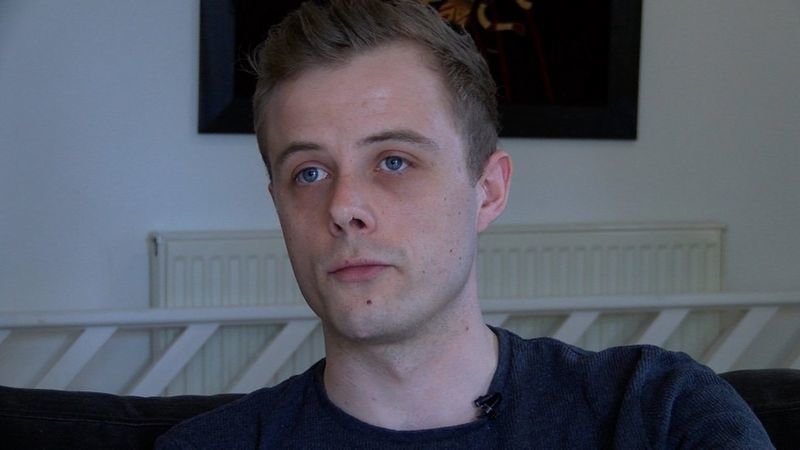

Neil Gillingham said he has never been allowed to attend a parole hearing in person


"The parole process I've always described as incredibly secretive, there is no transparency," he said.

"In terms of the input that the victim has [through the process] it is nothing more than a tick box exercise. It's an element for the Parole Board to be able to say that the victim has been listened to."

Mr Gillingham added that information following a decision is also "incredibly limited".

"To give you an example, 'Russell Causley poses an emotional risk to Samantha Gillingham [his mother] and a physical risk to Neil Gillingham'," he said.

"But they would never go into detail into how that risk is quantified."

Mr Gillingham said he was in support of the review as "there needs to be greater scrutiny", but he questioned why changes had not come sooner.

"Until I can go to a parole hearing, we convict in an open court, we release in a closed court," he said.

Victims are currently allowed to attend parole hearings only to read a statement about the impact of an offender's crime.

The review will look at whether they should be able to play a fuller role by observing hearings. Also under discussion will be whether the wider public and the media should have greater access to proceedings.

It will also examine whether parole panels should have more legal clout with powers like the courts to compel witnesses to attend hearings.

As part of the move to greater transparency the Parole Board now produces summaries of its decisions for victims and the public.

And the justice secretary, victims and prisoners are able to challenge Parole Board decisions without having to go through the courts.

'Real opportunity'


Mr Jones said the review offered "a real opportunity to provide more transparency of our decision making".

"Providing there are appropriate safeguards [...] victims would be better able to understand why we make the decisions that we do, and indeed the wider public," he said.

But he added that there were some difficulties to overcome, including where parole hearings currently take place - "physically in a prison" - and balancing the fact that there might be sensitive information mentioned about both the victim and the prisoner.

"There needs to be safeguards and balances in relation to information," he said.

Mr Jones suggested parole hearings could be streamed for victims to attend remotely, or that a court room might be more suitable if it's "a particularly tricky case" - allowing press to attend "as they do a normal crown court hearing".

The proposed moves represent the biggest change to the system since parole boards were established almost 60 years ago.

The Ministry of Justice has said decisions on its review of the Parole Board system are set to be made by the end of the year once the results of the consultation are received.

AI Disclaimer: An advanced artificial intelligence (AI) system generated the content of this page on its own. This innovative technology conducts extensive research from a variety of reliable sources, performs rigorous fact-checking and verification, cleans up and balances biased or manipulated content, and presents a minimal factual summary that is just enough yet essential for you to function as an informed and educated citizen. Please keep in mind, however, that this system is an evolving technology, and as a result, the article may contain accidental inaccuracies or errors. We urge you to help us improve our site by reporting any inaccuracies you find using the "Contact Us" link at the bottom of this page. Your helpful feedback helps us improve our system and deliver more precise content. When you find an article of interest here, please look for the full and extensive coverage of this topic in traditional news sources, as they are written by professional journalists that we try to support, not replace. We appreciate your understanding and assistance.
Newsletter

Related Articles

0:00
0:00
Close
Miliband Sets Climate and International Law at Centre of UK Diplomacy
Czech Central Bank Governor Rejects Early Euro Entry and Rate-Cut Pressure
Trump Readies New Tariffs as Temporary Global Levy Nears Expiry
Vivienne Westwood Casts Cicciolina, 74, in Its New Autumn Campaign
Dejavu: Germany’s Military Expansion Reshapes Europe’s Strategic Balance With France
Morgan Stanley Builds a Wall Street Lead in AI Infrastructure Finance
High Prices Push Coffee Drinkers Toward Whole Beans and Home Brewing
Trump Draws Boos and Podium Scrutiny at Spain’s World Cup Triumph
Brilliant move: Péter Magyar Moves to Nominate Chess Grandmaster Judit Polgár as Hungary’s President
Spain Defeats Argentina in Extra Time to Win Second World Cup
Current AI Seeks to Build an Open Global AI Infrastructure Outside Big Tech Control
Germany’s Economic Malaise Reopens the Sunday Shopping Debate
Proposed U.S.-Saudi Nuclear Pact Could Permit Limited Uranium Enrichment Under International Safeguards
Netherlands Declares Water Shortage Emergency After Drought Pushes Rivers to Historic Lows
Why Kentucky Fried Chicken Became KFC—and Why the False Explanations Persist
Ukrainian Drones Strike Wildberries Warehouses Deep Inside Russia
Reported CIA Mission Helped Clear the UAE’s Path to Advanced US AI Chips
Artificial Intelligence Capital Fuels Markets While Governments and Regulators Face Mounting Strategic Tests
China’s Moonshot’s Kimi K3 Narrows the Gap With Anthropic Through Scale, Openness and Lower Cost
The Ledger Will Not Trust on Faith
Trump Administration Pressures Banks to Restrict Financial Access for Undocumented Immigrants
Passenger Bound for Germany Refused to Sit Beside a Woman on a Plane — Then Slapped a Flight Attendant
Ukraine’s Leadership Rift Spills Into the Streets as Protesters Target Army Chief
Ukrainian Drone Barrage Kills Eight and Strikes Russian Logistics Network
The Ten World Cup Finals That Defined Football History
Smartphones Are Getting More Expensive, Sales Are Collapsing, and Even Apple Admits: "Prices Will Rise"
The Monaco Bombing Has Become a Test of Ukraine’s Intelligence Accountability
Leadership Change and Strategic Rivalry Redraw the Political Map
The AI Race Enters Its Infrastructure Era
Britain Nationalises British Steel to Protect Scunthorpe Production and Strategic Supply
French National Assembly Overrides Senate to Pass Historic Assisted-Dying Legislation
Spanish Prime Minister's Wife Ordered to Stand Trial as Corruption Probes Encircle Governing Party
Zelensky Faces Kyiv Protests Over Ousting of Dynamic Ukrainian Defense Minister
Thomas Tuchel Faces Fierce Backlash After Tactical Retreat Costs England World Cup Final Berth
A Quiet Bastille Day: France Grapples with World Cup Heartbreak and Leftover Fireworks
Spain in Ecstasy: "We Feel Unbeatable, We Taught the Whole World a Lesson"
Spain and UK Dismantle Gibraltar Border Following Landmark Schengen Integration Treaty
Hungary's "Puppet" President to Be Ousted, Orbán Fumes: "Democracy Is Dead"
Forget Tinder: The Surprising Platform Where People Find Love
Harvard Astrophysicist to Lead U.S. Scientific Advisory on Unidentified Aerial Phenomena
Emergency Sirens Activated Across Bahrain as Interior Ministry Issues Shelter Directives
World Cup Visitors Turn American Big-Box Stores Into Souvenir Stops
Netflix Weighs Always-On Channels, Bundles and Short-Form Video
Passenger Is Pulled Partly Outside Ryanair Jet After Window Fails Mid-Flight
The AI Invoice Shock: Layoffs Didn't Save Managers Money — They Cost Them More
Concern: Sexually Transmitted Bacterium Among Men Develops Antibiotic Resistance
Passenger Partially Pulled Out of Ryanair Jet After Cabin Window Fails Mid-Flight
Severe Heatwave Drives Dangerous Ground-Level Ozone Pollution Across Two Thirds of European Union
The Physical and Electronic Barriers Disrupting Domestic Wireless Networks
France and Morocco Open World Cup Quarter-Finals as Collina Defends Refereeing
×