Budapest Post

Cum Deo pro Patria et Libertate
Budapest, Europe and world news

DBS to allow employees to work from home up to 40 per cent of the time

DBS to allow employees to work from home up to 40 per cent of the time

Four out of five of DBS’s employees said they were able to work seamlessly remotely, the bank said.

DBS, Singapore’s biggest bank, said it would allow all of its employees to work from home up to 40 per cent of the time as it became the latest bank to reconsider its staffing model in light of its experience during the coronavirus pandemic.

Following a six-month examination by an internal task force, Piyush Gupta, DBS’s chief executive, said the lender would “radically transform” its structure by adopting a hybrid working model that allows employees to work remotely or in the office, creating more flexible work arrangements through job sharing and retraining 7,200 employees in data analytics, artificial intelligence and other emerging areas of technology.

“As the way we live, bank and work continues to change dramatically, we must address the magnitude of the disruptions before us,” Gupta said in a news release on Tuesday. “We will also accelerate our employee upskilling agenda at scale and ingrain the use of data-driven operating models across the bank. By implementing these measures, we believe that Team DBS will emerge as a confident future-ready workforce.”

DBS said four out of five of its 29,000 employees indicated they were able to work seamlessly remotely. However, the bank opted for a hybrid approach after employees indicated staying engaged and connecting with colleagues was challenging.

It was not immediately clear how the shift would affect the bank’s staffing structure in Hong Kong.

Under DBS’s job sharing scheme, two employees would share responsibilities for one full-time role. Those employees would retain existing medical benefits and be covered by the bank’s insurance plans.

DBS also said it would reconfigure workspaces for more collaboration between employees and accelerate a transition to a more project-specific operating model using teams from different function areas.

The move by DBS comes after Standard Chartered said this month it would allow employees in nine markets, including Hong Kong, to apply for formal flexi-working arrangements. That could include time split between Standard Chartered’s offices, at home or co-working facilities.
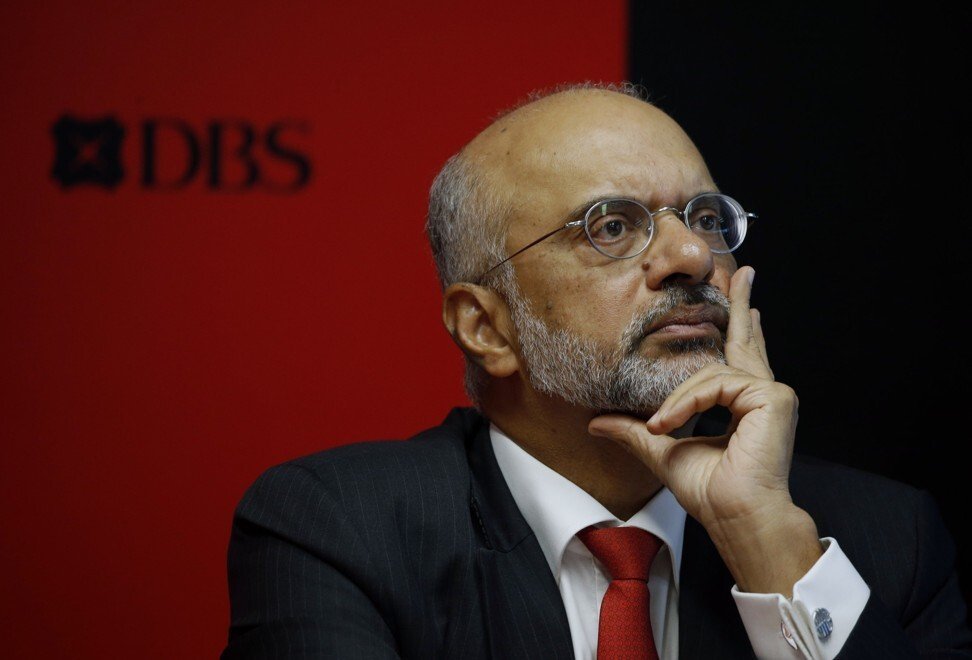

Piyush Gupta, DBS’s chief executive, said the company would “radically transform” its staffing structure with more flexible working arrangements.


“We are excited about the future as we step into a new era for the bank and the positive impact we can make on our productivity, well-being and carbon footprint,” Tanuj Kapilashrami, Standard Chartered’s group head of human resources, said in a November 6 statement. “We also see this as an opportunity to appeal to a wider and more diverse potential future workforce.”

HSBC chief financial officer Ewen Stevenson said last month that the bank was considering more ways to digitise its operations and have more staff members work from home in the future. Stevenson told Bloomberg Television that could include employees working remotely two to three days a week.

Jamie Dimon, the JPMorgan Chase chief executive, said in October that up to 30 per cent of the bank’s staff could work from home permanently in the future.

The coronavirus pandemic forced global lenders to reconfigure their systems and rapidly adopt remote working as much as 90 per cent of their employees were forced into lockdown in some markets.
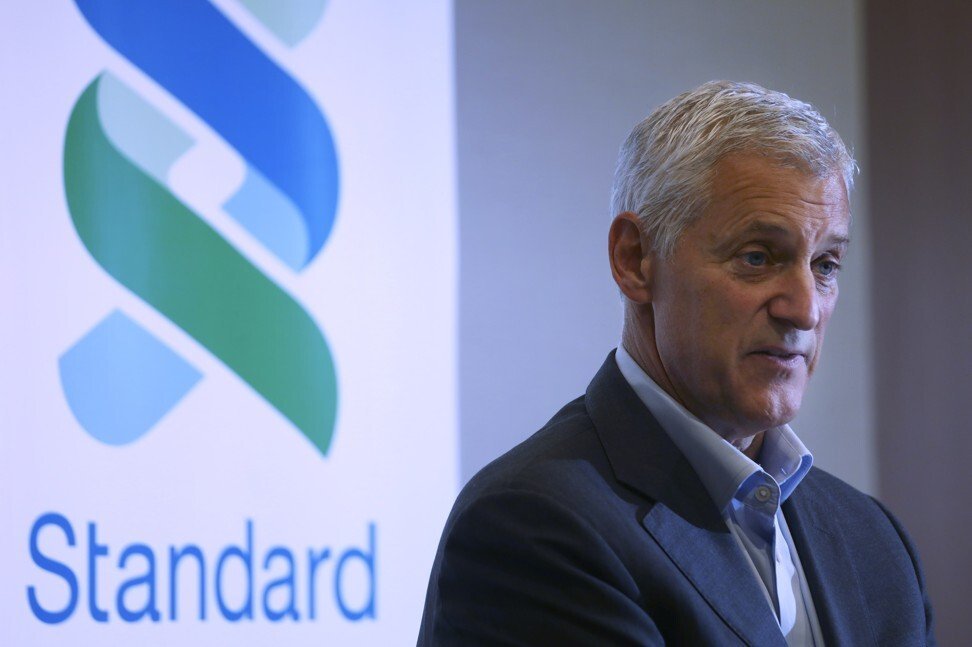

Standard Chartered chief executive Bill Winters.


The world’s largest work-from-home experiment ever has leaders at global banks rethinking everything from travel to office space as they look for ways to trim costs against the backdrop of historically low interest rates, which are cutting into their bottom lines.

The re-examination of how banks staff could cut into demand for Hong Kong’s prime office space, as financial companies are some of the biggest commercial renters in the city, according to market observers.

“Our intention at Standard Chartered is to imagine the future and move there quickly, rather than resist, resist and resist,” Bill Winters, the Standard Chartered CEO, said during a presentation at Hong Kong’s Fintech Week on November 4. “The space that you use has to be heavily invested in collaboration space.

Going forward when I come into the office – any office – it’s going to be to collaborate. It’s not going to be to sit in my office alone with me and my laptop, clicking away and doing video conferences. That I can do from home, the hotel or some other office.”

AI Disclaimer: An advanced artificial intelligence (AI) system generated the content of this page on its own. This innovative technology conducts extensive research from a variety of reliable sources, performs rigorous fact-checking and verification, cleans up and balances biased or manipulated content, and presents a minimal factual summary that is just enough yet essential for you to function as an informed and educated citizen. Please keep in mind, however, that this system is an evolving technology, and as a result, the article may contain accidental inaccuracies or errors. We urge you to help us improve our site by reporting any inaccuracies you find using the "Contact Us" link at the bottom of this page. Your helpful feedback helps us improve our system and deliver more precise content. When you find an article of interest here, please look for the full and extensive coverage of this topic in traditional news sources, as they are written by professional journalists that we try to support, not replace. We appreciate your understanding and assistance.
Newsletter

Related Articles

0:00
0:00
Close
Vivienne Westwood Casts Cicciolina, 74, in Its New Autumn Campaign
Dejavu: Germany’s Military Expansion Reshapes Europe’s Strategic Balance With France
Morgan Stanley Builds a Wall Street Lead in AI Infrastructure Finance
High Prices Push Coffee Drinkers Toward Whole Beans and Home Brewing
Trump Draws Boos and Podium Scrutiny at Spain’s World Cup Triumph
Brilliant move: Péter Magyar Moves to Nominate Chess Grandmaster Judit Polgár as Hungary’s President
Spain Defeats Argentina in Extra Time to Win Second World Cup
Current AI Seeks to Build an Open Global AI Infrastructure Outside Big Tech Control
Germany’s Economic Malaise Reopens the Sunday Shopping Debate
Proposed U.S.-Saudi Nuclear Pact Could Permit Limited Uranium Enrichment Under International Safeguards
Netherlands Declares Water Shortage Emergency After Drought Pushes Rivers to Historic Lows
Why Kentucky Fried Chicken Became KFC—and Why the False Explanations Persist
Ukrainian Drones Strike Wildberries Warehouses Deep Inside Russia
Reported CIA Mission Helped Clear the UAE’s Path to Advanced US AI Chips
Artificial Intelligence Capital Fuels Markets While Governments and Regulators Face Mounting Strategic Tests
China’s Moonshot’s Kimi K3 Narrows the Gap With Anthropic Through Scale, Openness and Lower Cost
The Ledger Will Not Trust on Faith
Trump Administration Pressures Banks to Restrict Financial Access for Undocumented Immigrants
Passenger Bound for Germany Refused to Sit Beside a Woman on a Plane — Then Slapped a Flight Attendant
Ukraine’s Leadership Rift Spills Into the Streets as Protesters Target Army Chief
Ukrainian Drone Barrage Kills Eight and Strikes Russian Logistics Network
The Ten World Cup Finals That Defined Football History
Smartphones Are Getting More Expensive, Sales Are Collapsing, and Even Apple Admits: "Prices Will Rise"
The Monaco Bombing Has Become a Test of Ukraine’s Intelligence Accountability
Leadership Change and Strategic Rivalry Redraw the Political Map
The AI Race Enters Its Infrastructure Era
Britain Nationalises British Steel to Protect Scunthorpe Production and Strategic Supply
French National Assembly Overrides Senate to Pass Historic Assisted-Dying Legislation
Spanish Prime Minister's Wife Ordered to Stand Trial as Corruption Probes Encircle Governing Party
Zelensky Faces Kyiv Protests Over Ousting of Dynamic Ukrainian Defense Minister
Thomas Tuchel Faces Fierce Backlash After Tactical Retreat Costs England World Cup Final Berth
A Quiet Bastille Day: France Grapples with World Cup Heartbreak and Leftover Fireworks
Spain in Ecstasy: "We Feel Unbeatable, We Taught the Whole World a Lesson"
Spain and UK Dismantle Gibraltar Border Following Landmark Schengen Integration Treaty
Hungary's "Puppet" President to Be Ousted, Orbán Fumes: "Democracy Is Dead"
Forget Tinder: The Surprising Platform Where People Find Love
Harvard Astrophysicist to Lead U.S. Scientific Advisory on Unidentified Aerial Phenomena
Emergency Sirens Activated Across Bahrain as Interior Ministry Issues Shelter Directives
World Cup Visitors Turn American Big-Box Stores Into Souvenir Stops
Netflix Weighs Always-On Channels, Bundles and Short-Form Video
Passenger Is Pulled Partly Outside Ryanair Jet After Window Fails Mid-Flight
The AI Invoice Shock: Layoffs Didn't Save Managers Money — They Cost Them More
Concern: Sexually Transmitted Bacterium Among Men Develops Antibiotic Resistance
Passenger Partially Pulled Out of Ryanair Jet After Cabin Window Fails Mid-Flight
Severe Heatwave Drives Dangerous Ground-Level Ozone Pollution Across Two Thirds of European Union
The Physical and Electronic Barriers Disrupting Domestic Wireless Networks
France and Morocco Open World Cup Quarter-Finals as Collina Defends Refereeing
Tech Pulse: The Future of AI and Screen Culture
Global News Briefing: Escalating Geopolitical Tensions and Corporate Shakeups
Global News Brief: Escalating Conflicts, Public Health Crises, and World Cup Drama
×