Budapest Post

Cum Deo pro Patria et Libertate
Budapest, Europe and world news

Birds, Bees and Physics: Breakthrough Insights Revealed in Long-Lost Letter By Albert Einstein

Birds, Bees and Physics: Breakthrough Insights Revealed in Long-Lost Letter By Albert Einstein

The letter that prompted the study was first found in 2019, after a retiree living in the United Kingdom read a published article by RMIT University, Australia, on the mathematical abilities of bees, and reached out to the scientific team to share the epistle, which Albert Einstein had addressed to her late husband Glyn Davys.

A recently-discovered letter, written by German-born mathematician and physicist Albert Einstein in 1949, sheds new light on his illuminating views on the birds, bees, and their links to physics, according to a study into the correspondence.

Einstein, one of the greatest physicists of all time, is revealed to have theorised in the letter that animals can provide vital clues about how physics work, and what makes birds and bees fly.


“Remarkably, it is clear through his writing that Einstein envisaged new discoveries could come from studying animals’ behaviours,” stated Professor Andrew Greentree, a theoretical physicist at RMIT.

The letter by Albert Einstein, validated by The Hebrew University of Jerusalem, where Einstein bequeathed his notes, letters and records, was researched thoroughly by a team led by Adrian Dyer, an Associate Professor at RMIT University, Australia.

The findings, entitled “Einstein, von Frisch and the honeybee: a historical letter comes to light”, were published on 10 May in the Journal of Comparative Physiology A.

Animal Physics


The team of scientists got their hands on the historical letter in 2019, after Judith Davys had offered to share the 72-year-old letter that the Nobel Prize-winner had addressed to her late husband, England-based radar researcher Glyn Davys. The retiree had been prompted to do so after accidentally reading an article published by RMIT University that dwelt upon the mathematical abilities of bees. A year was accordingly spent investigating the document.

Einstein’s letter is a response to a question he received from Glyn Davys, who had joined the British Royal Navy in WWII and trained as an engineer, researching topics such as the use of radar to detect ships and aircraft.

Around the same time, bio-sonar sensing had been discovered in bats, prompting further research into how animals may have different senses from humans.

Bees Synchronise to Create Beehives Waves


As for what may have prompted Davys to write to the famous physicist, the team researched England’s news archives dated to 1949 to discover that Austrian-German honey bee researcher and Nobel Prize winner Karl von Frisch’s findings on bee navigation were already making the headlines. As a debate had been triggered on how bees use polarised light to navigate, it is believed this spurred Davys to write to Einstein.

While the original missive to the scientist from Davys no longer exists, it is likely to have specifically mentioned von Frisch.
In the discovered letter, Einstein responds:

“I am well acquainted with Mr. v. Frisch’s admirable investigations.”

Einstein’s deliberations on animal physics were supposedly triggered by conversations with Karl von Frisch.

Encounter of Two Great Minds


In 1933, Einstein left Germany to work at Princeton University in the United States. In April 1949, he met von Frisch as the animal sensory researcher was giving a lecture at Princeton University.
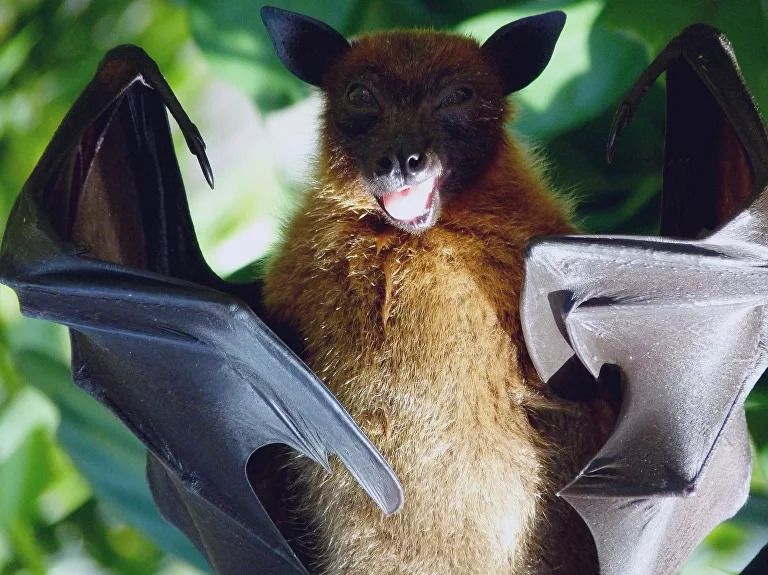
Bat


The Nobel laureate’s findings on bee navigation were already big news by that time. That year von Frisch published research detailing how honey bees find their way around by resorting to polarisation patterns of light scattered from the sky.

Shortly after the Princeton lecture, the two men shared a private meeting, which the discovered letter throws light on.

“It is thinkable that the investigation of the behaviour of migratory birds and carrier pigeons may someday lead to the understanding of some physical process which is not yet known,” reads an excerpt from Einstein’s letter.

In his letter to Davys, Einstein envisaged new discoveries could be made from studying animals’ behaviours.

“Seven decades after Einstein proposed new physics might come from animal sensory perception, we’re seeing discoveries that push our understanding about navigation and the fundamental principles of physics,” stated RMIT University Associate Professor Adrian Dyer in a press release.

AI Disclaimer: An advanced artificial intelligence (AI) system generated the content of this page on its own. This innovative technology conducts extensive research from a variety of reliable sources, performs rigorous fact-checking and verification, cleans up and balances biased or manipulated content, and presents a minimal factual summary that is just enough yet essential for you to function as an informed and educated citizen. Please keep in mind, however, that this system is an evolving technology, and as a result, the article may contain accidental inaccuracies or errors. We urge you to help us improve our site by reporting any inaccuracies you find using the "Contact Us" link at the bottom of this page. Your helpful feedback helps us improve our system and deliver more precise content. When you find an article of interest here, please look for the full and extensive coverage of this topic in traditional news sources, as they are written by professional journalists that we try to support, not replace. We appreciate your understanding and assistance.
Newsletter

Related Articles

0:00
0:00
Close
Trump Called Viktor Orbán: "Why Are You Using the Veto"
Horror in the Skies: Plane Engine Exploded, Passengers Sent Farewell Messages
AI in Policing: Draft One Helps Speed Up Reports but Raises Legal and Ethical Concerns
Shame in Norway: Crown Princess’s Son Accused of Four Rapes
Apple Begins Simultaneous iPhone 17 Production in India and China
A Robot to Give Birth: The Chinese Announcement That Shakes the World
Finnish MP Dies by Suicide in Parliament Building
Outrage in the Tennis World After Jannik Sinner’s Withdrawal Storm
Class Action Lawsuit Against Volkswagen: Steering Wheel Switches Cause Accidents
UK Government Tries to Sue 4chan for Breaching Online Safety Act
Dogfights in the Skies: Airbus on Track to Overtake Boeing and Claim Aviation Supremacy
Tim Cook Promises an AI Revolution at Apple: "One of the Most Significant Technologies of Our Generation"
Are AI Data Centres the Infrastructure of the Future or the Next Crisis?
Miles Worth Billions: How Airlines Generate Huge Profits
Cambridge Dictionary Adds 'Skibidi,' 'Delulu,' and 'Tradwife' Amid Surge of Online Slang
Zelenskyy Returns to White House Flanked by European Allies as Trump Pressures Land-Swap Deal with Putin
The CEO Who Replaced 80% of Employees for the AI Revolution: "I Would Do It Again"
"Every Centimeter of Your Body Is a Masterpiece": The Shocking Meta Document Revealed
Character.ai Bets on Future of AI Companionship
China Ramps Up Tax Crackdown on Overseas Investments
Japanese Office Furniture Maker Expands into Bomb Shelter Market
Intel Shares Surge on Possible U.S. Government Investment
Hurricane Erin Threatens U.S. East Coast with Dangerous Surf
EU Blocks Trade Statement Over Digital Rule Dispute
EU Sends Record Aid as Spain Battles Wildfires
Beijing is moving into gold and other assets, diversifying away from the dollar
China Requires Data Centres to Source Majority of AI Chips Locally, For Technological Sovereignty
Escalating Clashes in Serbia as Anti-Government Protests Spread Nationwide
Category 5 Hurricane in the Caribbean: 'Catastrophic Storm' with Winds of 255 km/h
Trump Backs Putin’s Land-for-Peace Proposal Amid Kyiv’s Rejection
Digital Humans Move Beyond Sci-Fi: From Virtual DJs to AI Customer Agents
YouTube will start using AI to guess your age. If it’s wrong, you’ll have to prove it
Jellyfish Swarm Triggers Shutdown at Gravelines Nuclear Power Station in Northern France
OpenAI’s ‘PhD-Level’ ChatGPT 5 Stumbles, Struggles to Even Label a Map
Zelenskyy to Visit Washington after Trump–Putin Summit Yields No Agreement
High-Stakes Trump-Putin Summit on Ukraine Underway in Alaska
The World Economic Forum has cleared Klaus Schwab of “material wrongdoing” after a law firm conducted a review into potential misconduct of the institution’s founder
A Computer That Listens, Sees, and Acts: What to Expect from Windows 12
Bitcoin hits $123,000
Southwest Airlines Apologizes After 'Accidentally Forgetting' Two Blind Passengers at New Orleans Airport and Faces Criticism Over Poor Service for Passengers with Disabilities
United States Sells Luxury Yacht Amadea, Valued at Approximately $325 Million, in First Sale of a Seized Russian Yacht Since the Invasion of Ukraine
Russian Forces Advance on Donetsk Front, Cutting Key Supply Routes Near Pokrovsk
It’s Not the Algorithm: New Study Claims Social Networks Are Fundamentally Broken
Sixty-Year-Old Claims: “My Biological Age Is Twenty-One.” Want the Same? Remember the Name Spermidine
Saudi Arabia accelerates renewables to curb domestic oil use
The Billion-Dollar Inheritance and the Death on the Railway Tracks: The Scandal Shaking Europe
World’s Cleanest Countries 2025 Ranked by Air, Water, Waste, and Hygiene Standards
Denmark Revives EU ‘Chat Control’ Proposal for Encrypted Message Scanning
Perplexity makes unsolicited $34.5 billion all-cash offer for Google’s Chrome browser
Cristiano Ronaldo and Georgina Rodríguez announce engagement
×