
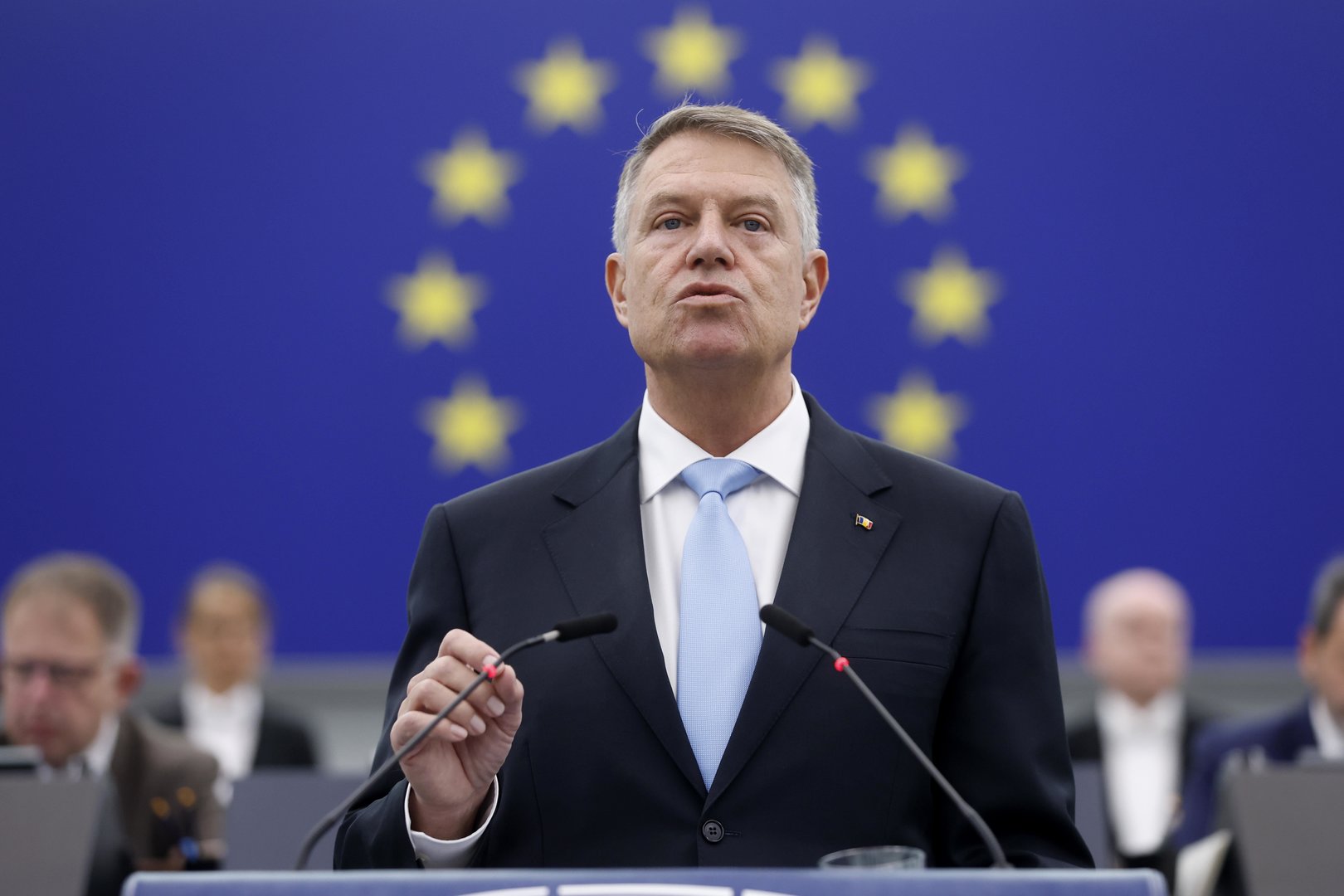
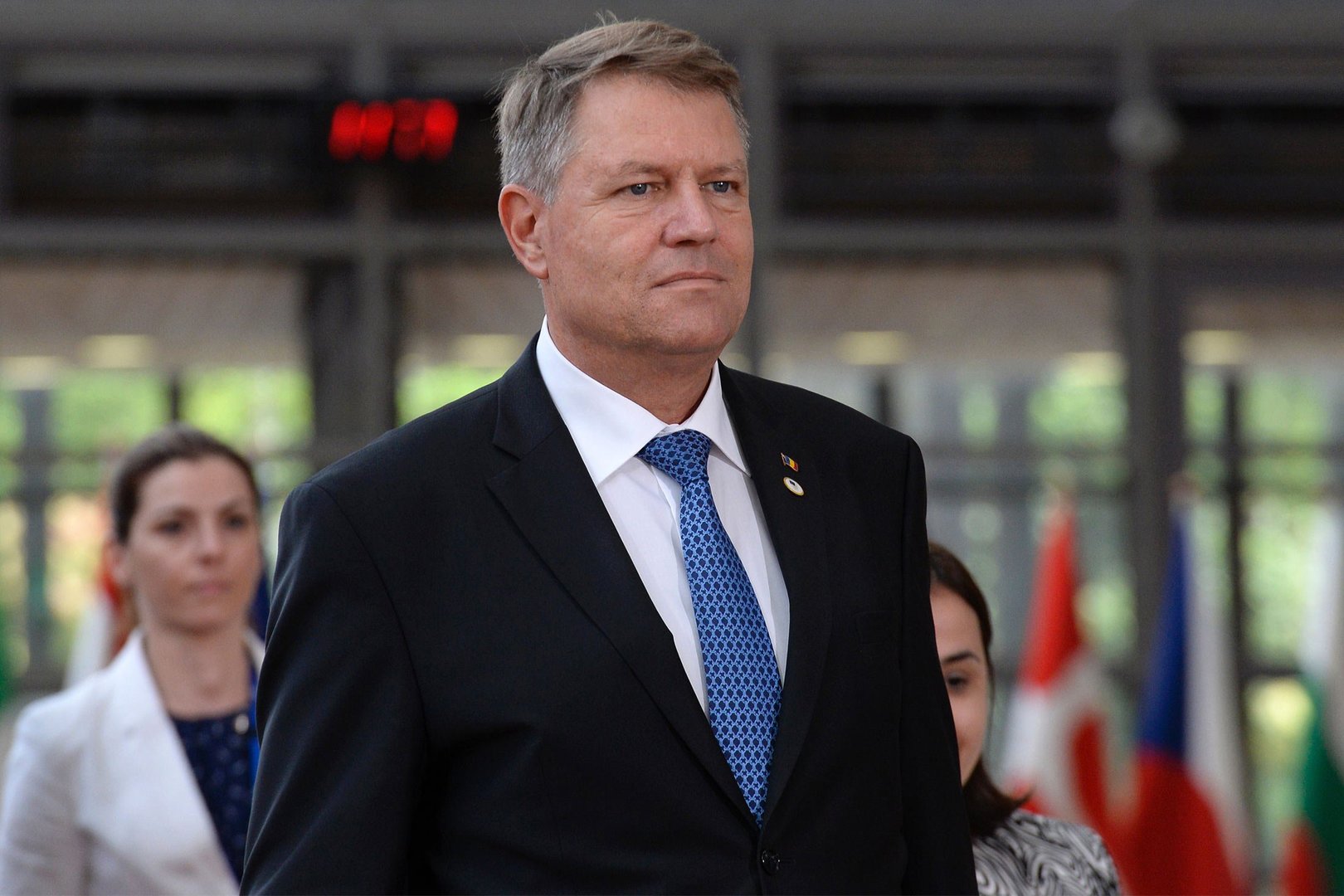
Who is Klaus Iohannis, Who Aims to be the NATO Secretary-General from the Presidency of Romania?
Despite the key role Hungarians played in his election as the Romanian president, the politician now seeking the NATO Secretary-General post is not necessarily known for his Hungarian-friendly stance.
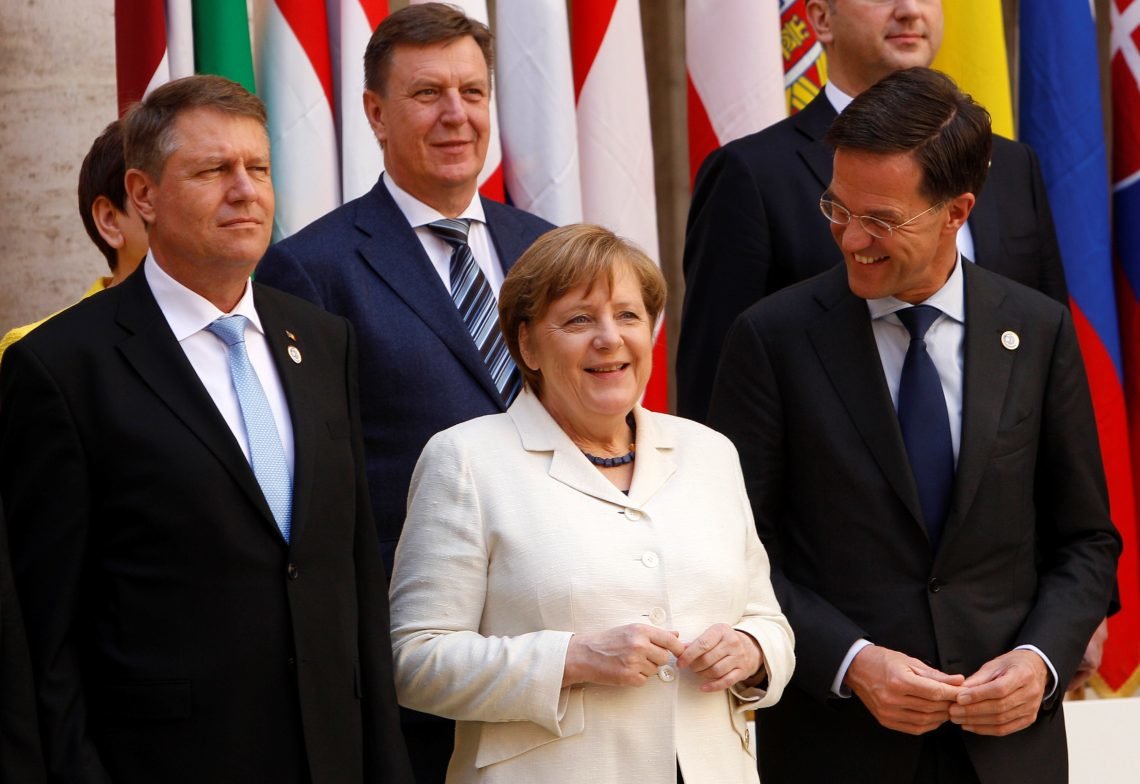
Klaus Iohannis, of Transylvanian Saxon descent, has officially applied for the highest political position within the North Atlantic Defense Alliance, potentially facing Mark Rutte, the retiring Dutch Prime Minister who is considered one of Viktor Orbán's prominent EU adversaries, in the bid for NATO leadership. The decision-making process may thus witness a clash between "East" and "West."
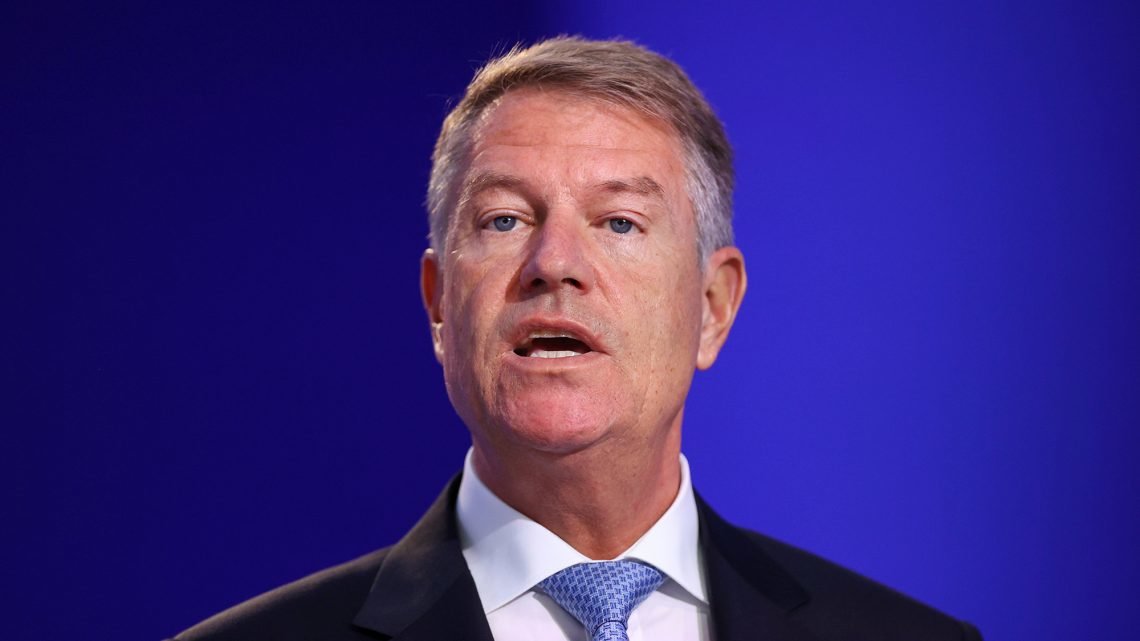
KLAUS IOHANNIS, President of Romania, announced on Tuesday that he is running for the position of NATO Secretary-General. The Transylvanian Saxon politician, representing the NATO member Romania, bases his candidacy on the nation's performance and his own presidential experience. Among other arguments, he cited Romania’s justified aspiration to play a more significant role in leading Euro-Atlantic structures and assist NATO in making decisions that serve the interests of the alliance as a whole by providing an “equilibrated, strong, and influential” representation of the Eastern European region.
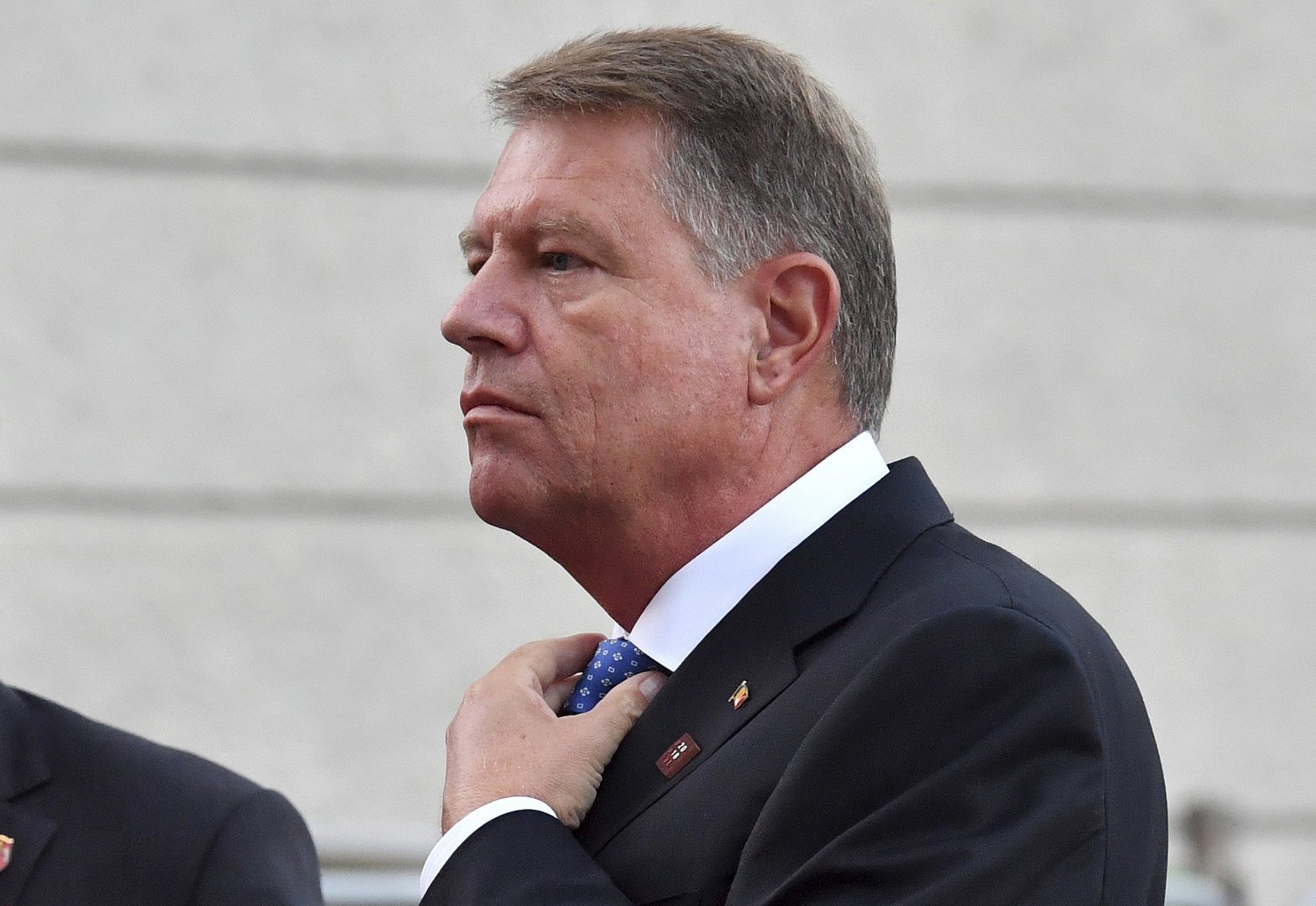
Since 2014, meaning for nearly a decade, Iohannis has served as President of Romania (a post he won across Transylvania with the exception of Hunedoara County). Romania joined the North Atlantic Defense Alliance in 2004, which recently has faced stern challenges. VLADIMIR PUTIN, who initiated the invasion against Ukraine in 2022, announced shortly before the Russian presidential election that Russian troops would be deployed along the border of newly NATO joined Finland (Finland and Sweden were the last two countries to join the alliance in 2023-24). In response, Finnish Prime Minister PETTERI ORPO suggested that Russia is preparing for a prolonged conflict with the West.
HUNGARY ONCE AGAIN A SPOKE IN THE WHEEL
The NATO accession process for Finland and Sweden primarily slowed down due to the stall tactics of Hungary and Turkey. The emergence of Iohannis as a candidate might also have an indirect, perhaps unintentional Hungarian role. Until the last few days, everyone considered MARK RUTTE, the acting Dutch Prime Minister, to be the frontrunner for the NATO Secretary-General post, with major Western nations seemingly aligning behind Rutte. However, the election of the new leader requires unanimous support from all 31 members of the alliance.
For the Hungarian government, Rutte is not acceptable. On March 5th, PÉTER SZIJJÁRTÓ, Minister of Foreign Affairs and Trade, announced:
Of course, we cannot support the election of a person to the NATO Secretary-General post who previously sought to kneel Hungary.
Rutte hadcriticized the Hungarian government mainly due to concerns about the rule of law and in 2021 stated that "Hungary no longer has a place in the EU."
This was shortly after the Hungarian National Assembly, with a Fidesz majority, passed the so-called "child protection law" in June 2021, which incorporated homophobic clauses stigmatizing sexual minorities. Rutte commented at the time that the homophobic law should be withdrawn, stating: "We have to force Hungary to kneel." Prime Minister VIKTOR ORBÁN reacted with a video: "Hungarian people kneel before God, kneel before their country, and kneel when asking for their lover’s hand." This coincides with Orbán’s statement of 2021 concerning the EU, which may also apply to NATO, headquartered in Brussels: "We are the sand in the gears, the spoke in the wheel, the thorn under the nail.”
RUTTE OR IOHANNIS?
Thus, although Rutte had been considered the most likely candidate for the position of NATO Secretary-General, battling for the post previously held by Norwegian JENS STOLTENBERG, a politician - likewise not noted for his friendliness towards Hungarians - could enter the fray.
The Hungarian role in the potential impediment of Rutte's election is not as serious as it was in obstructing NATO expansion. The requirement of unanimity in the selection of the Secretary-General is based on customary law, as opposed to the acceptance of new members, for which the governments and parliaments of all member states must approve entry. There is no veto power for member states in the selection of the Secretary-General; hence there have been non-unanimous decisions: Stoltenberg’s predecessor, the Dane ANDERS FOGH RASMUSSEN, was not supported by Turkey.
Our analysis in February also drew attention to Rutte’s failure to meet the two most important criteria formulated by NATO's leadership: many would prefer to see a woman at the helm, and the new leader being from Eastern Europe is considered important. This brought up the candidacy of Estonian Prime Minister KAJA KALLAS last year, who, however, was deemed unsuitable for the position of Secretary-General by some due to her excessively anti-Russian rhetoric.
Klaus Iohannis meets at least one criterion: he is an Eastern European politician. Moreover, he has Western "roots": his family arrived in the territory of present-day Romania 850 years ago with the first wave of Transylvanian Saxons. By the latest in the 1500s, his ancestors lived in the area around Sibiu. (Among the current Romanian president's close relatives, his parents and sister moved to Würzburg, Germany, in 1992.)
Born in 1959, the politician prides himself on never wanting to leave Romania and is the first in his immediate family to marry a Romanian woman. Although many of the Saxons who once lived in the Saxon towns no longer remain, identifying as "Siweberjer Saksen" (Transylvanian Saxons), Sibiu - with only a 2% German population - had Klaus Iohannis as its mayor for many years, from the turn of the millennium until 2014.
Before that, the Saxon politician worked as a high school teacher and school inspector. Thus far, if no other candidates come forward, it is certain that the new NATO Secretary-General will also be a former teacher, as Rutte previously taught in high school.
IS THE ROMANIAN PRESIDENT ANTI-HUNGARIAN?
The question remains how pleased Péter Szijjártó would be with the potential election of Iohannis over Rutte as NATO Secretary-General. The Hungarian Foreign Minister had previously qualified him as extremely anti-Hungarian.
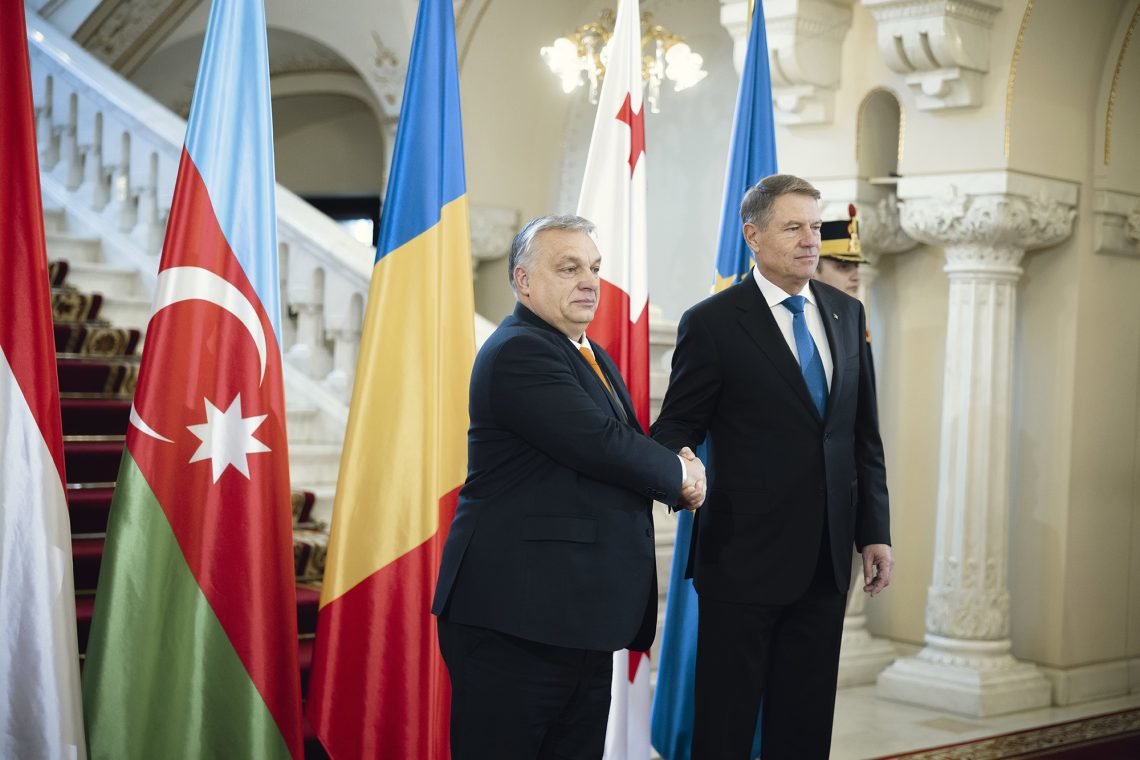
Szijjártó was reacting to news in 2020 that Iohannis, as President, had challenged the law on a new Romanian-Hungarian border crossing.
Iohannis is often accused of anti-Hungarian sentiment for other reasons as well. The National Council against Discrimination (CNCD) fined the President for anti-Hungarian hate speech (in November 2022, the fine was annulled by Romania’s supreme court). The anti-discrimination body stated that Iohannis violated the human dignity of his Hungarian compatriots in 2020 when he mocked his social democratic political opponents, accusing them of selling out Transylvania in Hungarian-language greetings.
During discussions on the autonomy of Székely Land in Romania in the spring of 2020, Iohannis announced that the PSD (the Social Democratic Party) wanted to give Transylvania to the Hungarians. With the greeting "Good day, PSD!" Iohannis mocked the vote on the autonomy statute of Székely Land and also declared that such a law should not come into being. Then he asked the president of the Social Democrats, which had the largest faction, MARCEL CIOLACU, "What did Viktor Orbán promise in exchange for this?"
In relation to all this, it is worth noting: Romania's current Prime Minister is Marcel Ciolacu, who is now governing together with the PNL party, which Iohannis headed in 2014. Ciolacu is now evidently supporting Iohannis's NATO ambitions, as demonstrated by the Social Democrats' politician, the president of the Senate's defense committee, NICOLETA PAULIUC, who declared on Wednesday that "under the circumstances of the war in Ukraine, the presence of the Romanian head of state at the helm of the North Atlantic Treaty Organization would be an extraordinary thing for Romania and all the countries on the eastern flank."
She added: "The election of President Iohannis to this position would mean that Romania takes its rightful role in this political-military alliance. It would be an honor for all Romanian citizens if Romania's president were to reach such a position."
COULD THE ORBÁN GOVERNMENT EVENTUALLY SUPPORT IOHANNIS?
After all this, it is difficult to guess the position of the Hungarian government since both Péter Szijjártó and Viktor Orbán have previously had conflicts with both NATO Secretary-General candidates. However, a Romanian political analyst, CRISTIAN PIRVULESCU, suggests that Budapest might still support Iohannis in a vote when deciding between Rutte or the Romanian head of state.
According to Pirvulescu, an "Eastern bloc" is forming against the NATO Western member states, which for example with Poland and the Baltic states at the forefront, could stand by Iohannis. The Romanian political scientist compared Iohannis to a "grandmaster in chess" who "carefully prepares his moves," and noted that "the Romanian president's announcement of his intent to run for NATO Secretary-General post after meeting with the Montenegrin president could signal backing from a coalition of Central and Eastern European states."
The distinguished German newspaper, Frankfurter Allgemeine Zeitung (FAZ), however, writes that Iohannis has no chance to become the NATO Secretary-General. His application serves only to prolong the decision-making process, which was received with frowns across the alliance. One diplomat told the newspaper that it divides the alliance at a time when we cannot afford it.
"THE TIME HAS COME TO PREPARE NATO FOR THE FUTURE"
In one of his video messages, Iohannis also spoke about "Romania's deep understanding of the current security situation, which has been destabilized by Russia's war against Ukraine." He mentioned his knowledge of "the challenges facing NATO, Europe, and the region." “The foundational values of the Alliance including the rule of law, the respect for fundamental rights and freedoms have steered us towards solidifying true democracy. And crucially: NATO’s umbrella has provided us with the strongest security guarantees in history. These guarantees have never been as important as they are today," the President emphasized.
Iohannis also highlighted that Romania spends 2.5 percent of its GDP on defense. This is particularly significant because should DONALD TRUMP be elected President of the USA in November this year, NATO's situation could become uncertain according to many. Trump would likely encourage Russia to attack the non-paying NATO member states.
The Turkish Anadolu agency highlighted from Iohannis' speech that Romania is a pillar of stability and security in the region. The Ankara news source also considers it important that, according to Iohannis, Romania has undergone radical changes in the past twenty years and is capable of contributing to NATO's new vision.
In an opinion piece for the Brussels-based Politico, Iohannis stressed that "The time has come to prepare NATO for the future." He articulated suggestions such as
* development of the European defense industry,
* support for Ukraine,
* enhancing cybersecurity,
* improvement of the use of artificial intelligence,
* and strengthening the strategic partnership between the EU and NATO.
KLAUS IOHANNIS, President of Romania, announced on Tuesday that he is running for the position of NATO Secretary-General. The Transylvanian Saxon politician, representing the NATO member Romania, bases his candidacy on the nation's performance and his own presidential experience. Among other arguments, he cited Romania’s justified aspiration to play a more significant role in leading Euro-Atlantic structures and assist NATO in making decisions that serve the interests of the alliance as a whole by providing an “equilibrated, strong, and influential” representation of the Eastern European region.
Since 2014, meaning for nearly a decade, Iohannis has served as President of Romania (a post he won across Transylvania with the exception of Hunedoara County). Romania joined the North Atlantic Defense Alliance in 2004, which recently has faced stern challenges. VLADIMIR PUTIN, who initiated the invasion against Ukraine in 2022, announced shortly before the Russian presidential election that Russian troops would be deployed along the border of newly NATO joined Finland (Finland and Sweden were the last two countries to join the alliance in 2023-24). In response, Finnish Prime Minister PETTERI ORPO suggested that Russia is preparing for a prolonged conflict with the West.
HUNGARY ONCE AGAIN A SPOKE IN THE WHEEL
The NATO accession process for Finland and Sweden primarily slowed down due to the stall tactics of Hungary and Turkey. The emergence of Iohannis as a candidate might also have an indirect, perhaps unintentional Hungarian role. Until the last few days, everyone considered MARK RUTTE, the acting Dutch Prime Minister, to be the frontrunner for the NATO Secretary-General post, with major Western nations seemingly aligning behind Rutte. However, the election of the new leader requires unanimous support from all 31 members of the alliance.
For the Hungarian government, Rutte is not acceptable. On March 5th, PÉTER SZIJJÁRTÓ, Minister of Foreign Affairs and Trade, announced:
Of course, we cannot support the election of a person to the NATO Secretary-General post who previously sought to kneel Hungary.
Rutte hadcriticized the Hungarian government mainly due to concerns about the rule of law and in 2021 stated that "Hungary no longer has a place in the EU."
This was shortly after the Hungarian National Assembly, with a Fidesz majority, passed the so-called "child protection law" in June 2021, which incorporated homophobic clauses stigmatizing sexual minorities. Rutte commented at the time that the homophobic law should be withdrawn, stating: "We have to force Hungary to kneel." Prime Minister VIKTOR ORBÁN reacted with a video: "Hungarian people kneel before God, kneel before their country, and kneel when asking for their lover’s hand." This coincides with Orbán’s statement of 2021 concerning the EU, which may also apply to NATO, headquartered in Brussels: "We are the sand in the gears, the spoke in the wheel, the thorn under the nail.”
RUTTE OR IOHANNIS?
Thus, although Rutte had been considered the most likely candidate for the position of NATO Secretary-General, battling for the post previously held by Norwegian JENS STOLTENBERG, a politician - likewise not noted for his friendliness towards Hungarians - could enter the fray.
The Hungarian role in the potential impediment of Rutte's election is not as serious as it was in obstructing NATO expansion. The requirement of unanimity in the selection of the Secretary-General is based on customary law, as opposed to the acceptance of new members, for which the governments and parliaments of all member states must approve entry. There is no veto power for member states in the selection of the Secretary-General; hence there have been non-unanimous decisions: Stoltenberg’s predecessor, the Dane ANDERS FOGH RASMUSSEN, was not supported by Turkey.
Our analysis in February also drew attention to Rutte’s failure to meet the two most important criteria formulated by NATO's leadership: many would prefer to see a woman at the helm, and the new leader being from Eastern Europe is considered important. This brought up the candidacy of Estonian Prime Minister KAJA KALLAS last year, who, however, was deemed unsuitable for the position of Secretary-General by some due to her excessively anti-Russian rhetoric.
Klaus Iohannis meets at least one criterion: he is an Eastern European politician. Moreover, he has Western "roots": his family arrived in the territory of present-day Romania 850 years ago with the first wave of Transylvanian Saxons. By the latest in the 1500s, his ancestors lived in the area around Sibiu. (Among the current Romanian president's close relatives, his parents and sister moved to Würzburg, Germany, in 1992.)
Born in 1959, the politician prides himself on never wanting to leave Romania and is the first in his immediate family to marry a Romanian woman. Although many of the Saxons who once lived in the Saxon towns no longer remain, identifying as "Siweberjer Saksen" (Transylvanian Saxons), Sibiu - with only a 2% German population - had Klaus Iohannis as its mayor for many years, from the turn of the millennium until 2014.
Before that, the Saxon politician worked as a high school teacher and school inspector. Thus far, if no other candidates come forward, it is certain that the new NATO Secretary-General will also be a former teacher, as Rutte previously taught in high school.
IS THE ROMANIAN PRESIDENT ANTI-HUNGARIAN?
The question remains how pleased Péter Szijjártó would be with the potential election of Iohannis over Rutte as NATO Secretary-General. The Hungarian Foreign Minister had previously qualified him as extremely anti-Hungarian.
Szijjártó was reacting to news in 2020 that Iohannis, as President, had challenged the law on a new Romanian-Hungarian border crossing.
Iohannis is often accused of anti-Hungarian sentiment for other reasons as well. The National Council against Discrimination (CNCD) fined the President for anti-Hungarian hate speech (in November 2022, the fine was annulled by Romania’s supreme court). The anti-discrimination body stated that Iohannis violated the human dignity of his Hungarian compatriots in 2020 when he mocked his social democratic political opponents, accusing them of selling out Transylvania in Hungarian-language greetings.
During discussions on the autonomy of Székely Land in Romania in the spring of 2020, Iohannis announced that the PSD (the Social Democratic Party) wanted to give Transylvania to the Hungarians. With the greeting "Good day, PSD!" Iohannis mocked the vote on the autonomy statute of Székely Land and also declared that such a law should not come into being. Then he asked the president of the Social Democrats, which had the largest faction, MARCEL CIOLACU, "What did Viktor Orbán promise in exchange for this?"
In relation to all this, it is worth noting: Romania's current Prime Minister is Marcel Ciolacu, who is now governing together with the PNL party, which Iohannis headed in 2014. Ciolacu is now evidently supporting Iohannis's NATO ambitions, as demonstrated by the Social Democrats' politician, the president of the Senate's defense committee, NICOLETA PAULIUC, who declared on Wednesday that "under the circumstances of the war in Ukraine, the presence of the Romanian head of state at the helm of the North Atlantic Treaty Organization would be an extraordinary thing for Romania and all the countries on the eastern flank."
She added: "The election of President Iohannis to this position would mean that Romania takes its rightful role in this political-military alliance. It would be an honor for all Romanian citizens if Romania's president were to reach such a position."
COULD THE ORBÁN GOVERNMENT EVENTUALLY SUPPORT IOHANNIS?
After all this, it is difficult to guess the position of the Hungarian government since both Péter Szijjártó and Viktor Orbán have previously had conflicts with both NATO Secretary-General candidates. However, a Romanian political analyst, CRISTIAN PIRVULESCU, suggests that Budapest might still support Iohannis in a vote when deciding between Rutte or the Romanian head of state.
According to Pirvulescu, an "Eastern bloc" is forming against the NATO Western member states, which for example with Poland and the Baltic states at the forefront, could stand by Iohannis. The Romanian political scientist compared Iohannis to a "grandmaster in chess" who "carefully prepares his moves," and noted that "the Romanian president's announcement of his intent to run for NATO Secretary-General post after meeting with the Montenegrin president could signal backing from a coalition of Central and Eastern European states."
The distinguished German newspaper, Frankfurter Allgemeine Zeitung (FAZ), however, writes that Iohannis has no chance to become the NATO Secretary-General. His application serves only to prolong the decision-making process, which was received with frowns across the alliance. One diplomat told the newspaper that it divides the alliance at a time when we cannot afford it.
"THE TIME HAS COME TO PREPARE NATO FOR THE FUTURE"
In one of his video messages, Iohannis also spoke about "Romania's deep understanding of the current security situation, which has been destabilized by Russia's war against Ukraine." He mentioned his knowledge of "the challenges facing NATO, Europe, and the region." “The foundational values of the Alliance including the rule of law, the respect for fundamental rights and freedoms have steered us towards solidifying true democracy. And crucially: NATO’s umbrella has provided us with the strongest security guarantees in history. These guarantees have never been as important as they are today," the President emphasized.
Iohannis also highlighted that Romania spends 2.5 percent of its GDP on defense. This is particularly significant because should DONALD TRUMP be elected President of the USA in November this year, NATO's situation could become uncertain according to many. Trump would likely encourage Russia to attack the non-paying NATO member states.
The Turkish Anadolu agency highlighted from Iohannis' speech that Romania is a pillar of stability and security in the region. The Ankara news source also considers it important that, according to Iohannis, Romania has undergone radical changes in the past twenty years and is capable of contributing to NATO's new vision.
In an opinion piece for the Brussels-based Politico, Iohannis stressed that "The time has come to prepare NATO for the future." He articulated suggestions such as
* development of the European defense industry,
* support for Ukraine,
* enhancing cybersecurity,
* improvement of the use of artificial intelligence,
* and strengthening the strategic partnership between the EU and NATO.
Translation:
Translated by AI
AI Disclaimer: An advanced artificial intelligence (AI) system generated the content of this page on its own. This innovative technology conducts extensive research from a variety of reliable sources, performs rigorous fact-checking and verification, cleans up and balances biased or manipulated content, and presents a minimal factual summary that is just enough yet essential for you to function as an informed and educated citizen. Please keep in mind, however, that this system is an evolving technology, and as a result, the article may contain accidental inaccuracies or errors. We urge you to help us improve our site by reporting any inaccuracies you find using the "Contact Us" link at the bottom of this page. Your helpful feedback helps us improve our system and deliver more precise content. When you find an article of interest here, please look for the full and extensive coverage of this topic in traditional news sources, as they are written by professional journalists that we try to support, not replace. We appreciate your understanding and assistance.