Budapest Post

Cum Deo pro Patria et Libertate
Budapest, Europe and world news

How wearables could help detect the next Covid-19 outbreak

How wearables could help detect the next Covid-19 outbreak

Your Apple Watch or Fitbit could help detect a Covid-19 outbreak, especially when wearable data is combined with reporting of symptoms. A new US study has shown that the two sources of data improve chances of early detection.

A new study by scientists describes a tool that could help public health officials spot and contain Covid-19 outbreaks. You might already be wearing it.

One in five Americans owns a wearable device, such as a Fitbit or Apple Watch. These gadgets monitor your heart rate, how many steps you take, and your sleep patterns – measurements that often change when you’re sick.

Scientists from at Scripps Research in La Jolla, California, found that combining wearable device data with symptoms better predicted if a person had Covid-19. That makes these popular devices a way to potentially track the scope and spread of the pandemic, says Dr Eric Topol, director and founder of the Scripps Research Translational Institute and executive vice-president of Scripps Research.

“Everyone talks about ‘test, test, test’. That isn’t working,” said Topol, one of the study’s authors. “We need other ways to track the toll of the virus and who might be affected.”
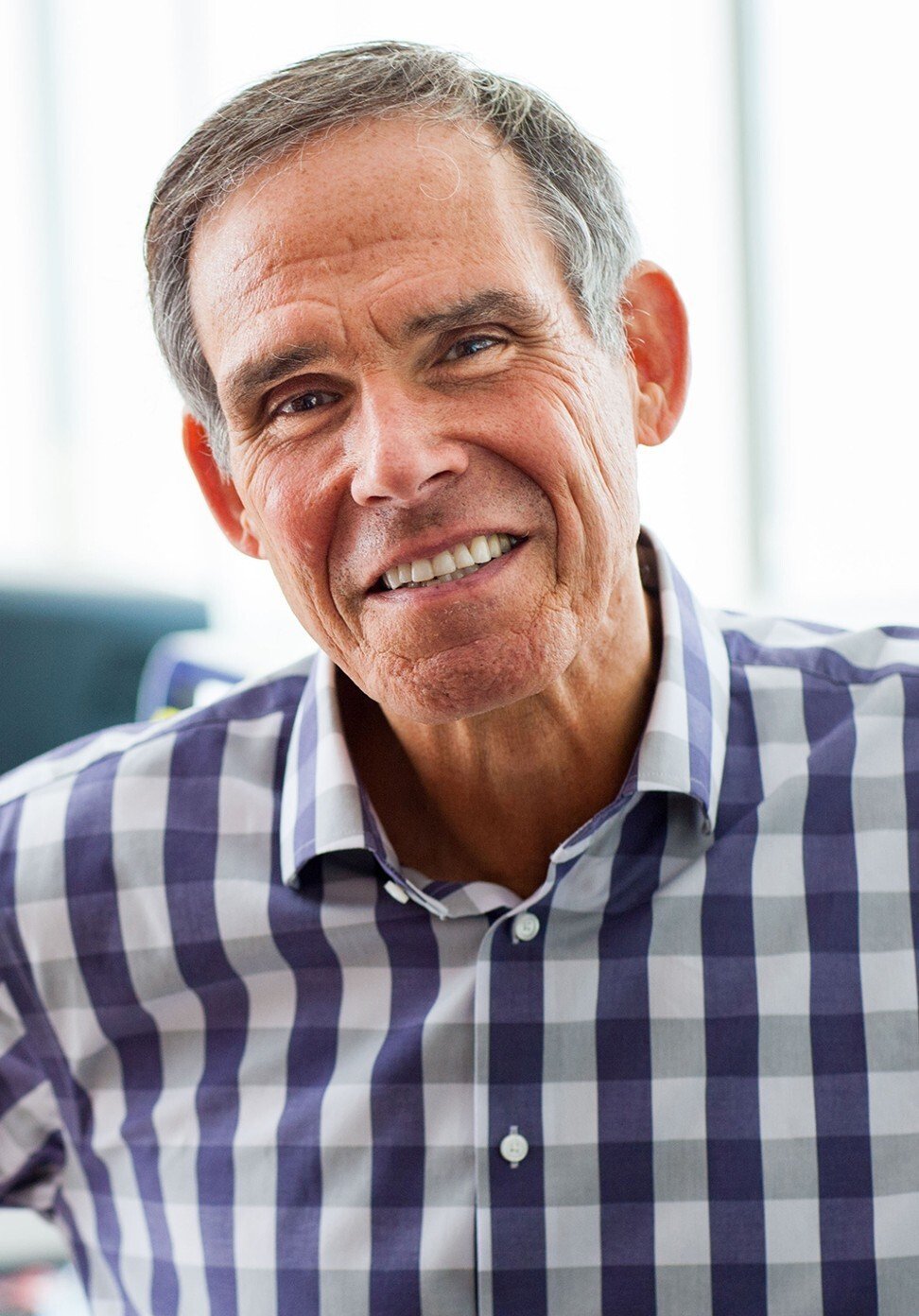

Dr Eric Topol, director and founder of the Scripps Research Translational Institute and executive vice-president of Scripps Research.


The study findings, published in the journal Nature Medicine, are part of a study called Detect – for Digital Engagement & Tracking for Early Control & Treatment. Roughly 30,000 people across the US enrolled between March 25 and June 7, sharing data from their wearable devices and reporting symptoms when they felt sick.

About 3,800 participants reported symptoms that ranged from a stomach ache to a cough to difficulty breathing and a loss of taste and smell. Of those who felt sick, 333 were tested for Covid-19; 54 tested positive and 279 tested negative.

The researchers then tried to predict who would test positive or negative with a statistical model based on self-reported symptoms; it performed about as well as a model based on wearable device data (heart rate, step count and sleep length). But combining the two predicted Covid-19 test results best.

“I see this approach as being more useful on a population level, in terms of seeing more activity in a population over time,” said Dr Chip Schooley, an infectious diseases specialist at the University of California at San Diego, who was not involved in the study.

Topol agrees, noting that researchers could regularly monitor wearable device data and self-reported symptoms to spot Covid-19 outbreaks and tip off public health officials, who could then ramp up community testing and other measures to curtail the spread of the virus.


Dr Chip Schooley is an infectious diseases specialist at the University of California at San Diego.


So far, the United States has struggled to slow the pandemic. More than 9.5 million Americans have been infected with the coronavirus so far and 234,000 have died. The US is now reporting more than one new Covid-19 case each second.

The Detect study is ongoing, with researchers looking to enrol 100,000 participants. To learn more about the study, visit detectstudy.org.

AI Disclaimer: An advanced artificial intelligence (AI) system generated the content of this page on its own. This innovative technology conducts extensive research from a variety of reliable sources, performs rigorous fact-checking and verification, cleans up and balances biased or manipulated content, and presents a minimal factual summary that is just enough yet essential for you to function as an informed and educated citizen. Please keep in mind, however, that this system is an evolving technology, and as a result, the article may contain accidental inaccuracies or errors. We urge you to help us improve our site by reporting any inaccuracies you find using the "Contact Us" link at the bottom of this page. Your helpful feedback helps us improve our system and deliver more precise content. When you find an article of interest here, please look for the full and extensive coverage of this topic in traditional news sources, as they are written by professional journalists that we try to support, not replace. We appreciate your understanding and assistance.
Newsletter

Related Articles

0:00
0:00
Close
Spain and Morocco Trade Blame After 72,000 Migrants Enter Ceuta
AI Is Remaking the US Economy, From GDP Growth to iPhone Prices
Europe’s Heat and Drought Are Now Disrupting Power, Shipping and Tourism
Europe’s Drying Rivers Trigger Power Cuts, Factory Shutdowns and Wildfire Emergencies
Record-Low Danube Forces Nuclear Cuts and Emergency Power Curbs
Danube Drought Forces Hungary’s Paks Nuclear Plant Into Full Shutdown
Ceuta Death Toll Rises as Spain and Europe Clash Over Border Response
Valued at $109 Million: F-35B Fighter Jet Crashes in Southern California
Record-Low Danube Exposes Probable Mammoth Remains in Bulgaria
US Says It Has Carried Out Heavy Strikes on Iran After Attempted Attacks on Its Forces
The AI User Nightmare: Private Claude Conversations Leaked to the Internet
Over 24 Hours in the Air: Qantas Airbus Completes Record-Breaking Test Flight
Massive Wildfires Ravage Southern Europe: Fatalities in Greece and Evacuations Across France, Spain, and Turkey
Nvidia Reportedly Takes Vast Texas Data-Centre Lease to Underwrite AI Expansion
FIFA’s Private-Investment Plan for World Cup Rights Draws European Revolt
Apple Briefly Crosses Five Trillion Dollar Valuation as Investors Retreat From AI Bets
Fresh Heatwave Threatens to Rekindle France’s Historic Wildfire Crisis
Following OpenAI's Cyberattack: 'Most Companies Still Do Not Understand What Is Coming'
OpenAI Sued After ChatGPT Allegedly Discouraged Emergency Care Before Near-Fatal Embolism
Miliband Sets Climate and International Law at Centre of UK Diplomacy
Czech Central Bank Governor Rejects Early Euro Entry and Rate-Cut Pressure
Trump Readies New Tariffs as Temporary Global Levy Nears Expiry
Vivienne Westwood Casts Cicciolina, 74, in Its New Autumn Campaign
Dejavu: Germany’s Military Expansion Reshapes Europe’s Strategic Balance With France
Morgan Stanley Builds a Wall Street Lead in AI Infrastructure Finance
High Prices Push Coffee Drinkers Toward Whole Beans and Home Brewing
Trump Draws Boos and Podium Scrutiny at Spain’s World Cup Triumph
Brilliant move: Péter Magyar Moves to Nominate Chess Grandmaster Judit Polgár as Hungary’s President
Spain Defeats Argentina in Extra Time to Win Second World Cup
Current AI Seeks to Build an Open Global AI Infrastructure Outside Big Tech Control
Germany’s Economic Malaise Reopens the Sunday Shopping Debate
Proposed U.S.-Saudi Nuclear Pact Could Permit Limited Uranium Enrichment Under International Safeguards
Netherlands Declares Water Shortage Emergency After Drought Pushes Rivers to Historic Lows
Why Kentucky Fried Chicken Became KFC—and Why the False Explanations Persist
Ukrainian Drones Strike Wildberries Warehouses Deep Inside Russia
Reported CIA Mission Helped Clear the UAE’s Path to Advanced US AI Chips
Artificial Intelligence Capital Fuels Markets While Governments and Regulators Face Mounting Strategic Tests
China’s Moonshot’s Kimi K3 Narrows the Gap With Anthropic Through Scale, Openness and Lower Cost
The Ledger Will Not Trust on Faith
Trump Administration Pressures Banks to Restrict Financial Access for Undocumented Immigrants
Passenger Bound for Germany Refused to Sit Beside a Woman on a Plane — Then Slapped a Flight Attendant
Ukraine’s Leadership Rift Spills Into the Streets as Protesters Target Army Chief
Ukrainian Drone Barrage Kills Eight and Strikes Russian Logistics Network
The Ten World Cup Finals That Defined Football History
Smartphones Are Getting More Expensive, Sales Are Collapsing, and Even Apple Admits: "Prices Will Rise"
The Monaco Bombing Has Become a Test of Ukraine’s Intelligence Accountability
Leadership Change and Strategic Rivalry Redraw the Political Map
The AI Race Enters Its Infrastructure Era
Britain Nationalises British Steel to Protect Scunthorpe Production and Strategic Supply
French National Assembly Overrides Senate to Pass Historic Assisted-Dying Legislation
×