Who could be the next European Parliament president?
The European Parliament is gearing up for a contested fight over who will lead the EU’s legislative body in the coming years.
A race that was once seen as predetermined is suddenly wide open, upended by a pandemic, internal personnel moves and the recent German election. So now the jockeying has begun ahead of January 17, when MEPs will select their next president for a two-and-a-half-year term.
The people rumored to be in the running range from the well-known current Parliament president, to a top Parliament voice on migration, to an MEP crucial to the EU’s climate change policy.
Whoever wins the top job will be saddled with a difficult task: Holding together an ever-more fractious assembly ahead of the 2024 European Parliament elections. And with Germany’s Social Democrats prevailing in Sunday’s election, the Parliament’s socialist MEPs have new ammunition to argue that their body’s leader should reflect the new reality in Germany, the EU’s largest and most influential country
Thus far, no candidates have officially declared, but the internal maneuvering has already begun.
Here are four candidates being discussed as the possible next president.
David Sassoli: The presidential redux pick
Parliament President David Sassoli’s desire to run for a second term is an open secret within the EU’s legislative body.
Sassoli, an Italian social democrat, unexpectedly became Parliament president in 2019 as part of a broader agreement to dole out top EU jobs. Under the deal, Sassoli was expected to stand aside when his term ended so a conservative could take over.
But Sassoli’s Socialists & Democrats crew doesn’t believe the deal still holds.
It was initially assumed the agreement would hand the presidency to Manfred Weber, leader of the Parliament’s largest group, the center-right European People’s Party. But just weeks ago, Weber ruled himself out, opting instead to pursue a dual-hatted role as both head of the EPP group within Parliament and president of the EPP’s EU-wide umbrella organization.
With Weber out of the picture, the S&D group is arguing the deal is void, saying it was contingent on Weber becoming president, not just anyone from the EPP.
Sassoli, a 65-year-old father of two, is also said to be frustrated that much of his term was overshadowed by the pandemic, forcing him to focus on complex logistical measures to protect MEPs and staff.
Roberto Cuillo, his spokesperson, has refused to comment on the issue.
If Sassoli, a former TV journalist who became an MEP in 2009, decides to make his bid official, he will undoubtedly get support from his S&D group
“Many people asked him to run,” said one S&D MEP, praising Sassoli’s decision to establish focus groups to reflect on Parliament’s future. “He did a great job, especially by making us operative during the pandemic.”
The EPP isn’t buying the S&D reasoning, though, making it tough for Sassoli to get the group’s backing. EPP MEPs insist the S&D has agreed to pass the torch to the EPP — end of story.
Sassoli would also struggle to get support from the Parliament’s smaller groups, especially the liberals, some of whom have mixed feelings about the Italian politician. One liberal MEP felt, for example, that Sassoli had “not defended the Parliament enough” in a fight with the European Commission over implementing a tool that lets the EU withhold funds from countries that don’t meet rule-of-law criteria.
Some liberals also fear that if they support Sassoli now, they might not get EPP support for the re-election of liberal European Council President Charles Michel.
Roberta Metsola: The consensus choice
Metsola may not have publicly declared her candidacy, but her Twitter account speaks for itself.
A former lawyer and graduate of the College of Europe, Metsola, 42, is a classic product of the Brussels bubble. She served as a legal attaché at the Maltese EU office from 2004 to 2012, and as a legal advisor to Catherine Ashton, the EU’s former top diplomat. She’s fluent in Italian and Finnish, having married a Finn, and has four children.
First elected to the European Parliament in 2013, Metsola became one of Malta’s first female MEPs as well as one of the EPP and Parliament’s point people on migration.
Metsola would be an acceptable choice for several groups in Parliament, including those pushing for a woman to lead the legislative body.
“Informally, we would support her,” said one official with the liberal Renew group. Metsola even recently met with Renew leader Dacian Cioloș to talk about mid-term elections.
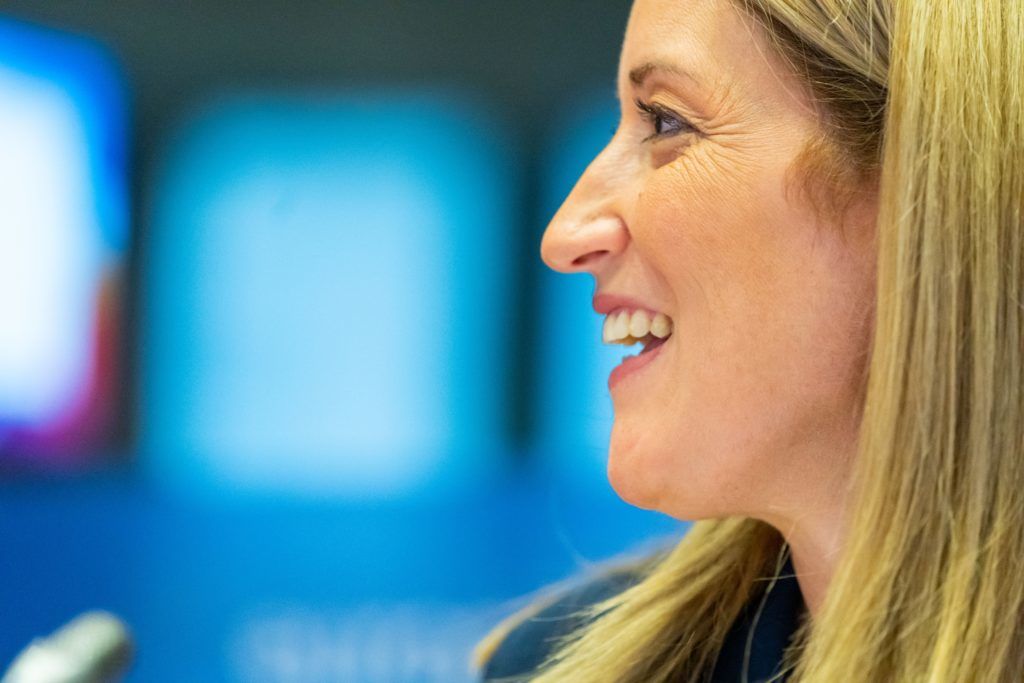 Roberta Metsola
Yet several MEPs, including some in her EPP group, conceded that having a president from Malta — a country with only six MEPs — is a disadvantage. Parliament presidents have often come from the EU’s large countries like Germany or France, or from one of the bloc’s founding countries like The Netherlands.
Speaking to the Times of Malta, Metsola didn’t rule out her candidacy.
“I am speaking to colleagues within the [EPP] group to listen to what they want from the person leading this institution and to discuss the vision for Europe over the next years,” she said.
The EPP has said it will submit its candidate on November 24.
Esther de Lange: The veteran option
A longtime operative for the Dutch Christian Democrat party, CDA, de Lange, 46, was elected as an MEP in 2007, making her the most senior person being floated for the presidency.
As a member of the Parliament’s environment committee, she was involved in drafting the EPP’s climate change position, which critics lambasted as overly ambiguous. She also provided Ursula von der Leyen with her punchiest line — “This is Europe’s man on the moon moment” — when the European Commission president presented Parliament with her Green Deal, a proposal to make the bloc climate neutral by 2050.
De Lange’s name has often come up as a possible replacement for Weber atop the EPP. And like Metsola, de Lange is one of the EPP’s most influential female MEPs.
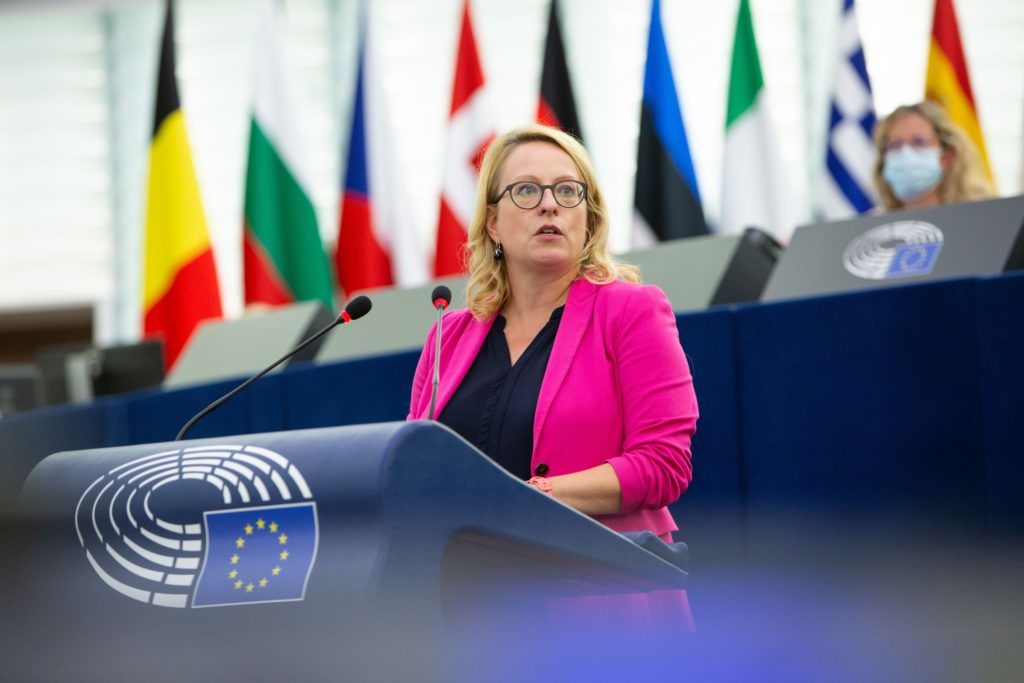 Esther de Lange
“She is definitely trusted in the group, but if you really want a safe vote, if you want a majority, Roberta would be a safer bet,” said one EPP official.
As a single mother, one of de Lange’s fights in the Parliament has been to obtain parental leave for MEPs.
But de Lange might struggle to get support from the center-left MEPs, some of whom perceive her as too politicized, embodying the pro-austerity line of Europe’s northern countries. De Lange also comes from a small conservative party that is a minor coalition partner in The Netherlands’ ruling government.
Esteban González Pons: The Spanish selection
A former Spanish senator from Valencia and one-time operative for Spain’s conservative Popular Party (PP), González Pons has long been the EPP group’s No. 2 behind Weber.
Elected to the European Parliament in 2014, Gonzáles Pons is known for his speaking talents. His direct and evocative warning to the British that they were “wrong” to leave the EU attracted more than 32,000 viewers on YouTube — a record for MEPs not named Guy Verhofstadt.
Yet the 57-year-old father of three has sent signals he is not seeking the presidency.
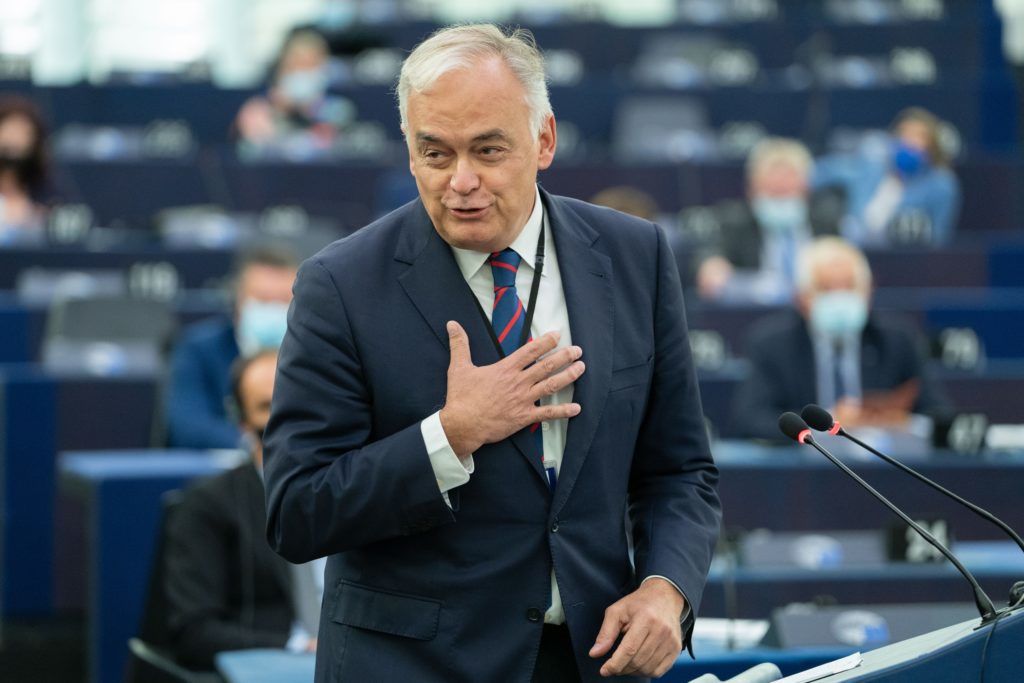 Esteban González Pons
González Pons told the Spanish press recently the EPP must find a “consensus candidate,” implying that it would not be him. And asked about his personal ambitions at a recent EPP group meeting in Rome, González Pons did not rule out an eventual presidential bid but told POLITICO now was “not the right moment.”
There is also chatter within Parliament that González Pons doesn’t have the backing of his home party’s leader, PP chief Pablo Casado, to seek the presidency. González Pons is viewed as more moderate than Casado.
However, some Parliament officials also deny that the Spanish MEP has withdrawn from the race.
He unofficially took over from Weber after the German MEP temporarily left the Parliament for health reasons following a failed bid to become Commission president. If Weber had won the Commission presidency, González Pons would have become EPP group leader.
Still, if González Pons decided to run, his biggest obstacle might be MEP Iratxe Garcia, his Spanish socialist rival who leads the Parliament’s S&D group.
Garcia has made it clear she would not back any candidate from the PP.
“We need to see in the PP a behavior of loyalty and cooperation that for now does not exist,” Garcia recently told the Spanish press.