

What's a PM to do when even kids joke about his future?
MPs can't skulk, plotting, in Westminster's corridors at weekends. But for Boris Johnson, the time his colleagues spend back in their constituencies could prove even worse.
One senior MP described how on Friday, during a standard school visit, he was asked by a group of nine-year-olds whether or not the prime minister was going to resign, and then was catcalled by teenage pupils about Boris Johnson's behaviour.
As much as the prime minister's seemingly dwindling number of backers may wish this saga was merely a preoccupation of his many enemies or the press, the question of whether he stays or goes has become a national conversation.
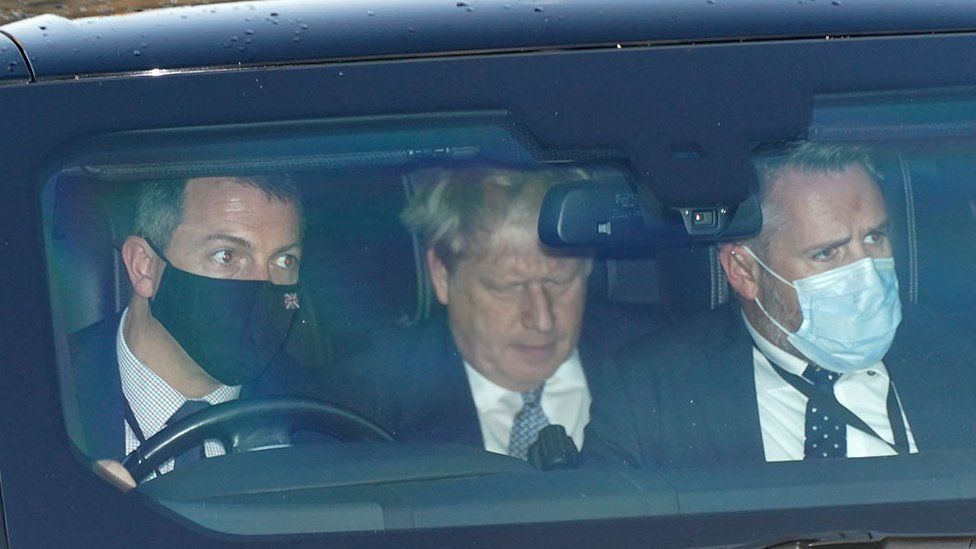 Boris Johnson is driven away from Parliament on Wednesday
On Wednesday, presenters on cosy daytime TV sofas crossed live to the Commons for PMQs. Music radio presenters challenged each other to race to the Co-op on London's Strand to fill a carry-on case with a carry-out, after the latest claims about No 10 staff filling a suitcase with booze.
One minister admits there is a "lot of discontent" among local party associations - which MPs will hear in person this weekend. And many report their email inboxes have been filling up with party members and constituents seething about what's been going on.
The prime minister's future is now the subject of playground teasing. As the MP who had that awkward conversation with the nine-year-olds suggested, if many of his colleagues have similar experiences, "Monday morning could be a very difficult moment".
Another senior MP, who has already been told by their local party chairman that the prime minister should quit, predicted that MPs will hear so much concern this weekend, "it could all be over on Monday".
But hang on. There is nothing automatic about what happens next.
The consensus among MPs right now seems to be at least to wait until the conclusions of Sue Gray's report are made public.
One cabinet minister who says "there is no getting away from the situation - it is very bad", also cautions: "It is very hard to get rid of a leader who doesn't want to go." The minister says Johnson will "want to go on and on and on" - whatever the findings of the report.
Another senior cabinet minister believes that while MPs are angry, "they are not at the stage when they want to get rid of him". Importantly, too, the cabinet itself does not seem to be taking a collective view about what to do.
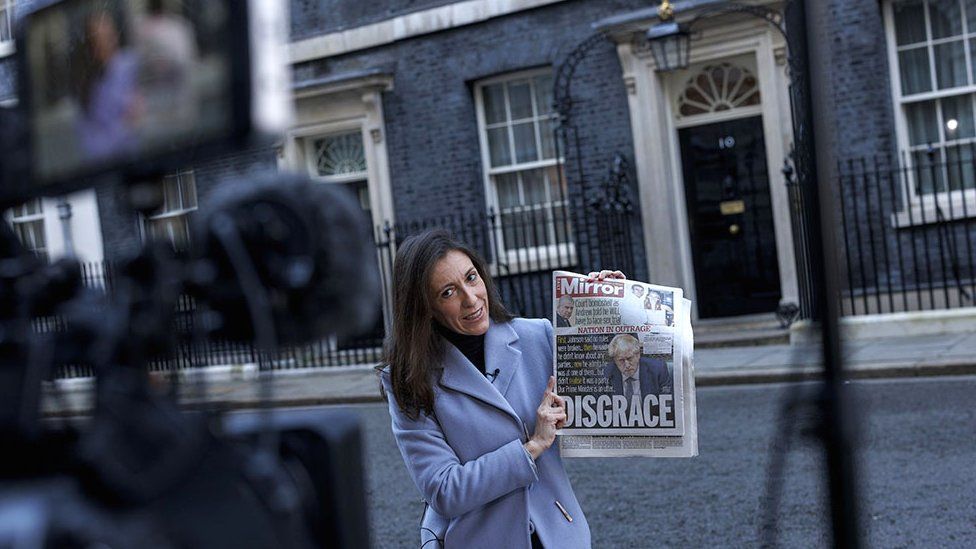
The mood among ministers is that the situation is pretty desperate. But they don't seem to be trying to take concerted action together, either, to find a way out.
For one member of the cabinet, that's in contrast with memories they have of regular discussions about how to manage the political horror during the worst days of Theresa May's premiership. This may be in part down to the fact we are now in very different political times.
There aren't bonds between groups at the most influential table in the land in the same way - no Brexiteer band determined to get their way whatever the cost, and no group like the one that was determined to protect Mrs May.
There is, however, an acceptance that Boris Johnson faces a moment of real peril and has to change. One says: "A lot of people say he has three months to significantly raise his game."
The question of whether the prime minister himself believes he has to change, or can, is an argument for another day.
The precise wording of the Sue Gray report will be vital in all of this. Will she criticise the overall culture in No 10, or point to individuals or blame the prime minister himself?
Remember, the report is official and Sue Gray's reputation is fearsome, but that's not the same as being an outsider. She is a senior government employee, not an independent arbiter. That's not to suggest that she will pull any punches, but it would be quite something if she were to suggest that Boris Johnson himself had directly broken the rules.
Whatever the specifics of her conclusions, the position will still be difficult. And some of the rising generation of ministers not yet in cabinet may take a harsher view than those already at the top table.
Sources suggest there are conversations taking place among the lower ranks, those who see themselves as the future of the party, about the possibility of taking action. The idea has been mooted that some of them may go to the prime minister once the report is out and say that either he goes, or they do instead.
This doesn't seem to be a concrete plan, but an apparent lack of organisation in cabinet doesn't mean that there's no threat from others on the payroll. Johnson's ministers may not all be prepared to tolerate many more weeks like this.
It's on the backbenches where MPs are far more open about the action they may take. One former minister, not a usual troublemaker, predicted confidently there will be enough letters calling for a vote of no confidence to bring about a contest next month.
Another, who backed Boris Johnson originally, told me they will call for him to resign when the Gray report is published and expect enough others will agree to trigger a fight for him to stay in the job.
But it is one thing threatening all of this privately right now. It's another to follow through.
Another backbencher told me they were pleading with colleagues to remember the turmoil that changing a leader creates, saying: "We might not be that far from an election - I just wish everyone would remember that."
Another told the BBC "I can see no scenario where he's the PM going into the next election" but "it's not the right time" to act.
The pandemic is still with us. There is growing pressure on family finances. Yet the levels of frustration with No 10 are sky-high, in part because the fiasco is seen as being entirely self-inflicted.
The behaviour itself, behind closed doors, is almost unbelievable to many. The handling of it a product of what's often seen as Johnson's credo - never apologise, never explain - which means rather than confronting the claims at the start and coming clean, allegations have been left to fester and grow, resulting yesterday in the most extraordinary apology, even, to the Queen.
It's not at all clear how No 10 believes they can get through this crisis.
Regular briefings to the press this week have been surreal and unproductive. I'm told the mood inside the building is terrible, one source telling me staff are unsure if colleagues are telling each other the truth.
Some, it's said, are still holding on to the conviction that what happened can be explained away that the gatherings were "events" not parties, and that the technicalities of the rules may somehow see them through.
The mood outside Downing Street is rather different, with disbelief that, as one cabinet minister suggested, "Boris has persuaded himself he's the victim here".
There was "consternation" when the prime minister went to talk to MPs moments after his Commons apology and - as one of them described to me - told them "he was bravely taking the blame for other people's mistakes".
The fate of Boris Johnson is certainly not yet sealed. The details of the Gray report matter. The bravado of MPs can melt away. The absence of an obvious, ready-to-go rival may protect him (although there are plenty who are lining up to have a go).
The prime minister may be able to rediscover what one of his colleagues describes as "his magic". It could prove in time that this was simply an appalling bout of the mid-term blues. And those who know him well think the chance of Boris Johnson concluding it's best to step away are extremely slim.
But with each new day of allegations and embarrassment it's more likely that the decision could be taken out of his hands.