Budapest Post

Cum Deo pro Patria et Libertate
Budapest, Europe and world news

Russia Desperately Imported Iranian Drones. Then, They Malfunctioned in Battle

Russia Desperately Imported Iranian Drones. Then, They Malfunctioned in Battle

Moscow has reportedly lost nearly 1,000 drones in six months of war, forcing it to import Iranian drones.

Russia’s first shipment of Iranian military drones is a mixed bag, with some of the drones malfunctioning just weeks after delivery. The drones were pressed into service after heavy losses depleted Moscow’s own fleet. The deal underscores how vital Russia believes drones to be in modern warfare—and how far it’s willing to go to gain its battlefield drone capabilities back.
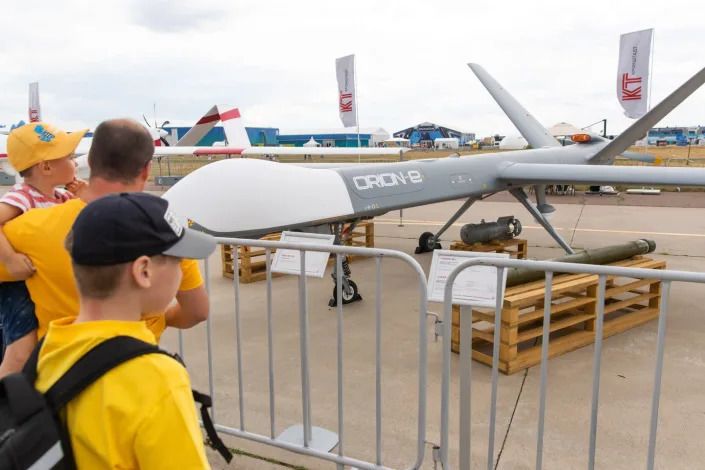

At the start of the war, Russia had a formidable drone arsenal. Drones were a key part of the Russian Ground Forces’ “reconnaissance-strike complex” doctrine, which calls for drones to quickly find targets for artillery strikes. The Russian arsenal includes low-altitude intelligence/surveillance/reconnaissance drones like the Orlan-10, Orlan-30, and Zastava, and larger medium-altitude, long-endurance (MALE) reconnaissance drones such as Forpost-R and Orion.

Six months of war has ground the arsenal down. An independent study of images of Russian equipment losses has concluded the military has lost at least 5,362 tanks, aircraft, armored vehicles, howitzers, trucks, and drones, including 120 military drones. The Ukrainian military goes even further, claiming it has destroyed 847 drones. The life of a drone is hazardous and short, with drones typically sent to places deemed too risky for humans. They’re typically lost through air defense fire, small arms fire, operator error, and accidental crashes. Drones are often considered “semi-attritable,” meaning armies expect to lose them at a higher rate than crewed aircraft as the price of doing business.
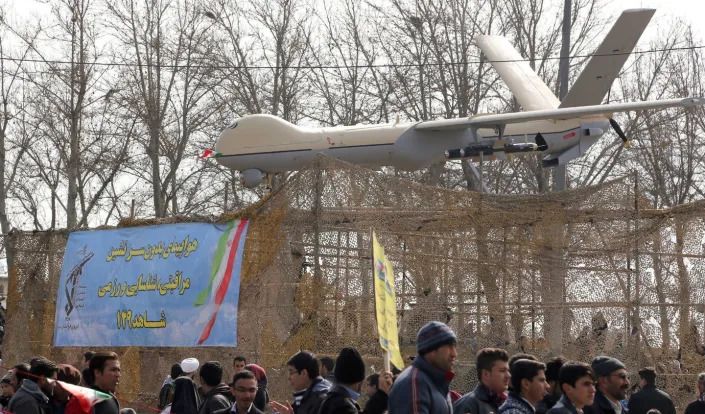

Despite the losses, Russia is anxious to make up for its losses. The Washington Post reports that, after several months of negotiations between Russian and Iranian officials, Russia agreed to replenish its ranks by buying a large consignment of homemade Iranian drones. It purchased Mohajer-6, Shahed-129 (pictured above), and Shahed-191 drones, the rough equivalent of Forpost-R and Orion MALE drones. It’s a particularly ironic situation as Russia has for decades supplied Iran with advanced weaponry.

“Russia needs more drones to support the war effort, and clearly it’s not building enough at home. That’s a key challenge for drone warfare,” Zachary Kallenborn, a weapons of mass destruction analyst with the Schar School of Policy and Government at George Mason University in Fairfax, Virginia, tells Popular Mechanics. “Drones are cheap and expendable. But what happens when the drones run out?”

Russia’s drone crunch has come at a particularly dangerous time. The United States and NATO have provided the Armed Forces of Ukraine with a total of 28 long-range multiple launch rocket systems, including the truck-based M142 HIMARS and the M270 MLRS. The rocket launchers are wreaking havoc far behind Russian lines, destroying ammunition depots, air defense systems, and headquarters locations, laying the groundwork for the Ukrainian Army offensive in Kherson. Without drones, Russia has little chance of locating and destroying the rocket-launcher vehicles.
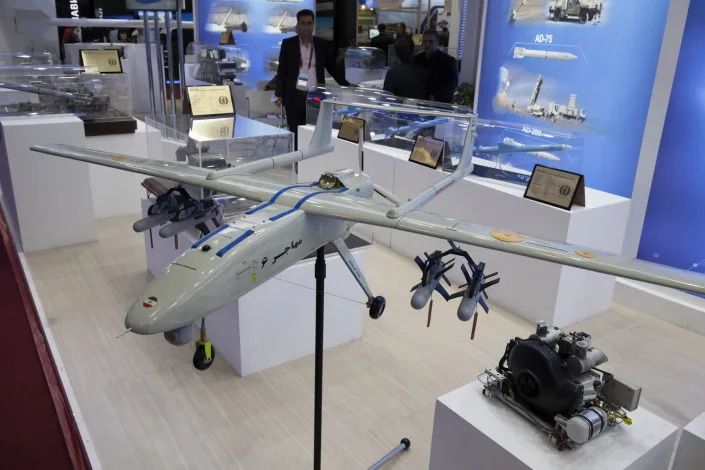

Iran is an unlikely supplier for Russia’s war machine, but no other country that builds drones will sell them to Russia due to internal policy or the weight of world opinion that overwhelmingly blames Russia for the war. “Iran has supplied drones to Middle Eastern allies for years,” Kallenborn says. “Those drones have been used in combat to cause significant harm. The Abqaiq-Khurais (drone) attack on Saudi oil processing facilities caused a 5 percent cut in global oil production. That experience translates into better equipment, and tactics that would be of great use to the Russians.”

Unfortunately for Russia, Iran’s drones are apparently not without their problems. The Washington Post reports that several have malfunctioned in Ukraine, and that “the Russians are not satisfied.” Whether these problems can be fixed in time to be of use remains to be seen.

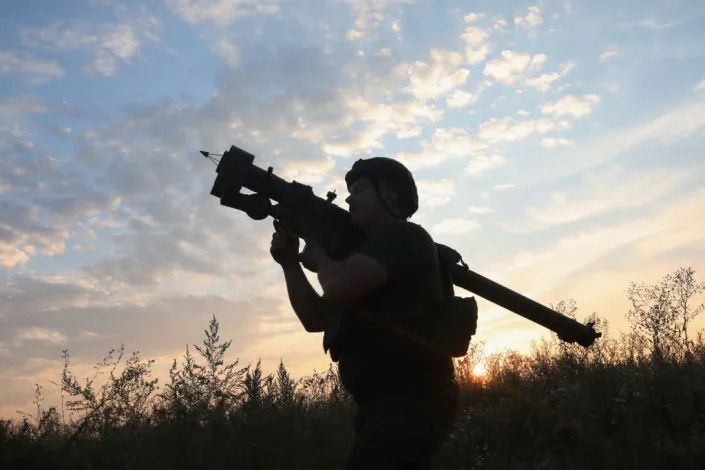
There’s also the question of how long a non-stealthy drone flying at 10,000 feet can survive over Ukraine. Ukraine’s air defense network is largely intact, and it is evidently responsible for downing Russia’s homegrown MALE drones. Ukraine’s air defenses are also set to become deadlier than ever, with the imminent deployment of NATO-supplied NASAMS and IRIS-T missile systems.

Russia’s purchase of Iranian drones makes clear that even Moscow believes drones have become an indispensable asset in modern warfare. It also makes clear that Russia’s industrial capacity is not capable of replenishing losses. Finally, it tells us international sanctions are crippling its ability to buy good drones, to the point where it must settle for second-rate Iranian drones. In Ukraine, Russia is between a drone and a hard place, and it won’t get easier for Moscow any time soon.

AI Disclaimer: An advanced artificial intelligence (AI) system generated the content of this page on its own. This innovative technology conducts extensive research from a variety of reliable sources, performs rigorous fact-checking and verification, cleans up and balances biased or manipulated content, and presents a minimal factual summary that is just enough yet essential for you to function as an informed and educated citizen. Please keep in mind, however, that this system is an evolving technology, and as a result, the article may contain accidental inaccuracies or errors. We urge you to help us improve our site by reporting any inaccuracies you find using the "Contact Us" link at the bottom of this page. Your helpful feedback helps us improve our system and deliver more precise content. When you find an article of interest here, please look for the full and extensive coverage of this topic in traditional news sources, as they are written by professional journalists that we try to support, not replace. We appreciate your understanding and assistance.
Newsletter

Related Articles

0:00
0:00
Close
Japanese Technology Firm Fujitsu Launches Advanced Artificial Intelligence Tool for Corporate Disclosures
South Africa Officially Launches Nationwide Campaign for Highly Contested Local Government Elections
United Kingdom Commits Additional Funding for Unexploded Ordnance Clearance in Laos
Singapore Announces Stringent New Greenhouse Gas Regulations for Commercial Cooling Systems
Cambodia and Thailand Hold High-Level Border Security Talks at United Nations Headquarters
Myanmar Military Government and China Sign Major Agreement to Upgrade Media and Cultural Cooperation
Knife Attack at Swiss Train Station Leaves Three Injured in Suspected Act of Domestic Terrorism
Transnational Extortion Gang Threatens Canadian Police With Army of One Thousand Armed Operatives
Australia Imposes Forty-Two-Day Quarantine on Cruise Ship Passengers Following Deadly Hantavirus Outbreak
International Monetary Fund Unlocks Seven Hundred Million United States Dollars for Sri Lanka Following Economic Reforms
Australia Launches Record One Point Four Billion Dollar Lawsuit Against Chemical Giant 3M Over Contamination
China and Canada Foreign Ministers Meet in Ottawa in Effort to Stabilize Strained Diplomatic Ties
Indonesia Demands Urgent United Nations Security Council Reform Amid Escalating Global Conflicts
Extreme Weather Patterns Trigger Severe Drought in Madagascar and Destructive Flooding in East Africa
Indian State of Karnataka Faces Political Upheaval as Chief Minister Siddaramaiah Abruptly Resigns
Philippines and Japan Reaffirm Defense Ties as Crucial for Indo-Pacific Regional Stability
Norway Joins French Nuclear Deterrence Initiative in Major Shift for European Security Architecture
Global Critical Mineral Alliances Expand as Western Nations Move to Counter Chinese Supply Dominance
United States Imposes Fifty Percent Tariffs on Mexican Steel and Aluminum Ahead of Trade Pact Review
European Union and China Head Toward Major Trade Conflict Over Clean Technology Exports
United States Economic Growth Severely Downgraded to One Point Six Percent as Stagflation Fears Mount
World Health Organization Warns Central African Ebola Epidemic is Outpacing Containment Efforts
United States Treasury Department Conditions Sanctions Relief on Reopening of the Strait of Hormuz
Iranian Air Defenses Intercept and Destroy United States Military Drone Over Bushehr Province
Iranian Armed Forces Launch Ballistic Missiles Toward Unspecified Targets Prompting Regional Condemnation
United Nations Secretary-General Warns Global Order Facing Highest Level of Conflict Since 1945
Israel Issues Sweeping Evacuation Orders in Southern Lebanon Amid Intensified Hezbollah Conflict
Russia Announces Systemic Military Strikes Targeting Ukrainian Defense and Energy Infrastructure
United States and Iranian Negotiators Reach Draft Agreement to Extend Ceasefire and Resume Nuclear Talks
United Nations Security Council Deeply Divided Over United States Capture of Venezuelan President
US and Iran Exchange Direct Military Strikes Amid Fragile Gulf Ceasefire
World Health Organization Warns of Catastrophic Ebola Outbreak in DR Congo
Russia Threatens New Wave of Strikes on Ukrainian Infrastructure and Embassies
Scientists Warn Atlantic Ocean Currents Could Collapse Faster Than Projected
Anthropic Reaches $900 Billion Valuation in Historic AI Funding Round
Washington Imposes Crippling Sanctions on Iranian Maritime Authority
Japan and the Philippines Initiate Strategic Intelligence-Sharing Pact
Microsoft Deploys Autonomous Computer-Using AI Agents to Global Markets
Anthropic Secures $45 Billion Compute Infrastructure Agreement With SpaceX
U.S. Director of National Intelligence Resigns Amid Administration Shakeup
Micron Technology Crosses Trillion-Dollar Valuation Amid Unprecedented Hardware Demand
Canada and Germany Finalize Historic Long-Term LNG Export Agreement
China Expands International Travel Restrictions on Domestic AI Researchers
Japan Approves Sweeping Overhaul of National Intelligence Apparatus
Global Airlines Scramble Logistics as Middle East Airspace Remains Fractured
Japan's Naphtha Imports Plunge 47 Percent Amid Strait of Hormuz Closure
Global Crude Prices Retreat Below $96 as Gulf Tensions Momentarily Ease
Generative AI Outperforms Human Baselines in Landmark Global Creativity Study
NASA Partners With Private Aerospace to Unveil Permanent Lunar Base Architecture
South Korean Equity Markets Surge on Next-Generation Memory Chip Frenzy
×