Budapest Post

Cum Deo pro Patria et Libertate
Budapest, Europe and world news

'Holy cow ... are you kidding me?' Scientists stunned to see plants grow in soil from the moon

'Holy cow ... are you kidding me?' Scientists stunned to see plants grow in soil from the moon

Researchers had no idea if anything would sprout in harsh moon dirt and wanted to see if it could be used to grow food by the next generation of lunar explorers. The results stunned them.

For the first time, scientists have grown plants in soil from the moon collected by NASA's Apollo astronauts.

Researchers had no idea if anything would sprout in the harsh moon dirt and wanted to see if it could be used to grow food by the next generation of lunar explorers. The results stunned them.

"Holy cow. Plants actually grow in lunar stuff. Are you kidding me?" said Robert Ferl of the University of Florida's Institute of Food and Agricultural Sciences.

Ferl and his colleagues planted thale cress — a small annual weed related to mustard and cabbage — in moon soil returned by Apollo 11's Neil Armstrong and Buzz Aldrin, and other moonwalkers. The good news: All of the seeds sprouted.

The downside was that after the first week, the coarseness and other properties of the lunar soil stressed the small, flowering weeds so much that they grew more slowly than seedlings planted in fake moon dirt from Earth. Most of the moon plants ended up stunted.
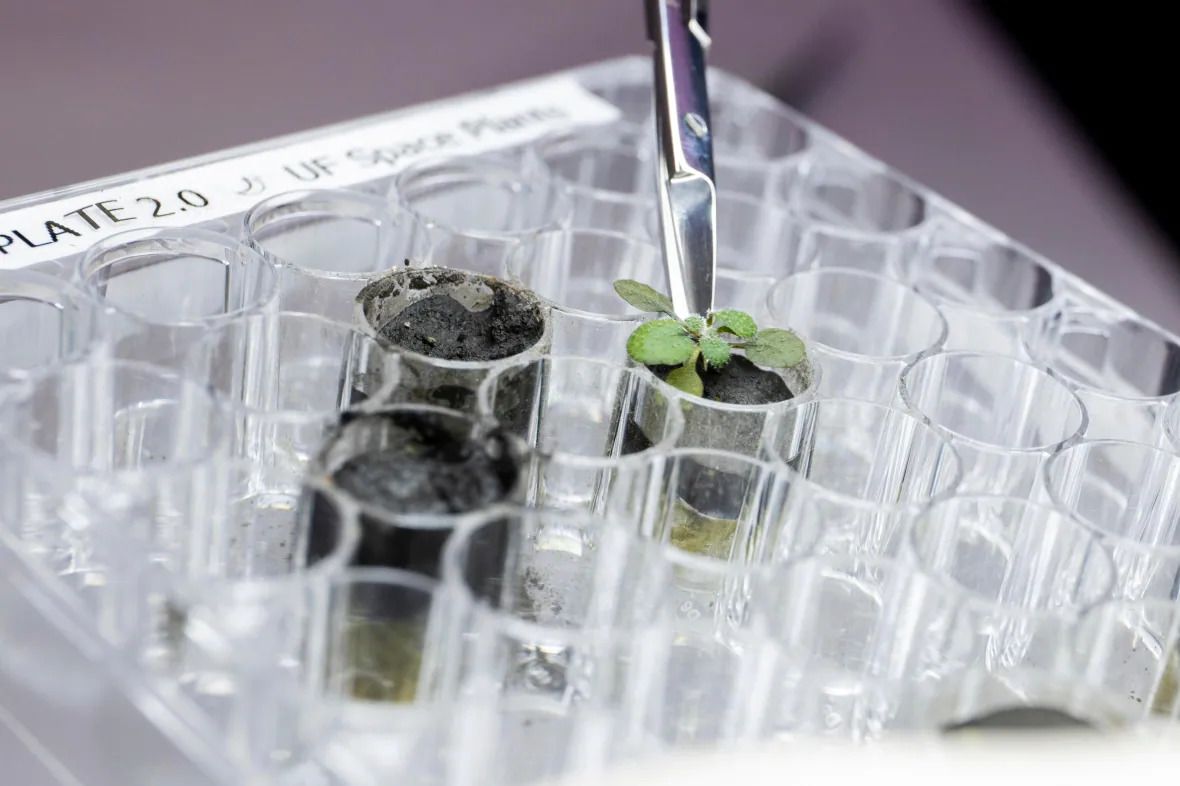
For the first time, scientists have used lunar soil collected by long-ago moonwalkers to grow plants, with results promising enough that NASA and others already are envisioning hothouses on the moon for the next generation of lunar explorers.


Results were published Thursday in the journal Communications Biology.

Soil exposed to punishing conditions


The longer the soil was exposed to punishing cosmic radiation and solar wind on the moon, the worse the plants seemed to do. The Apollo 11 samples — exposed a couple billion years longer to the elements because of the Sea of Tranquility's older surface — were the least conducive for growth, according to scientists.

"This is a big step forward to know that you can grow plants," said Simon Gilroy, a space plant biologist at the University of Wisconsin-Madison, who had no role in the study. "The real next step is to go and do it on the surface of the moon."

Moon dirt is full of tiny glass fragments from micrometeorite impacts that got everywhere in the Apollo lunar landers and wore down the moonwalkers' spacesuits.

One solution might be to use younger geologic spots on the moon, like lava flows, for digging up planting soil. The environment also could be tweaked, altering the nutrient mixture or adjusting the artificial lighting.

Only 382 kilograms of moon rocks and soil were brought back by six Apollo crews. Some of the earliest moon dust was sprinkled on plants under quarantine with the Apollo astronauts in Houston after returning from the moon.
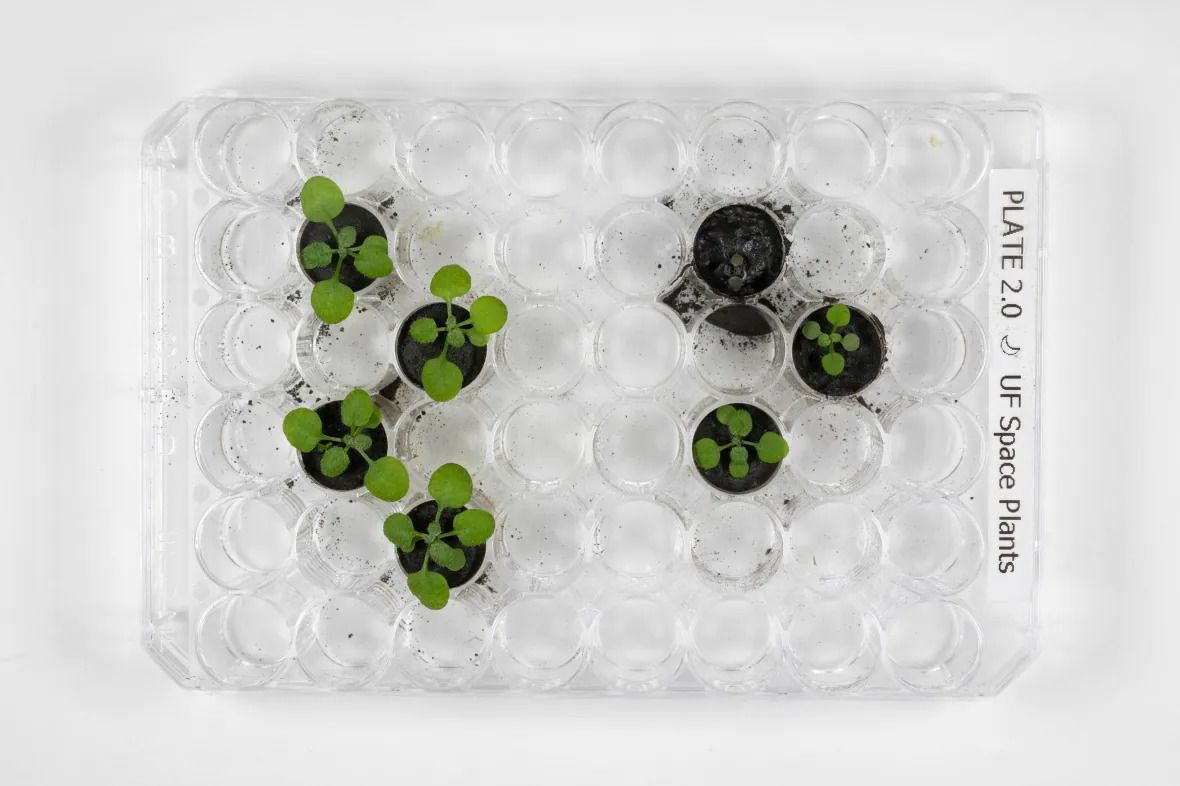
Another 2021 photo provided by the University of Florida Institute of Food and Agricultural Sciences shows the differences between thale cress plants grown in volcanic ash from Earth, which had a similar particle size and mineral composition to lunar soil, left, compared with those grown in the lunar soil, right, after 16 days.


Another 2021 photo provided by the University of Florida Institute of Food and Agricultural Sciences shows the differences between thale cress plants grown in volcanic ash from Earth, which had a similar particle size and mineral composition to lunar soil, left, compared with those grown in the lunar soil, right, after 16 days. (Tyler Jones/UF/IFAS/The Associated Press)

Most of the lunar stash remained locked away, forcing researchers to experiment with simulated soil made of volcanic ash on Earth. NASA finally doled out 12 grams to the University of Florida researchers early last year, and the long-awaited planting took place last May in a lab.

NASA said the timing for such an experiment was finally right, with the space agency looking to put astronauts back on the moon in a few years.

The ideal situation would be for future astronauts to tap into the endless supply of available local dirt for indoor planting versus setting up a hydroponic, or all-water, system, scientists said.

"The fact that anything grew means that we have a really good starting point, and now the question is how do we optimize and improve," said Sharmila Bhattacharya, NASA's program scientist for space biology,

The Florida scientists hope to recycle their lunar soil later this year, planting more thale cress before possibly moving on to other vegetation.

AI Disclaimer: An advanced artificial intelligence (AI) system generated the content of this page on its own. This innovative technology conducts extensive research from a variety of reliable sources, performs rigorous fact-checking and verification, cleans up and balances biased or manipulated content, and presents a minimal factual summary that is just enough yet essential for you to function as an informed and educated citizen. Please keep in mind, however, that this system is an evolving technology, and as a result, the article may contain accidental inaccuracies or errors. We urge you to help us improve our site by reporting any inaccuracies you find using the "Contact Us" link at the bottom of this page. Your helpful feedback helps us improve our system and deliver more precise content. When you find an article of interest here, please look for the full and extensive coverage of this topic in traditional news sources, as they are written by professional journalists that we try to support, not replace. We appreciate your understanding and assistance.
Newsletter

Related Articles

0:00
0:00
Close
Japanese Technology Firm Fujitsu Launches Advanced Artificial Intelligence Tool for Corporate Disclosures
South Africa Officially Launches Nationwide Campaign for Highly Contested Local Government Elections
United Kingdom Commits Additional Funding for Unexploded Ordnance Clearance in Laos
Singapore Announces Stringent New Greenhouse Gas Regulations for Commercial Cooling Systems
Cambodia and Thailand Hold High-Level Border Security Talks at United Nations Headquarters
Myanmar Military Government and China Sign Major Agreement to Upgrade Media and Cultural Cooperation
Knife Attack at Swiss Train Station Leaves Three Injured in Suspected Act of Domestic Terrorism
Transnational Extortion Gang Threatens Canadian Police With Army of One Thousand Armed Operatives
Australia Imposes Forty-Two-Day Quarantine on Cruise Ship Passengers Following Deadly Hantavirus Outbreak
International Monetary Fund Unlocks Seven Hundred Million United States Dollars for Sri Lanka Following Economic Reforms
Australia Launches Record One Point Four Billion Dollar Lawsuit Against Chemical Giant 3M Over Contamination
China and Canada Foreign Ministers Meet in Ottawa in Effort to Stabilize Strained Diplomatic Ties
Indonesia Demands Urgent United Nations Security Council Reform Amid Escalating Global Conflicts
Extreme Weather Patterns Trigger Severe Drought in Madagascar and Destructive Flooding in East Africa
Indian State of Karnataka Faces Political Upheaval as Chief Minister Siddaramaiah Abruptly Resigns
Philippines and Japan Reaffirm Defense Ties as Crucial for Indo-Pacific Regional Stability
Norway Joins French Nuclear Deterrence Initiative in Major Shift for European Security Architecture
Global Critical Mineral Alliances Expand as Western Nations Move to Counter Chinese Supply Dominance
United States Imposes Fifty Percent Tariffs on Mexican Steel and Aluminum Ahead of Trade Pact Review
European Union and China Head Toward Major Trade Conflict Over Clean Technology Exports
United States Economic Growth Severely Downgraded to One Point Six Percent as Stagflation Fears Mount
World Health Organization Warns Central African Ebola Epidemic is Outpacing Containment Efforts
United States Treasury Department Conditions Sanctions Relief on Reopening of the Strait of Hormuz
Iranian Air Defenses Intercept and Destroy United States Military Drone Over Bushehr Province
Iranian Armed Forces Launch Ballistic Missiles Toward Unspecified Targets Prompting Regional Condemnation
United Nations Secretary-General Warns Global Order Facing Highest Level of Conflict Since 1945
Israel Issues Sweeping Evacuation Orders in Southern Lebanon Amid Intensified Hezbollah Conflict
Russia Announces Systemic Military Strikes Targeting Ukrainian Defense and Energy Infrastructure
United States and Iranian Negotiators Reach Draft Agreement to Extend Ceasefire and Resume Nuclear Talks
United Nations Security Council Deeply Divided Over United States Capture of Venezuelan President
US and Iran Exchange Direct Military Strikes Amid Fragile Gulf Ceasefire
World Health Organization Warns of Catastrophic Ebola Outbreak in DR Congo
Russia Threatens New Wave of Strikes on Ukrainian Infrastructure and Embassies
Scientists Warn Atlantic Ocean Currents Could Collapse Faster Than Projected
Anthropic Reaches $900 Billion Valuation in Historic AI Funding Round
Washington Imposes Crippling Sanctions on Iranian Maritime Authority
Japan and the Philippines Initiate Strategic Intelligence-Sharing Pact
Microsoft Deploys Autonomous Computer-Using AI Agents to Global Markets
Anthropic Secures $45 Billion Compute Infrastructure Agreement With SpaceX
U.S. Director of National Intelligence Resigns Amid Administration Shakeup
Micron Technology Crosses Trillion-Dollar Valuation Amid Unprecedented Hardware Demand
Canada and Germany Finalize Historic Long-Term LNG Export Agreement
China Expands International Travel Restrictions on Domestic AI Researchers
Japan Approves Sweeping Overhaul of National Intelligence Apparatus
Global Airlines Scramble Logistics as Middle East Airspace Remains Fractured
Japan's Naphtha Imports Plunge 47 Percent Amid Strait of Hormuz Closure
Global Crude Prices Retreat Below $96 as Gulf Tensions Momentarily Ease
Generative AI Outperforms Human Baselines in Landmark Global Creativity Study
NASA Partners With Private Aerospace to Unveil Permanent Lunar Base Architecture
South Korean Equity Markets Surge on Next-Generation Memory Chip Frenzy
×