Hungary Faces High Costs in Reducing Dependence on Russian Oil
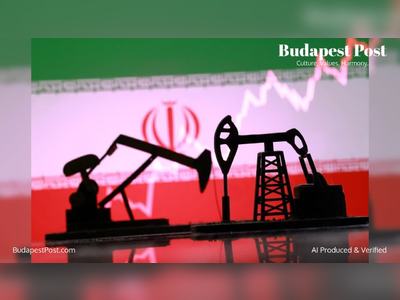
The MOL Group's CEO estimates that Hungary's transition away from Russian oil could cost between 175 and 210 billion forints annually.
Hungary, along with other Eastern European countries, is facing significant challenges in reducing its reliance on Russian oil, a task deemed more complex than for Western European nations that have access to maritime shipping.
In an interview, Zsolt Hernádi, CEO of the MOL Group, indicated that Hungary’s dependence on pipeline transportation hinders the transition to alternative oil supply routes.
The MOL Group has improved its operational efficiency in recent months, with increased production and refinery utilization, despite a deteriorating external environment.
Several countries, including Austria, have reported a decline in fuel consumption, adversely affecting regional oil companies.
Hernádi noted that although the Hungarian government has reduced certain special taxes imposed on the company, the international uncertainty continues to weigh heavily on the sector.
He deemed the proposed 500% tariff on Russian energy products as impractical from both a market and rational perspective.
He suggested that market logic should dictate competition between American and Russian oil rather than political decisions governing procurement sources.
The 500% tariff appears more as a political pressure tactic, possibly part of a broader business negotiation aimed at aligning Europe closer with U.S. energy policy.
Citing the energy landscape during Donald Trump's presidency, Hernádi hinted at a potential new type of agreement that might reshape current market conditions.
The recent toxic oil contamination incident in Gardony, covering a localized area of approximately 30 meters, was also highlighted.
Hernádi stated that the remediation of the contaminated soil is ongoing, with no immediate risk of pollution spreading to groundwater or the nearby Lake Balaton.
To enhance safety, a protective wall is being constructed around the affected area.
The urgency around diversifying energy sources has escalated, especially following the European Union's stated goal of completely phasing out imports of Russian natural gas, oil, and nuclear fuel by the end of 2027. The newly unveiled Brussels plan outlines nine steps to achieve this, including bans on new Russian gas contracts and mandatory national disconnection plans.
For Hungary, this transition poses substantial challenges, as approximately 75-80% of its crude oil imports continue to originate from Russia, serving both the MOL refinery in Bratislava and the Százhalombatta facility.
Experts predict that the loss of Russian imports would result in significantly higher oil procurement costs for MOL.
The so-called Brent-Ural oil price differential and the increased transport costs via the Adriatic pipeline due to existing infrastructure limitations are expected to drive up expenses.
This cost increase would ultimately affect both the Hungarian economy and consumers, explaining the resistance from both the Hungarian government and MOL against a rapid disassociation from Russian oil.
In an interview, Zsolt Hernádi, CEO of the MOL Group, indicated that Hungary’s dependence on pipeline transportation hinders the transition to alternative oil supply routes.
The MOL Group has improved its operational efficiency in recent months, with increased production and refinery utilization, despite a deteriorating external environment.
Several countries, including Austria, have reported a decline in fuel consumption, adversely affecting regional oil companies.
Hernádi noted that although the Hungarian government has reduced certain special taxes imposed on the company, the international uncertainty continues to weigh heavily on the sector.
He deemed the proposed 500% tariff on Russian energy products as impractical from both a market and rational perspective.
He suggested that market logic should dictate competition between American and Russian oil rather than political decisions governing procurement sources.
The 500% tariff appears more as a political pressure tactic, possibly part of a broader business negotiation aimed at aligning Europe closer with U.S. energy policy.
Citing the energy landscape during Donald Trump's presidency, Hernádi hinted at a potential new type of agreement that might reshape current market conditions.
The recent toxic oil contamination incident in Gardony, covering a localized area of approximately 30 meters, was also highlighted.
Hernádi stated that the remediation of the contaminated soil is ongoing, with no immediate risk of pollution spreading to groundwater or the nearby Lake Balaton.
To enhance safety, a protective wall is being constructed around the affected area.
The urgency around diversifying energy sources has escalated, especially following the European Union's stated goal of completely phasing out imports of Russian natural gas, oil, and nuclear fuel by the end of 2027. The newly unveiled Brussels plan outlines nine steps to achieve this, including bans on new Russian gas contracts and mandatory national disconnection plans.
For Hungary, this transition poses substantial challenges, as approximately 75-80% of its crude oil imports continue to originate from Russia, serving both the MOL refinery in Bratislava and the Százhalombatta facility.
Experts predict that the loss of Russian imports would result in significantly higher oil procurement costs for MOL.
The so-called Brent-Ural oil price differential and the increased transport costs via the Adriatic pipeline due to existing infrastructure limitations are expected to drive up expenses.
This cost increase would ultimately affect both the Hungarian economy and consumers, explaining the resistance from both the Hungarian government and MOL against a rapid disassociation from Russian oil.
AI Disclaimer: An advanced artificial intelligence (AI) system generated the content of this page on its own. This innovative technology conducts extensive research from a variety of reliable sources, performs rigorous fact-checking and verification, cleans up and balances biased or manipulated content, and presents a minimal factual summary that is just enough yet essential for you to function as an informed and educated citizen. Please keep in mind, however, that this system is an evolving technology, and as a result, the article may contain accidental inaccuracies or errors. We urge you to help us improve our site by reporting any inaccuracies you find using the "Contact Us" link at the bottom of this page. Your helpful feedback helps us improve our system and deliver more precise content. When you find an article of interest here, please look for the full and extensive coverage of this topic in traditional news sources, as they are written by professional journalists that we try to support, not replace. We appreciate your understanding and assistance.