

Europe was largest contributor to new Covid-19 deaths in the past week, WHO says
The European region accounted for 44% of global new cases and 49% of global new deaths in the past week, according to the latest weekly WHO report, released Tuesday.
While the number of new cases in the region is declining on a weekly basis, the number of deaths is still rising, with 32,684 new fatalities reported in the previous seven days.
This update comes as countries across the continent grapple with how to allow people to celebrate upcoming holidays, including Christmas, and mitigate the economic pain to businesses while countering the pandemic.
France and the United Kingdom both set out plans Tuesday for the coming weeks based on falling infection rates following lockdown measures.
Ursula von der Leyen, president of the European Commission, on Wednesday called on EU leaders not to relax their coronavirus restrictions too quickly.
"I know that shop owners, bartenders and waiters in restaurants want an end to restrictions, but we must learn from the summer and not repeat the same mistakes," she told the European Parliament in Brussels. "Relaxing too fast and too much is a risk for a third wave after Christmas."
Von der Leyen said she had warned weeks ago that this Christmas would be different, and quieter, than usual, and urged solidarity between European nations.
But, she added, "there is also good news, the European Commission by now has secured contracts on vaccines with six pharmaceutical companies, the first European citizens might already be vaccinated before the end of December, and there's finally light at the end of the tunnel."
The European Commission announced Tuesday that it had secured a contract with pharmaceutical company Moderna for up to 160 million doses of its Covid-19 vaccine.
According to the WHO report, the global acceleration in case incidence has slowed down over the past week, with around 4 million new cases recorded.
However, death rates continued to increase, with more than 67,000 new deaths reported across the world.
The number of new cases reported in the European region in the past week declined by 6% to 1.77 million, after a decline of 10% in the previous week, the report said, "in a sign that the reintroduction of stricter public health and social measures in a number of countries over the last few weeks is beginning to slow down transmission."
But despite this downward trend, "the European Region remains the largest contributor to new cases and new deaths in the past 7 days," the report said. The European region, as defined by WHO, encompasses 53 countries.
Italy reported the highest number of new cases in the region and the third-highest globally, with 235,979, but, according to WHO, cases may have peaked given the 3% decline reported there. The number of new deaths increased in the country by 26% last week, to 4,578.
The second largest global contributor to new cases and deaths was the Americas region, with 1.6 million new cases -- an increase of 11% on the previous week -- and 22,005 new deaths, up 15% on the previous week, according to WHO.
The majority of those were in the United States, which reported over 1.1 new million cases, a 14% increase from the previous week, while deaths increased in the US over that period by 23%, with 9,918. The Americas region continues to account for the greatest proportion of cumulative cases and deaths, according to WHO figures.
UK plans 'Christmas bubble'
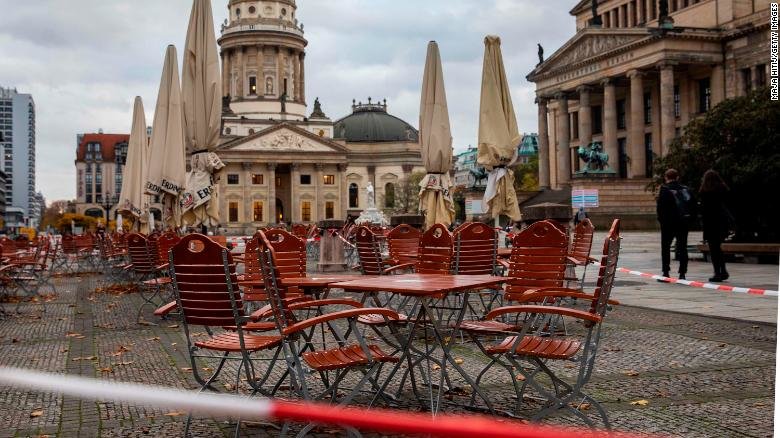
Despite some positive signs, parts of Europe continue to grapple with a relentless second wave of Covid-19 infections.
Germany recorded 410 deaths related to coronavirus in the past 24 hours -- the highest single-day jump in fatalities since the outbreak began, the Robert Koch Institute (RKI), the country's disease and control agency, said Wednesday.
It was the first time that more than 400 Covid-19 deaths were recorded by Germany in a single day. A total of 18,633 new infections were registered in the past 24 hours, according to RKI.
German Chancellor Angela Merkel is set to meet state governors on Wednesday to decide on new measures to try to bring the surge under control. Among the measures to be debated is an extension of the current, lighter restrictions until the end of December, additional mask mandates for schools and further restrictions on the number of contacts people are allowed to have.
Meanwhile, Poland reported 674 coronavirus deaths on Wednesday, a new daily record for the nation. The total number of deaths connected to Covid-19 has reached 14,888, its health ministry tweeted. There were also 15,362 new cases reported in the last day, bringing the total number of cases to 942,442.
The latest WHO figures brought some relief for the United Kingdom, which has suffered the highest number of Covid-related deaths overall in Europe, with 55,935 in total, according to the latest figures from Johns Hopkins University.
The UK registered a 13% decrease of new cases from last week, with 149,027 reported, while the number of new deaths remained similar, according to the WHO. This decrease in new cases was the first weekly decline since late August, the report said.
A month-long partial lockdown in England is due to end on December 2, to be replaced by three-tiered restrictions based on local infection rates. Devolved governments in Scotland, Wales and Northern Ireland have imposed their own measures.
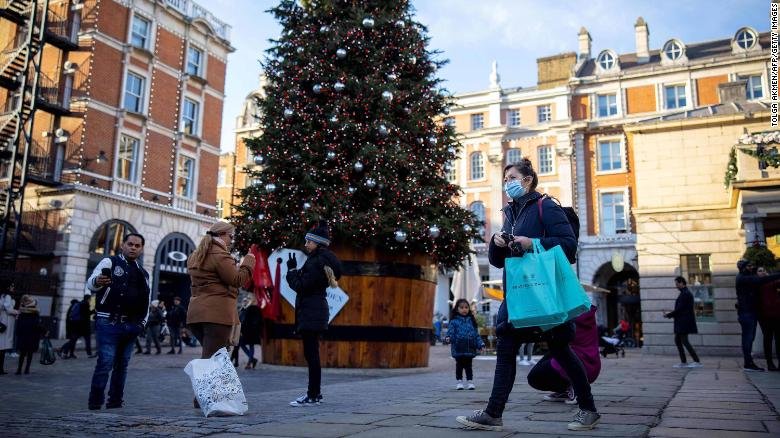
The UK government said Tuesday it would allow for up to three households to form a "Christmas bubble" and mix indoors, outdoors and in places of worship from December 23 to 28 across the UK. There will be no restrictions on travel across the country for that time period even if some areas are under tighter measures than others, the government said.
"This cannot be a 'normal' Christmas. But as we approach the festive period, we have been working closely together to find a way for family and friends to see each other, even if it is for a short time, and recognising that it must be both limited and cautious," a government news release said.
Macron: We avoided the worst
Across the Channel in France, President Emmanuel Macron said the country would start to lift Covid-19 lockdown restrictions this weekend because of a slowdown in the spread of virus.
In an address to the nation, Macron said the latest figures showed that more than 50,000 people had died from Covid-19 in France but the number of patients in ICUs was on the decline. "It appears that the peak of the second wave of the epidemic has passed; we dreaded even worse numbers and avoided them," he said.
As of Saturday, shops, boutiques and hairdressers will be allowed to open until 9 p.m., but people will still need to carry a certificate with an approved reason to leave the house. Internal travel restrictions will also be eased and places of worship can reopen with a maximum of 30 people gathered at the same time.
The lockdown could be lifted further on December 15, if the daily number of cases drops under 5,000 and there are only 2,000 to 3,000 patients in hospital ICUs. "We will therefore once again be able to travel without authorization, including between regions, and spend Christmas with our family," Macron said.
In that instance, French cinemas, theaters and museums would also be allowed to open, but bars, clubs and restaurant will remain closed. There will be a curfew from 9 p.m. to 7 a.m., except at Christmas and the New Year.
Macron said a decision on opening ski and winter sport resorts had not yet been made yet but warned that it looked "impossible to envisage an opening for the holidays." From January 20, a third stage of easing that would allow restaurants to open could go ahead if the number of daily cases stays below 5,000.
The President said vaccination for those at highest risk was expected to roll out at the end of December or early January.
Belgian businesses urge reopening
As Belgium's neighbors begin opening up their stores, the Belgian federation of commerce and services, Comeos, warned the country "will not become an island of closed shops but rather an island of bankrupt shops, while Belgian money is spent abroad."
"If everything remains closed with us, everyone will go across the border also for their Christmas shopping," Dominique Michel, CEO of Comeos, said in a statement.
According to Comeos, which represents 18 business sectors in Belgium and more than 400,000 employees, half of all Belgians live within 50 kilometers (31 miles) of an international border.
Earlier this week, the Belgian National Crisis Centre urged Belgians not to travel abroad over Christmas and New Year, warning trips to neighboring countries would "cancel out our efforts" in reducing the spread of the coronavirus.
Belgium's Consultative Committee -- made up of leaders from the three regional governments and federal government -- is due to meet Friday to assess the measures currently in place and discuss ways the country would be able to celebrate Christmas.
Belgium's strict lockdown measures were put in place on November 2 and are due to last until December 13.
Announcing the lockdown, Prime Minister Alexander de Croo said a decision would be made by December 1 regarding a possible reopening of shops and services.
Ireland to ease restrictions
The Irish government is set to ease restrictions for nearly two weeks around the Christmas period and is considering allowing up to three household to gather for the holidays, deputy premier Leo Varadkar told state broadcaster RTE Wednesday.
"We know people are going to do it anyway, so it's better we provide for it in a safe way," Varadkar told RTE.
Strict restrictions have been in place in Ireland since October, with social gatherings at homes or in gardens banned and restaurants, cafes and bars only open for takeaway.
Shops, gyms and hairdressing could be among the first services to reopen, RTE reports, with a timeline for bars and restaurants still under consideration.
Meanwhile, Czech Prime Minister Andrej Babis said Tuesday he aimed to offer all citizens voluntary free antigen testing for Covid-19 by Christmas, the Czech Health Ministry told CNN.
"I would very much like us to meet this challenge to allow all citizens, at least a week or 10 days before Christmas, to be able to be tested voluntarily and for free with antigen tests," Babis said.