

EU crisis chief calls for more powers to fight climate impacts
Brussels plays an expanding but still limited role in disaster response, with the EU’s legal framework restricting the European Commission to coordinating backup assistance when governments request help.
Such requests are expected to increase as devastating floods and fires become more common with every tenth of a degree of global warming — and Janez Lenarčič, the EU’s commissioner for crisis management, says that any future treaty changes must address that growing need.
“When and if there is a decision to go for treaty change, I’m sure this should be part of the discussions — how to strengthen the disaster response capacity, including the decision-making capacity on the European level, which we now don’t have,” he said in an interview at the Commission’s Berlaymont headquarters.
That could open the door to the creation of a permanent EU civil protection force, which was floated as far back as 2006 by then-Commissioner Michel Barnier, Lenarčič added.
“If you take firefighting planes, if Barnier’s idea could be implemented, this would mean European-owned planes, EU-employed crews and pilots … but with this treaty, this is not possible,” he said, as civil protection is currently under the sole jurisdiction of national governments.
Expanding role
Currently, countries can ask for aid under the EU’s Civil Protection Mechanism if their national emergency services become overwhelmed. Brussels then coordinates help offered by other governments or, in severe cases, organizes the deployment of a small fleet of firefighting planes provided by EU countries.
Demand for help is rising.
“The fire season lasts longer and ends much later than was historically the case. Plus, fires are now everywhere, no longer just in the Mediterranean part,” Lenarčič said. “This year, we’ve faced specific challenges because requests were almost simultaneous.”
In mid-July, multiple countries battled devastating fires spreading across forests and fields that were already bone dry as a result of extreme heat and persistent drought.
By the end of July, halfway through Europe’s fire season, the EU had dealt with six requests for assistance, compared to nine for all of 2021; from mid-July alone, four countries — France, Portugal, the Czech Republic and Lenarčič’s native Slovenia — had called Brussels for air support.
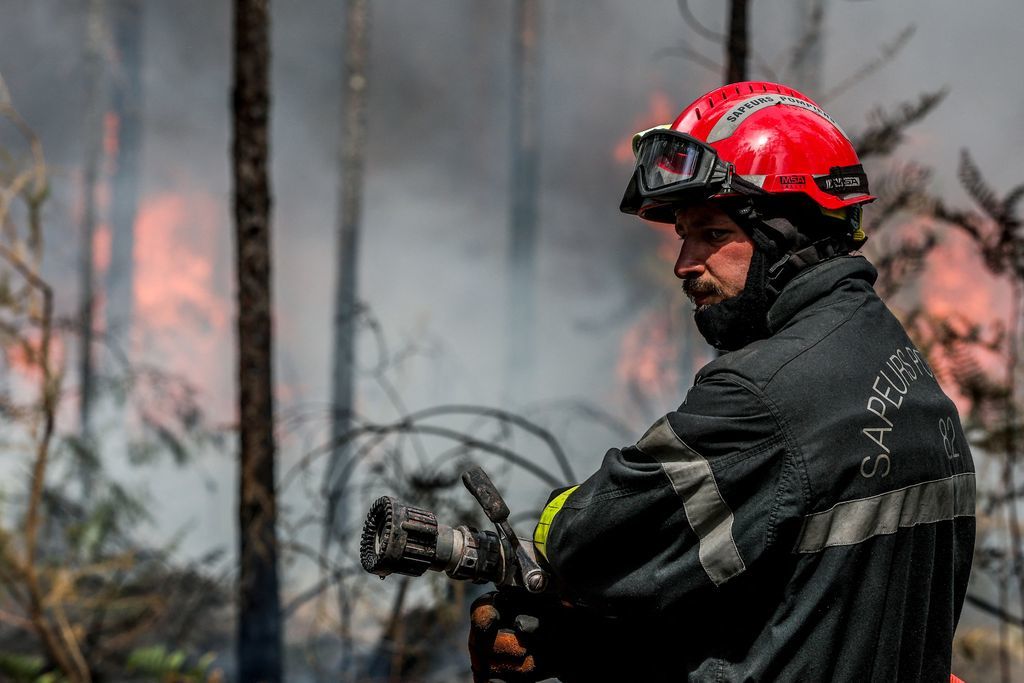 Halfway through Europe’s fire season, the EU had dealt with six requests for assistance this year
Brussels was also involved in stationing 200 firefighters from other European countries in Greece to help local services and coordinated aerial support for Albania.
Even within the current legal limits, the EU’s role in disaster response is expanding.
The bloc is building a common emergency reserve, dubbed rescEU, which for now includes the firefighting fleet and a medical stockpile — but in the future will also include resources to respond to chemical, biological and nuclear incidents as well as equipment relevant to emergency logistics and energy supply like shelters and generators, according to Lenarčič.
“So on one hand, we have this treaty,” he said. “On the other hand, we have a growing sense that more Europe is needed in civil protection.”
Prepare and prevent
The EU's firefighting capacity is also set to expand. For now, the fleet is temporary, set up each year ahead of the wildfire season. This summer, Brussels is coordinating and funding the operation of 12 planes and one helicopter provided by Croatia, France, Greece, Italy, Spain and Sweden, which decide jointly with the Commission on any deployment.
But before the end of the decade, Brussels wants to have a permanent capacity of 12 firefighting planes and nine helicopters.
The Commission and six member countries — Croatia, Portugal, Spain, France, Italy and Greece — signed letters of intent in March with Canadian manufacturer De Havilland to produce 22 Canadair-type firefighting planes, Lenarčič said.
Ten of them will be bought by governments for their own reserves, and 12 planes will be part of rescEU — owned by member countries but financed by the Commission. Binding agreements have yet to be signed.
A spokesperson for De Havilland confirmed that letters of intent for 22 firefighting planes were signed with the Commission, adding that the company “anticipate[s] all contracts to be signed in either late 2022 or early 2023 with construction beginning shortly after and first delivery in 2026.”
Given treaty restrictions, Brussels can’t own or buy any planes, or decide on the timing, place and duration of deployment. Changing that would streamline the process of disaster response, Lenarčič argued.
But national governments usually aren’t keen on handing Brussels more powers. Discussions around a joint civil protection force pose “a similar dilemma like never-ending, continuously repeated talks about a so-called European army,” he acknowledged.
The commissioner also noted that disaster response was only a small part of dealing with climate impacts, calling on EU countries to urgently step up preventative measures.
That means slashing emissions “to prevent further deterioration of the climate,” he said, but also preparing for the increase in extreme weather events like fires and floods.
The EU’s capacity for crisis response, he said, was holding up so far — all requests for firefighting aid this year were swiftly met.
“But I’m not sure we will be able to do so for long if we don’t do enough on prevention and preparedness,” Lenarčič warned. “If we only focus on response, then before long, we will be overwhelmed.”