

Britain Banks On Tempest Future Fighter Program As Its Next Great Hope In Combat Airpower
A group of leading British defense aerospace companies, helmed by BAE Systems, has laid out the latest details regarding the ambitious Tempest next-generation fighter program, against a compelling backdrop of potential benefits to the United Kingdom.
A new study detailing the economic contribution of the Tempest program predicts that it could support an average of 20,000 jobs every year between 2026 and 2050, plus it would contribute at least £25.3 billion, or nearly $32.7 billion at the present rate of exchange, to the British economy in the first 30 years of the project. It will also play a critical role in securing skills within the domestic military aerospace industrial sector.
BAE Systems heads up Team Tempest, which is a technology and defense partnership. It also includes Italian defense contractor Leonardo, European missile consortium MBDA, British engine manufacturer Rolls-Royce, and the U.K. Royal Air Force (RAF), as well as hundreds of other high-tech companies, as part of a growing industrial base.
The latest details about the project's progress were laid out alongside the preliminary results of an independent analysis by PwC, a private consulting firm commissioned by BAE Systems. This outlines the potential economic contribution from the initial stages of the Tempest program, covering the period up to 2050, the full details of which will be published later this year.
Team Tempest says the full analysis will help to inform a new business case that is expected to assess three options for the U.K. According to a report in the Financial Times, these are expected to include continuing with Tempest, becoming a partner in an international fighter program, or to purchase an off-the-shelf solution. A decision on funding the next phase of Tempest will be announced after the government makes its preference known.
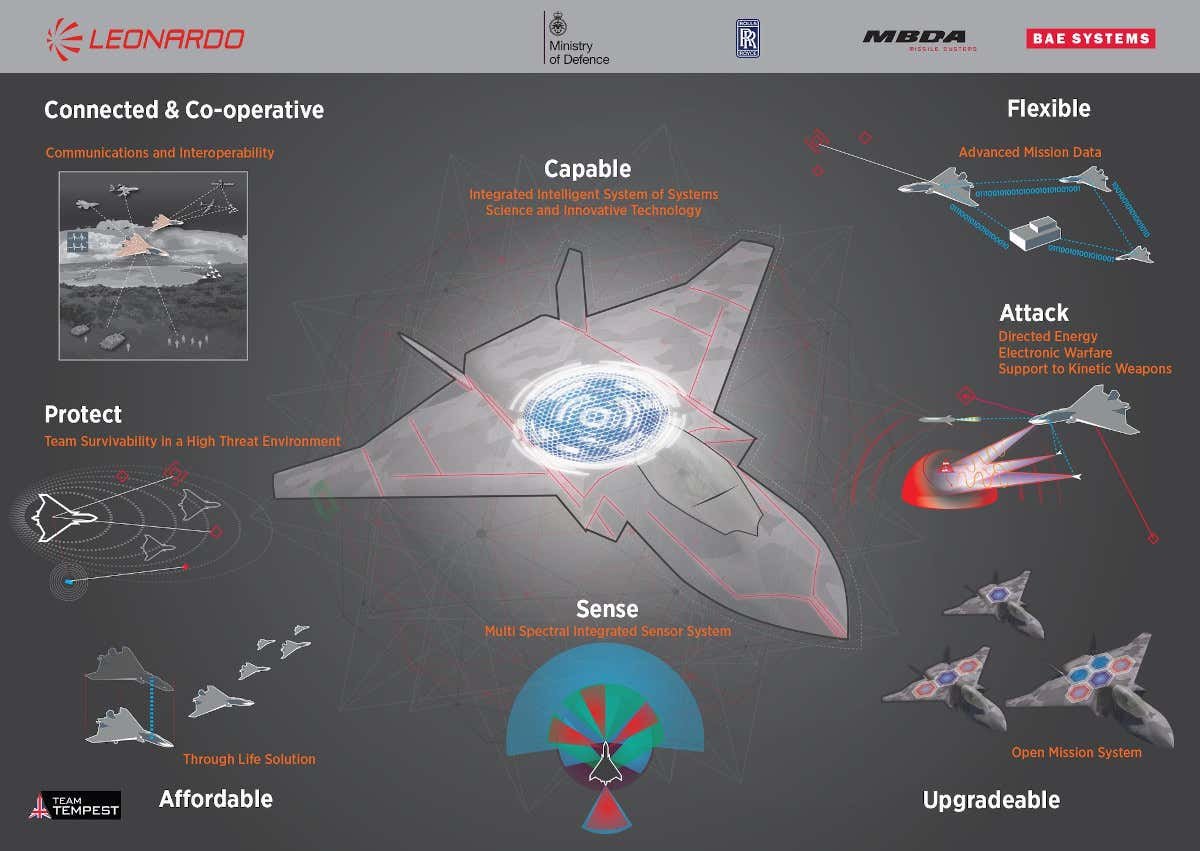
Tempest was launched in 2018 in a bid to produce a sixth-generation “system of systems” air combat capability, with a new stealthy six-generation fighter as the centerpiece. A similar French-German Future Combat Air System (FCAS) program, which European aviation consortium Airbus is leading, is currently in an 18-month initial risk-reduction phase that is intended to lead to demonstrator flights as soon as 2026.
According to BAE Systems, there are currently 1,800 people employed in Team Tempest across the U.K. industrial base and the country's Ministry of Defense, with this number set to increase to 2,500 next year. In 2019, the team expanded to add Sweden’s Saab and Italy’s Leonardo in a bid to share costs and bring a wider knowledge base into the project. The United Kingdom has already committed £2 billion, or almost $2.6 billion at the current rate of exchange, to Team Tempest, which aims to see manufacturing begin by 2025, with a “combat air system” reaching Initial Operating Capability by 2035, if the government elects to press ahead with Tempest.
“Tempest is an exciting and ambitious multi-decade program that will help to preserve our national security whilst at the same time driving significant economic benefits for the U.K.,” commented Michael Christie, Director, Combat Air Acquisition Program, for BAE Systems. “The initial analysis revealed today demonstrates that Tempest is critical to ensuring the U.K. can sustain its world-leading Combat Air Sector, preserving the sovereign capability that is essential to retaining military freedom of action for the U.K.”
A Combat Air Strategy
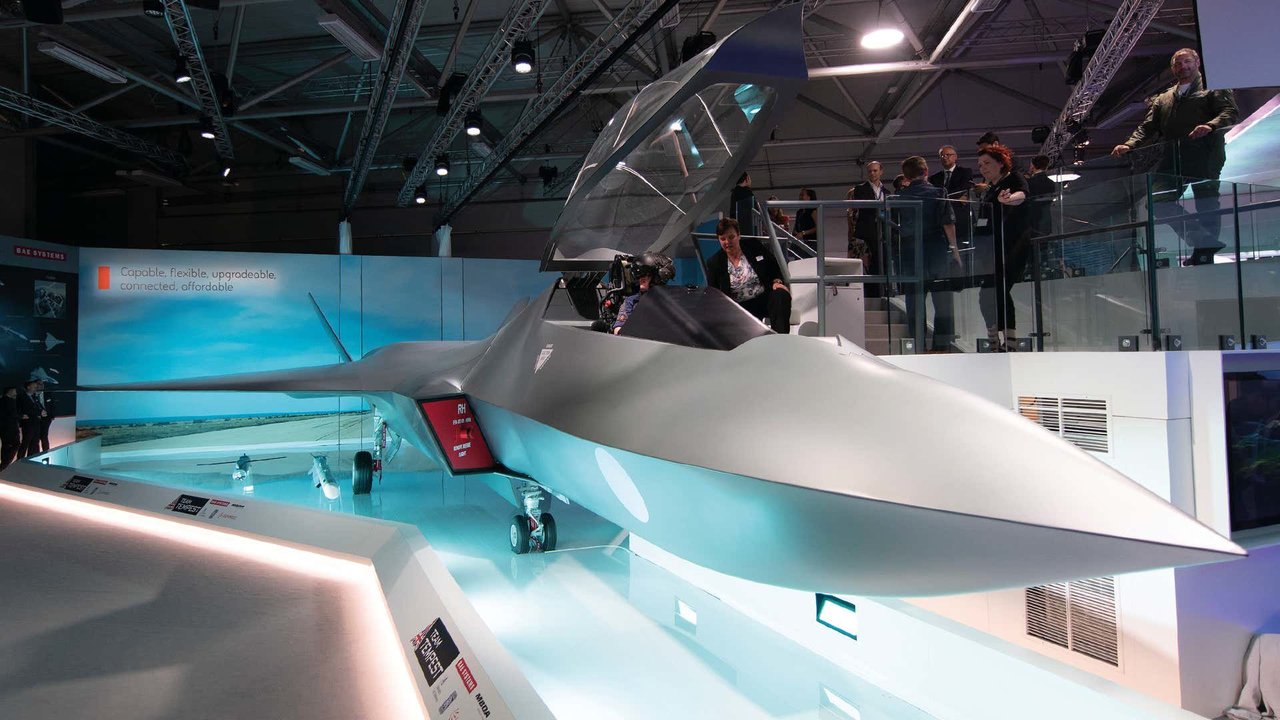
The U.K Combat Air Strategy, launched in 2018 alongside Team Tempest, is designed to underpin Britain’s combat air industry, which is also led by BAE Systems. This would help to preserve sovereign capability and critical skills needed for independent military “freedom of action” and national security. Unfortunately, the forthcoming five-year defense spending review has been delayed due to the ongoing coronavirus pandemic, and the unprecedented situation is expected to place even greater strain on the British defense budget. However, this has in turn led to a greater emphasis on maintaining a domestic capability in this sector and securing national jobs.
Launched under the Future Combat Air System Technology Initiative (FCAS TI), not to be confused with the Airbus-led FCAS program, an initial concept phase, planned to be complete by the end of this year, was designed to build an understanding of potential costs and viability. Since the initial announcement in 2018, seven further companies have signed agreements to progress opportunities to work on Team Tempest, including Bombardier Belfast, Collins Aerospace, GE Aviation UK, GKN Aerospace, Martin-Baker, QinetiQ, and Thales.
Britain has also enjoyed significant involvement in the Eurofighter Typhoon program alongside Germany, Spain, and Italy, but this program is beginning to wind down. While BAE Systems has enjoyed Britain’s Tier 1 status as a partner in the F-35 Lightning II program, which is led by Lockheed Martin, it is widely acknowledged that this has failed to support U.K. industrial expertise with regard to the development of advanced combat air systems, as well. Tempest is designed to re-energize this important part of the British manufacturing and technology industry.
Revolutionary technology
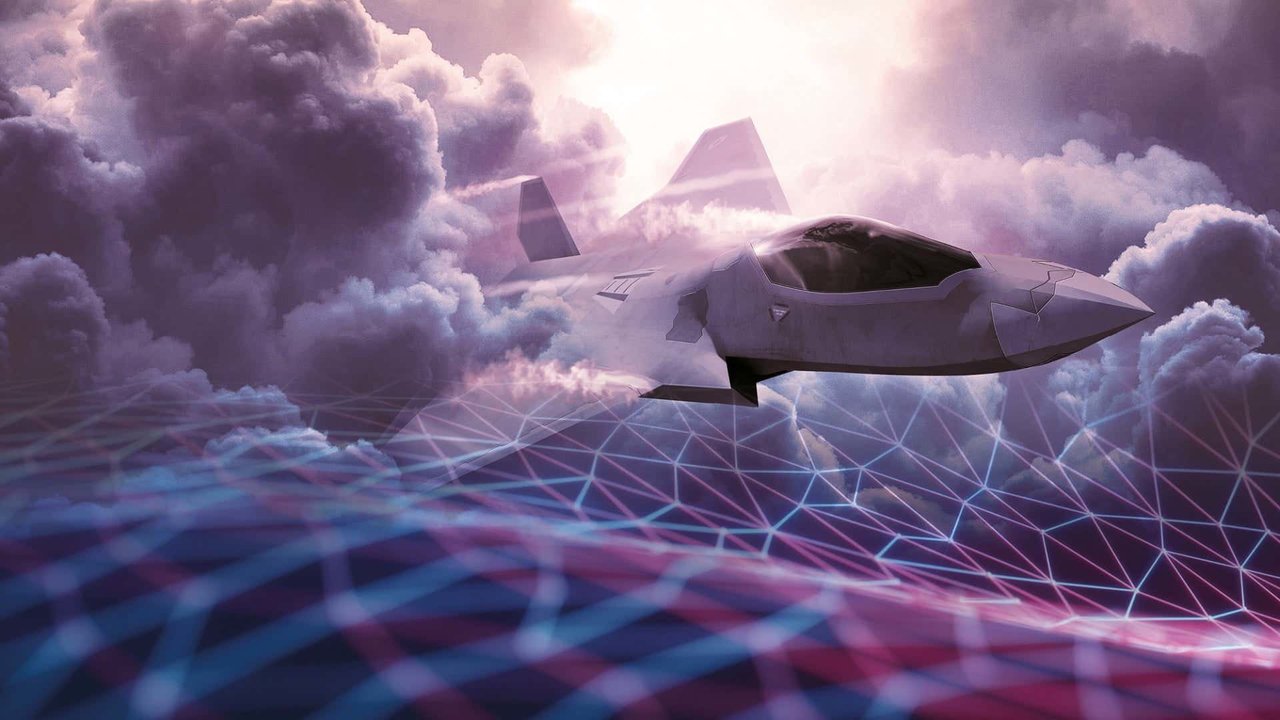
Team Tempest is using new technologies with the aim of making revolutionary strides in the way combat aircraft are developed and fielded and respond to increasingly high-tech and complex threats. Initial concepts have matured and have been evaluated, including testing cutting-edge “wearable cockpit” technologies, which could replace physical controls in current aircraft cockpits with Augmented and Virtual Reality displays projected directly inside the visor of a helmet, and able to be configured to suit any mission. “Concepts including human-autonomy teaming are also being developed, where a 'virtual co-pilot' could take on some of the pilot’s responsibilities. The virtual co-pilot concept is still being developed, but could, for example, take the form of an ‘avatar’ built into the cockpit to interact with the pilot,” according to BAE Systems.
The company has also been trialing “psycho-physiological” technologies, including eye-tracking, to study the operator’s physical and cognitive processes to better understand aircrew exertion, stress, workload, and fatigue. BAE Systems says its test pilots are now trialing these technologies in controlled test flight conditions in a Typhoon aircraft. “The results of the trials will inform further development to better understand a pilot’s cognitive behavior and processes relating to brain activity, psychological rhythms, and eye movement to inform further development,” the company has said.
Leonardo has disclosed that it is developing new radar technology for Tempest. The Multi-Function Radio Frequency System (MRFS) is designed to collect and process unprecedented amounts of data, which it says is equivalent to “the internet traffic of a large city.” MRFS is supposedly designed to work beyond the boundaries of a traditional radar, with digital technology providing the operator with a clear view of the battlespace and of potential targets, “helping it win the information war.”
The Italian-headquartered firm says it has already built complete sub-systems using the new technology and has successfully tested them at the company’s site in Edinburgh, Scotland.
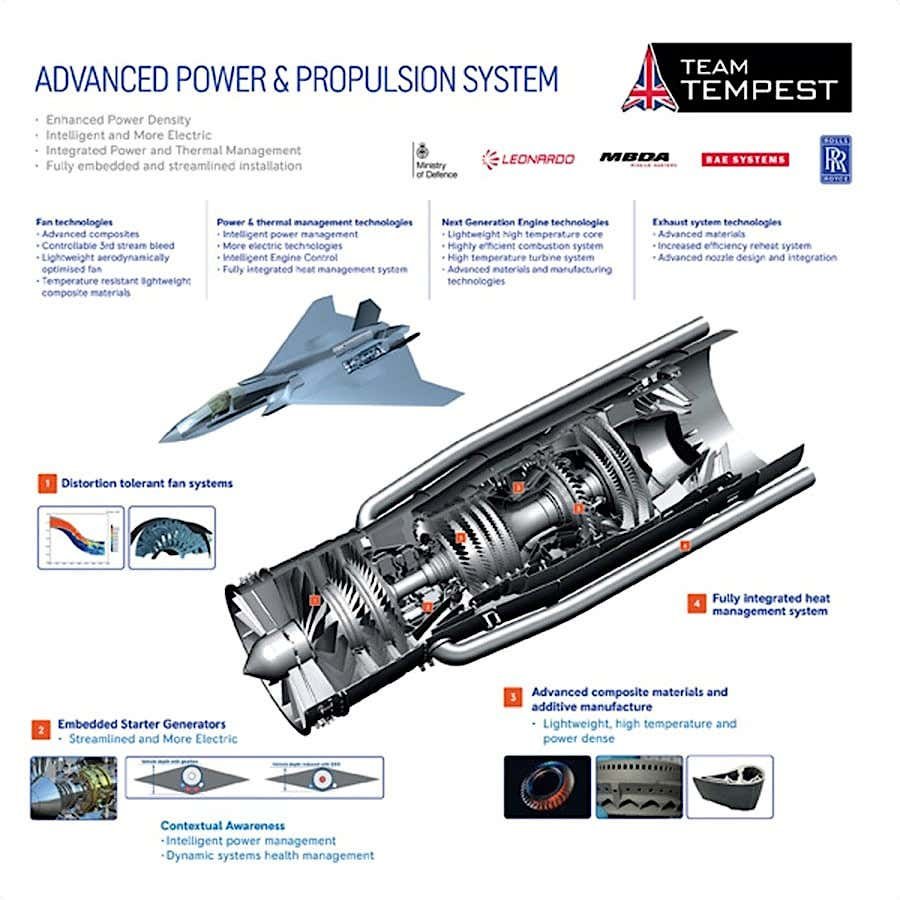
Meanwhile, Rolls-Royce engineers are evaluating advanced engine technology for Tempest. The company says the engine will burn hotter than previous systems, thereby increasing efficiency. Thermal management of the Tempest fighter will be critical, and the company is working with Leonardo to help deal with the heat generated by the plethora of onboard sensors and avionics by directing this back into the engines for cooling. Rolls-Royce’s Phil Townley says the hotter the engine, the more efficient it becomes. “We get less carbon dioxide and bring emissions down.” Team Tempest is also looking at how the use of synthetic aviation fuel can bring down exhaust temperatures and also contribute to a more sustainable future.
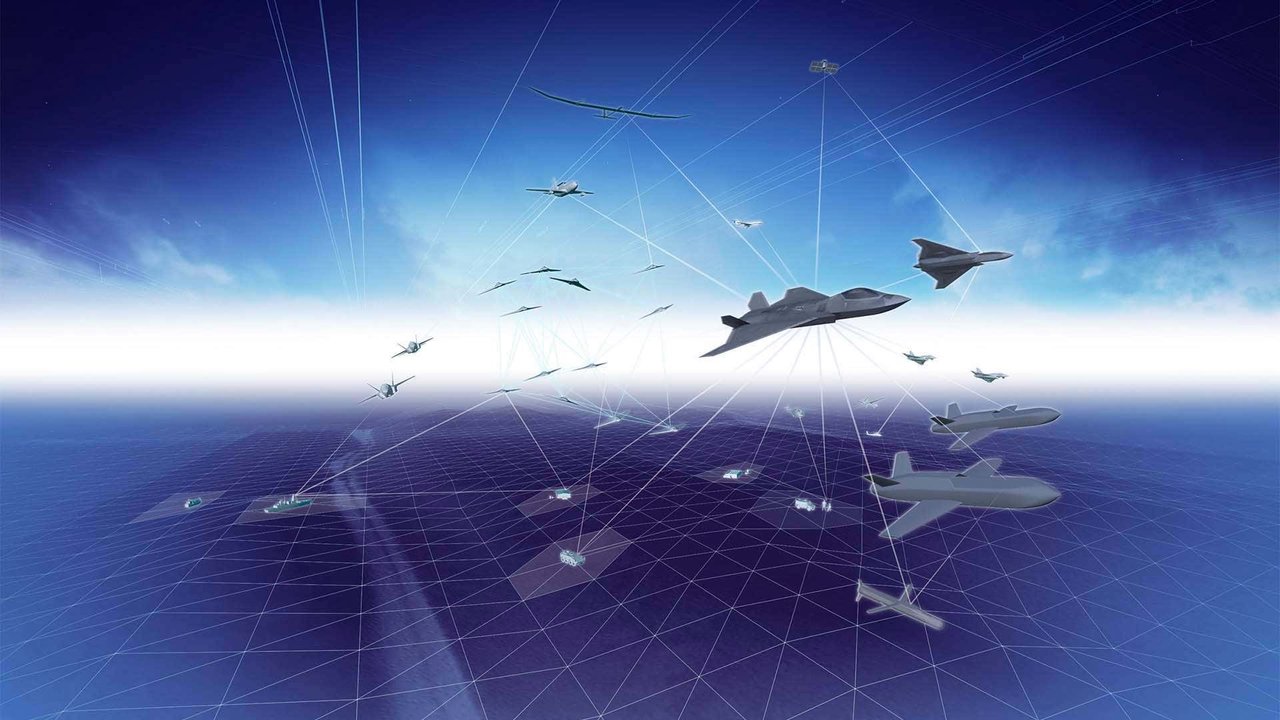
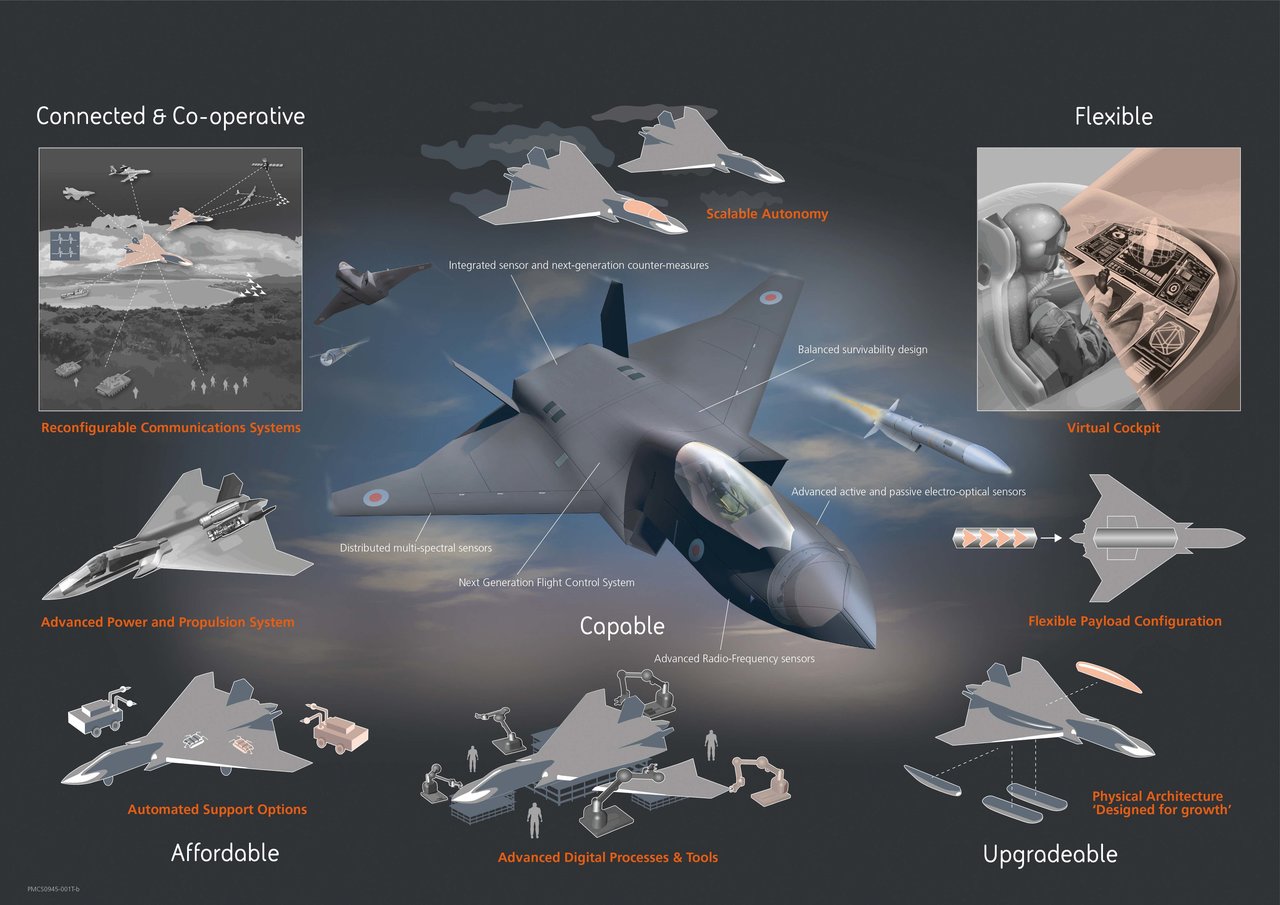
Behind Tempest lies an ethos of flexibility, capability, affordability, and upgradeability. While it will have a combat aircraft at its core, it will be a connected network of capabilities — a mix of piloted and unpiloted platforms. The exact scope of this is still to be revealed, but it could include follow-on efforts to the current Lightweight Affordable Novel Combat Aircraft (LANCA) program, and other RAF swarming drone initiatives, both of which you can read more about in this past War Zone piece.
For weapons manufacturer MBDA, it says Tempest could include "electro-magnetic effects and laser weapons." The company’s Mike Mew says it aims to make integration of new weapons far easier. It could be “as simple as plugging a USB stick into your computer.” This type of approach is a theme that runs through the core of Tempest, with an ambitious desire to break out of the cycle of large defense programs. “Each generation has been more complex and cumbersome, we need to break out of that,” Mew says, adding that instead of months of integration work and huge cost, quicker fielding will mean funds can be spent elsewhere on software and capability.
Changing the current model
Team Tempest aims to halve the time from project go-ahead to initial operating capability. BAE’s Michael Christie says the use of model-based engineering gives a far greater chance of success in collapsing timescales, as does the increased use of advanced software. Christie says that BAE Systems is similarly ambitious when it comes to exporting Tempest. He foresees that it could become one of the company’s most successful programs. He points to how combat aviation has traditionally accounted for as much as 80% of the defense export sector for the United Kingdom.
However, it is at home that Tempest faces a significant challenge. Ultimately designed as a replacement for the Eurofighter Typhoon, it’s difficult to see how it can be procured for the Royal Air Force in sufficient numbers alongside a full buy of 138 F-35s. Even with a reduction in what the RAF refers to as the Lightning Force, developing Tempest will be reliant on international partnerships to spread the fiscal load. The United Kingdom will simply not have the funds to go it alone, despite the clear benefit to industry. The existing partnerships with Sweden and Italy are valuable, but more will need to join.
For Tempest to succeed and flourish, the Lightning Force may have its wings clipped, but many will still question whether such an ambitious program is achievable. Even though Tempest promises to be “affordable,” developing new fighters is far from being a cheap business. For the RAF it could mean backing British industry, possibly at the expense of U.S. relations regarding F-35. Buying American has been a recurring theme in recent major airpower procurement programs — not least the F-35, P-8 Poseidon, and E-7 Wedgetail.
There is also the question of timelines. It can take decades to see a new fighter enter production. By the time Tempest is sitting on flight lines, if it indeed makes it that far, will purchasing an all-new advanced manned tactical combat aircraft be a good procurement decision? Will it even be relevant?
While the last two years of concept work may not have afforded many tangible signs of advance, Team Tempest has made good progress in identifying what this project needs to be. These aspects include everything from advanced cockpit designs to efficient production lines, which are hoped to expedite production once final designs are solidified. The desire to not fall into the trap of obsolescence fuels a need for the final specifications of Tempest to be locked down as late as practicable, and able to adapt to a world where technology and software are advancing at an exponential rate.

Actually realizing the ambition behind the program represents a very different set of problems. Fundamentally changing the way fighter aircraft are designed, built, and fielded is great in theory, but the reality may be very different. Certifying such a raft of advanced systems in one of the world’s most highly regulated sectors will be both costly and time-consuming.
For Tempest, if the British government decides to continue down this path, a decision to move some of the advanced new systems into flight testing could come as soon as next year. A Boeing 757 is to be converted by Leonardo U.K. to serve as an avionics and systems testbed, which could fly by 2023 or 2024, according to the company. It would act in a similar manner as the “Catfish” 757 that serves as an integrated avionics testbed for the U.S. Air Force's F-22 Raptor.
This would present the next clear sign of progress for Tempest. A step ahead from model-based design, computer-aided design simulations, and hyperbole, to actual hardware in the sky—an important move forward in taking what is still just a concept, and making it a reality.