Prague Faces Challenges of Mass Tourism Amidst Recovery
The city grapples with the resurgence of tourism as visitor numbers reach pre-pandemic levels, raising concerns over local living conditions.
Prague, one of Europe's most picturesque cities, is navigating the complexities of mass tourism as visitor numbers rebound to pre-pandemic levels.
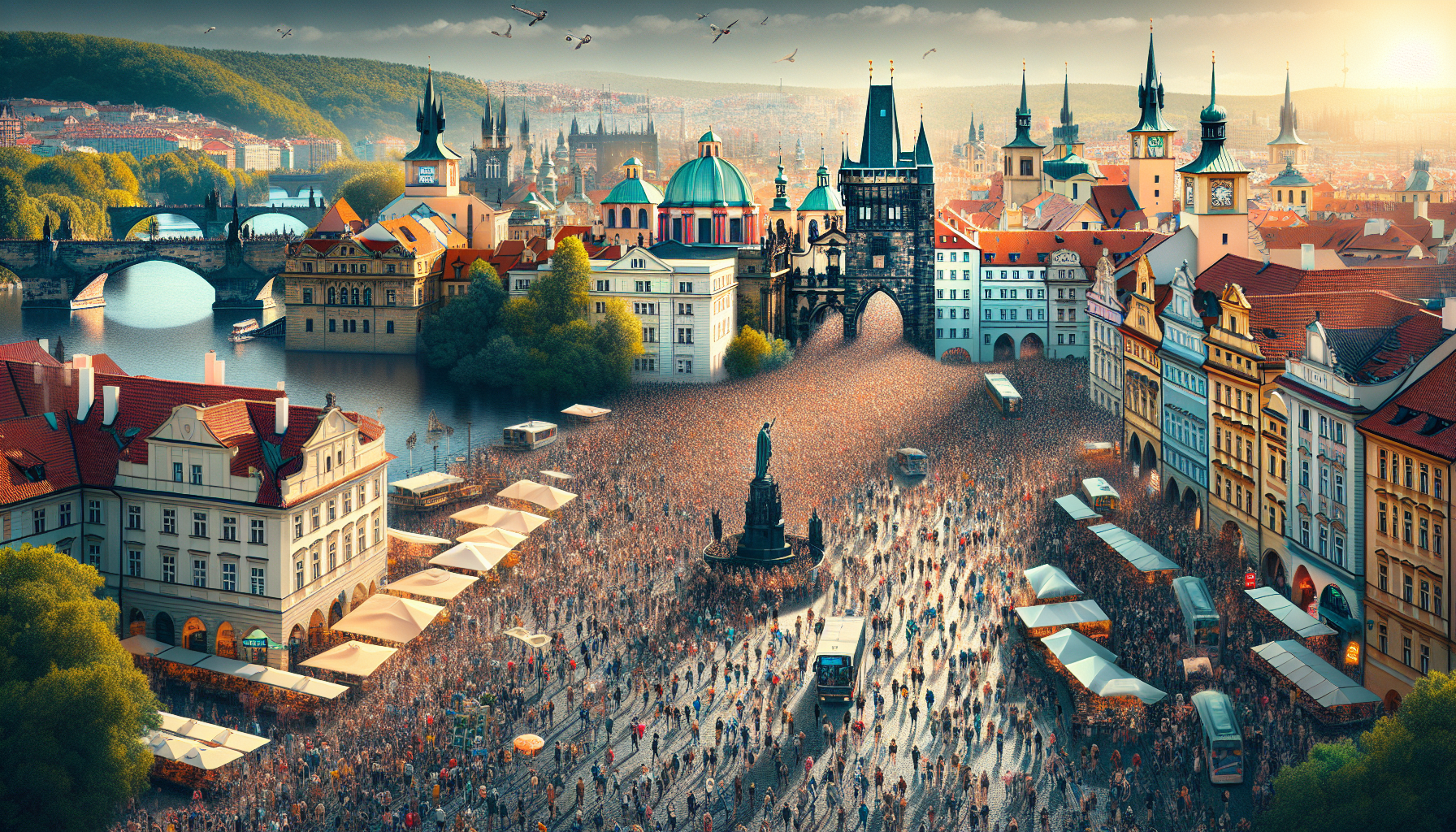
Following a significant decline during the COVID-19 pandemic, the number of tourists is projected to return to 2019 figures by 2024. This resurgence has brought both positive economic impacts and concerns for local residents, as the influx of visitors leads to crowded streets and rising rental costs.
The iconic Charles Bridge often serves as a focal point for tourists, contributing to the vibrant tourism sector in the Czech capital.
However, the influx has had a pronounced effect on the local demographic, with many residents leaving the historic areas, particularly in the Old Town, which is reported to harbor only about 15,000 permanent residents.
Tourists are also reportedly spending more during their visits, contributing significantly to the local economy.
This economic boost, while beneficial in creating job opportunities and apparent wealth for the city, has prompted the municipal government to seek alternative strategies to manage the situation.
The Prague city administration has devised a strategy that focuses on the quality of the tourism experience rather than the quantity of visitors.
The Mayor of Prague has expressed hope that enhancing the cultural offerings in the city may attract a more cultured audience.
In contrast, there lacks a cohesive government plan to address the challenges posed by mass tourism, and there is currently no dedicated minister overseeing tourism.
As local authorities explore solutions to balance the needs of residents and tourists, the role of the government in managing tourism remains a contentious issue.
Meanwhile, the broader implications of the tourism surge continue to unfold in Prague's historical districts.
This report is part of a program produced by Arte, a European network which is made available in nine languages through its EMOVE initiative.
Arte coordinates this network in conjunction with various international media outlets, including Spain's El País, Poland's Gazeta Wyborcza, Italy's Internazionale, Lithuania's Ir, Greece's Kathimerini, and Belgium's Le Soir, with funding from the European Union's DG CNECT initiative aimed at establishing 'European Media Centers' within the framework of EU multimedia actions.
Following a significant decline during the COVID-19 pandemic, the number of tourists is projected to return to 2019 figures by 2024. This resurgence has brought both positive economic impacts and concerns for local residents, as the influx of visitors leads to crowded streets and rising rental costs.
The iconic Charles Bridge often serves as a focal point for tourists, contributing to the vibrant tourism sector in the Czech capital.
However, the influx has had a pronounced effect on the local demographic, with many residents leaving the historic areas, particularly in the Old Town, which is reported to harbor only about 15,000 permanent residents.
Tourists are also reportedly spending more during their visits, contributing significantly to the local economy.
This economic boost, while beneficial in creating job opportunities and apparent wealth for the city, has prompted the municipal government to seek alternative strategies to manage the situation.
The Prague city administration has devised a strategy that focuses on the quality of the tourism experience rather than the quantity of visitors.
The Mayor of Prague has expressed hope that enhancing the cultural offerings in the city may attract a more cultured audience.
In contrast, there lacks a cohesive government plan to address the challenges posed by mass tourism, and there is currently no dedicated minister overseeing tourism.
As local authorities explore solutions to balance the needs of residents and tourists, the role of the government in managing tourism remains a contentious issue.
Meanwhile, the broader implications of the tourism surge continue to unfold in Prague's historical districts.
This report is part of a program produced by Arte, a European network which is made available in nine languages through its EMOVE initiative.
Arte coordinates this network in conjunction with various international media outlets, including Spain's El País, Poland's Gazeta Wyborcza, Italy's Internazionale, Lithuania's Ir, Greece's Kathimerini, and Belgium's Le Soir, with funding from the European Union's DG CNECT initiative aimed at establishing 'European Media Centers' within the framework of EU multimedia actions.
AI Disclaimer: An advanced artificial intelligence (AI) system generated the content of this page on its own. This innovative technology conducts extensive research from a variety of reliable sources, performs rigorous fact-checking and verification, cleans up and balances biased or manipulated content, and presents a minimal factual summary that is just enough yet essential for you to function as an informed and educated citizen. Please keep in mind, however, that this system is an evolving technology, and as a result, the article may contain accidental inaccuracies or errors. We urge you to help us improve our site by reporting any inaccuracies you find using the "Contact Us" link at the bottom of this page. Your helpful feedback helps us improve our system and deliver more precise content. When you find an article of interest here, please look for the full and extensive coverage of this topic in traditional news sources, as they are written by professional journalists that we try to support, not replace. We appreciate your understanding and assistance.