Budapest Post

Cum Deo pro Patria et Libertate
Budapest, Europe and world news

An Italian Futurist’s Kaleidoscopic Apartment Welcomes Visitors Into a Vibrant World of Color

An Italian Futurist’s Kaleidoscopic Apartment Welcomes Visitors Into a Vibrant World of Color

After a meticulous restoration, the extraordinary former apartment of Italian artist Giacomo Balla is opening to the public for the first time in Rome.

At Rome’s National Museum of 21st Century Art (MAXXI), an exhibition devoted to Italian futurist Giacomo Balla offers the rare chance to step inside the early 20th-century painter’s creative universe-more specifically, his former home. As part of the MAXXI exhibit, which celebrates the 15oth anniversary of Balla’s birth, visitors can reserve a tour of the wildly colorful Roman apartment, which is dubbed Casa Balla.
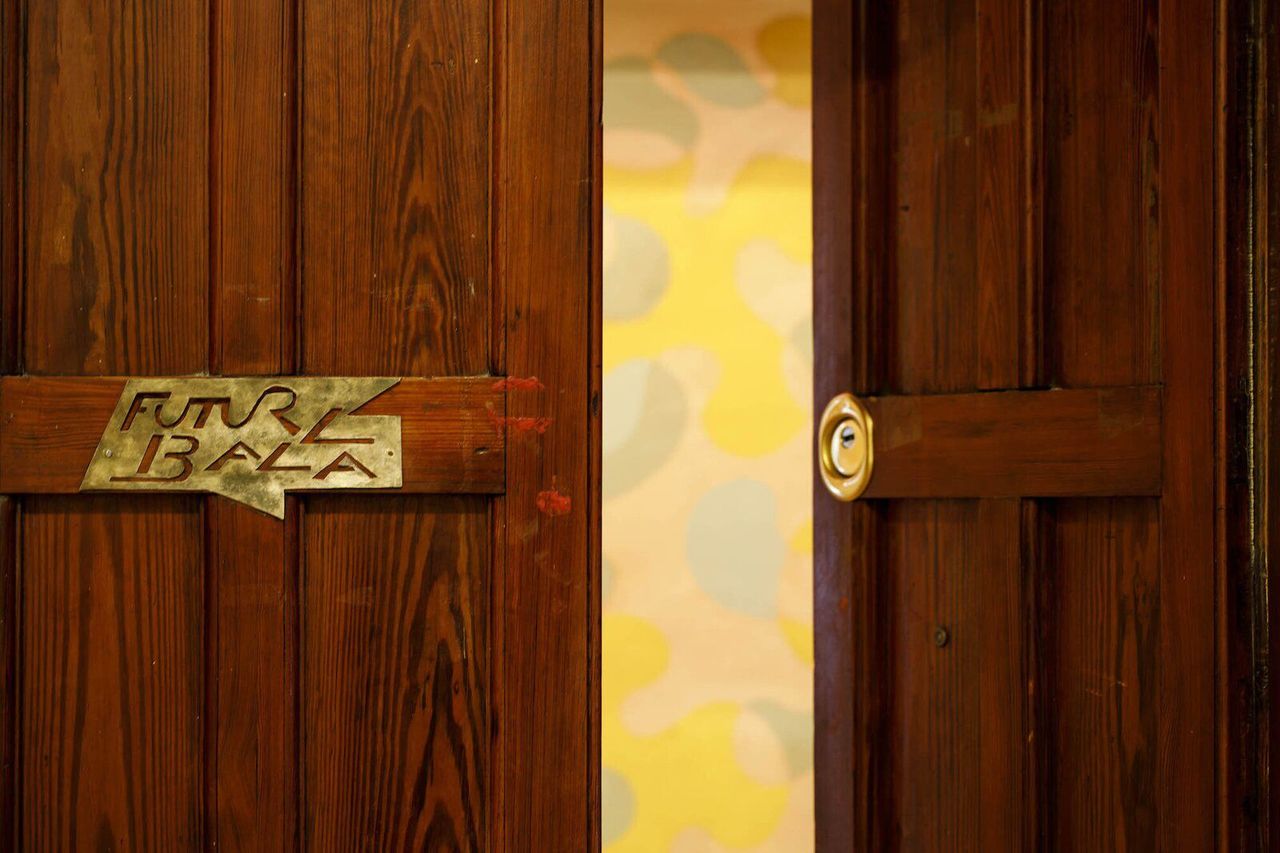


Italian artist Giacomo Balla’s former family apartment is open to the public through November 21, 2021, as part of the MAXXI’s Casa Balla: From the House to the Universe and Back exhibition.

Just a 22-minute walk from the museum, on the fourth floor of a Via Oslavia building in Rome’s Della Vittoria district, a door with a metal plaque announcing Futur Balla opens to a whimsical world of bold pattern, color, and light. Casa Balla’s entrance hall vividly conveys the idea that this is a different kind of family home-one dedicated not just to art, but to vibrant spaces that break down the boundaries between art and daily life.
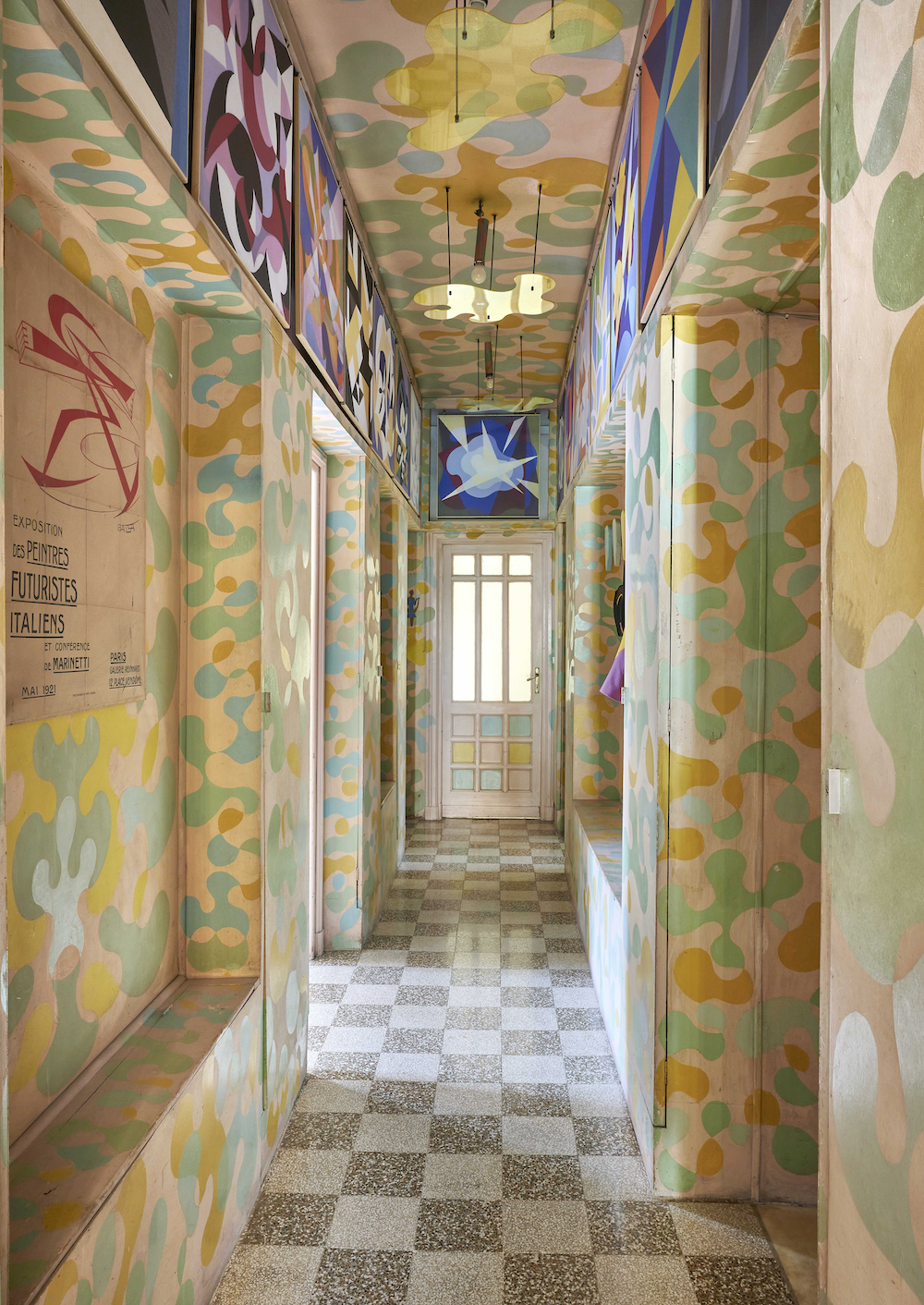


Inside Casa Balla, even practical storage spaces serve as vehicles to introduce more color and beauty to the interiors. In the hallway, overhead lights are shaded by acrylic clouds designed by Balla.

In a 1915 manifesto titled "Futurist Reconstruction of the Universe" that Balla coauthored with Italian painter Fortunato Depero, the prominent Italian futurist introduces the concept of living life itself as "a total work of art"-something that Balla achieved in his family’s home.
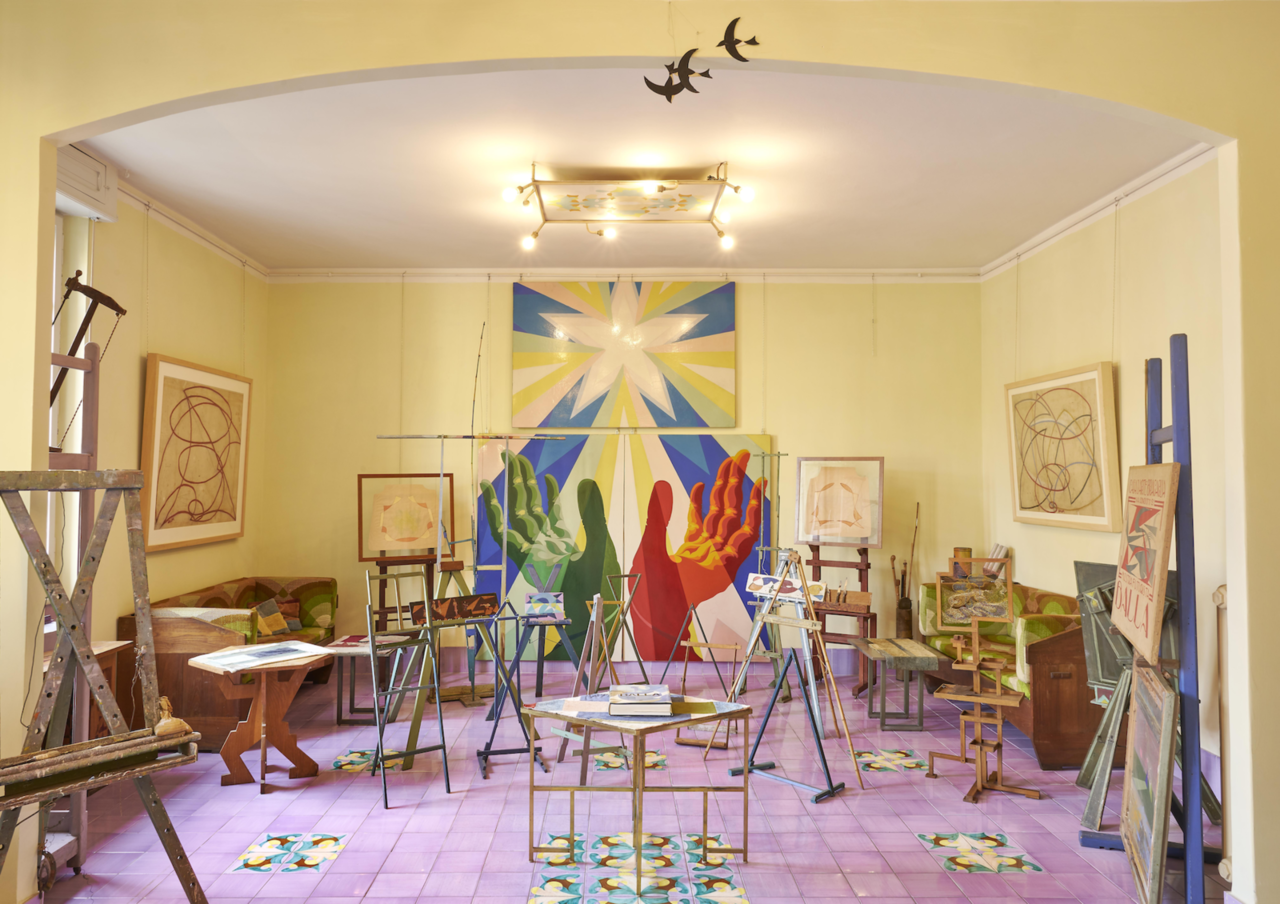


The living room, which is crowded with easels to display the family’s artworks, became a veritable showroom for Balla’s futurist universe. Every decorative detail-down to the sofas, upholstery, and lilac-painted floor tiles-was conceived and built by Balla, his wife, and his daughters.


This corridor, which Balla called the Studiolo Rosso, was used as a painting studio and study. The dizzying pattern repeated across the walls, ceiling, and bookcase depicts the dynamism of speed-a theme that early 20th-century Italian futurists returned to repeatedly.

Balla moved into the apartment in 1929 with his wife, Elisa, and their two young daughters, Elica and Luce, both of whom were also painters. But instead of merely living and working within the walls of the typical, upper-middle class flat, the family used it as a dynamic, inhabitable canvas for art-painting the walls, designing and building furniture, and creating their own imaginative floor tiles, carpets, upholstery, light fixtures, and dishes.
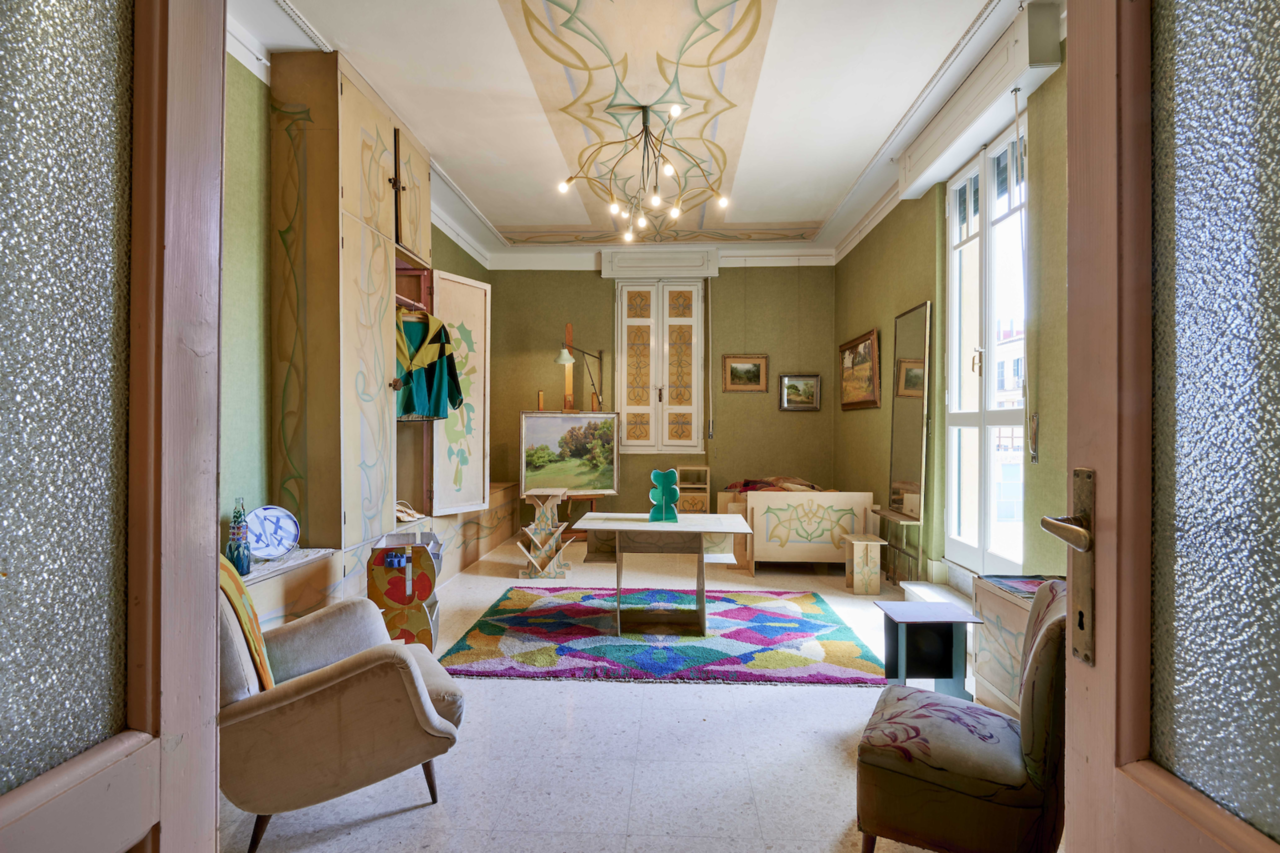


In Luce Balla’s room, harmonious colors and lively patterns reflect the presence of a creative family. Her own figurative landscape painting comfortably coexists with the furniture, rug, lighting, and acrylic vase designed by her father.


In the kitchen, a set of painted wooden chairs around the table include geometric details.

Walking through the apartment, Balla’s intention to infuse daily life with art is abundantly clear. In the hallways, patterned murals wrap up the walls and across the ceilings, while hanging light fixtures are adorned with fanciful clouds cut from plexiglass. Carpets designed and hooked at Casa Balla add symmetrical arabesques and swirls of rich color to Luce and Elica’s rooms-the former of which is anchored by a graceful, branch-like chandelier. Nothing seems to have been ignored as a potential delivery system for the futurist’s ideal: the boldly patterned crockery, the clashing colors of the upholstered furniture-even the cabinet pulls and coat hooks have been altered and made beautiful.
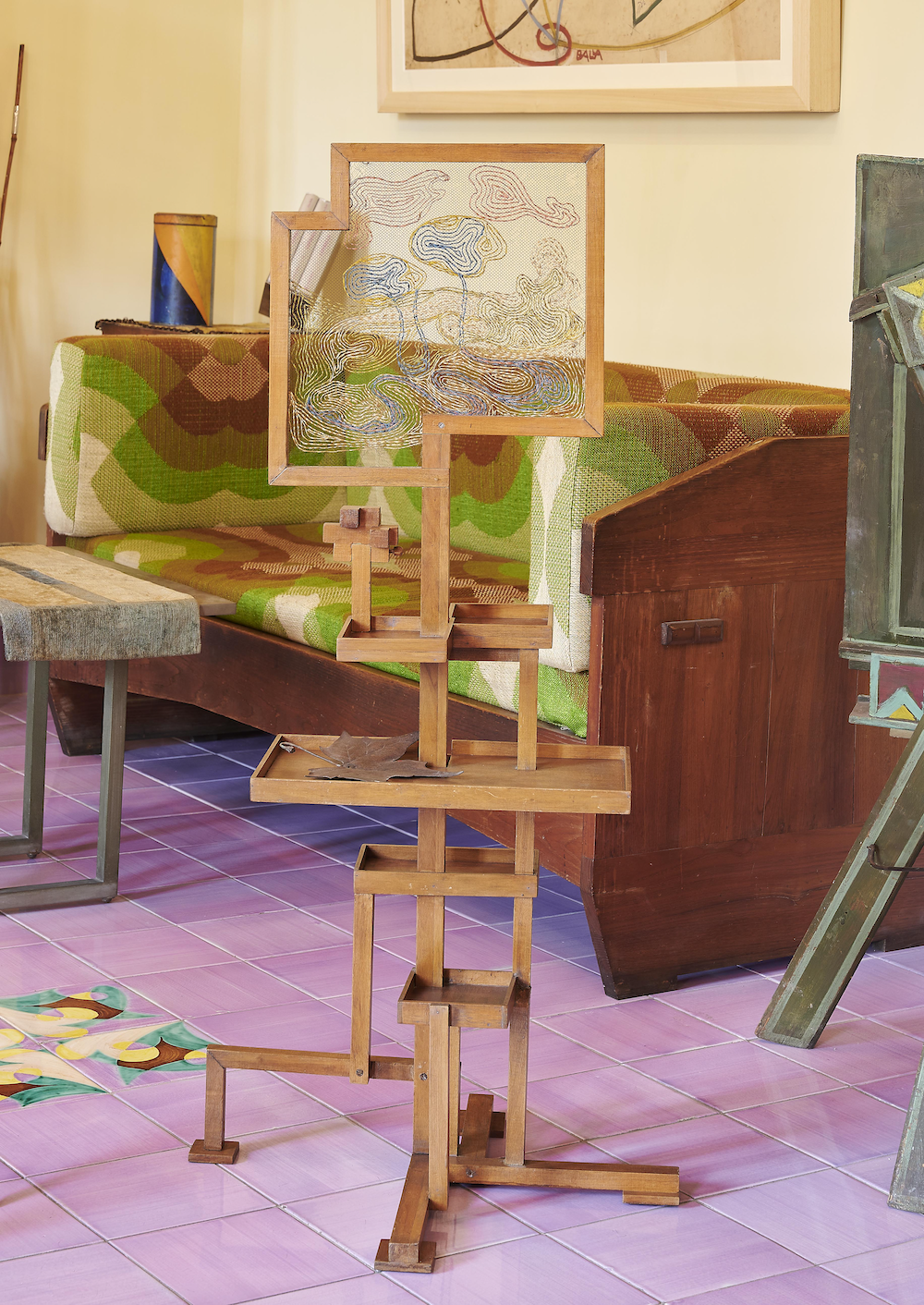


An angular smoking table in the living room and gallery offers several functional surfaces to hold tobacco and ashtrays and is decorated by a screen embroidered with fanciful swirls of smoke.
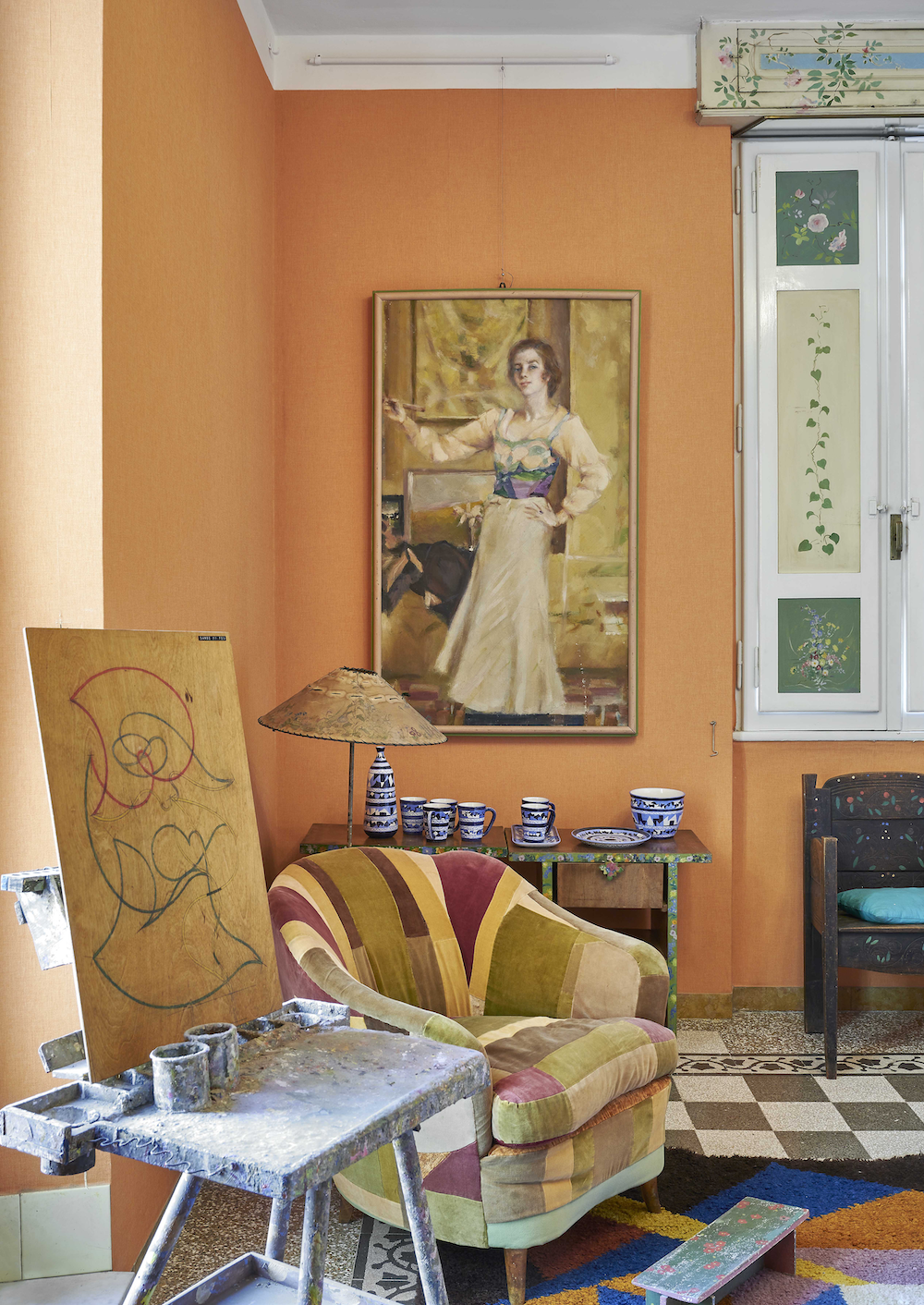


A corner of Elica’s bedroom and studio features a rug and velvet patchwork chair designed by Balla, as well as a portrait painted by her sister, Luce. Only the classic terrazzo floors hint at the home’s relationship to the rest of the neighborhood’s Art Deco apartment buildings.

To coincide with Casa Balla’s opening to the public, the MAXXI is hosting a major exhibition, dubbed Casa Balla: From the House to the Universe and Back. Curators Bartolomeo Pietromarchi and Domitilla Dardi commissioned eight contemporary works from artists inspired by Giacomo Balla and his Casa Balla, which create a visual dialogue alongside additional drawings, sketches, and objects by the Italian futurist.
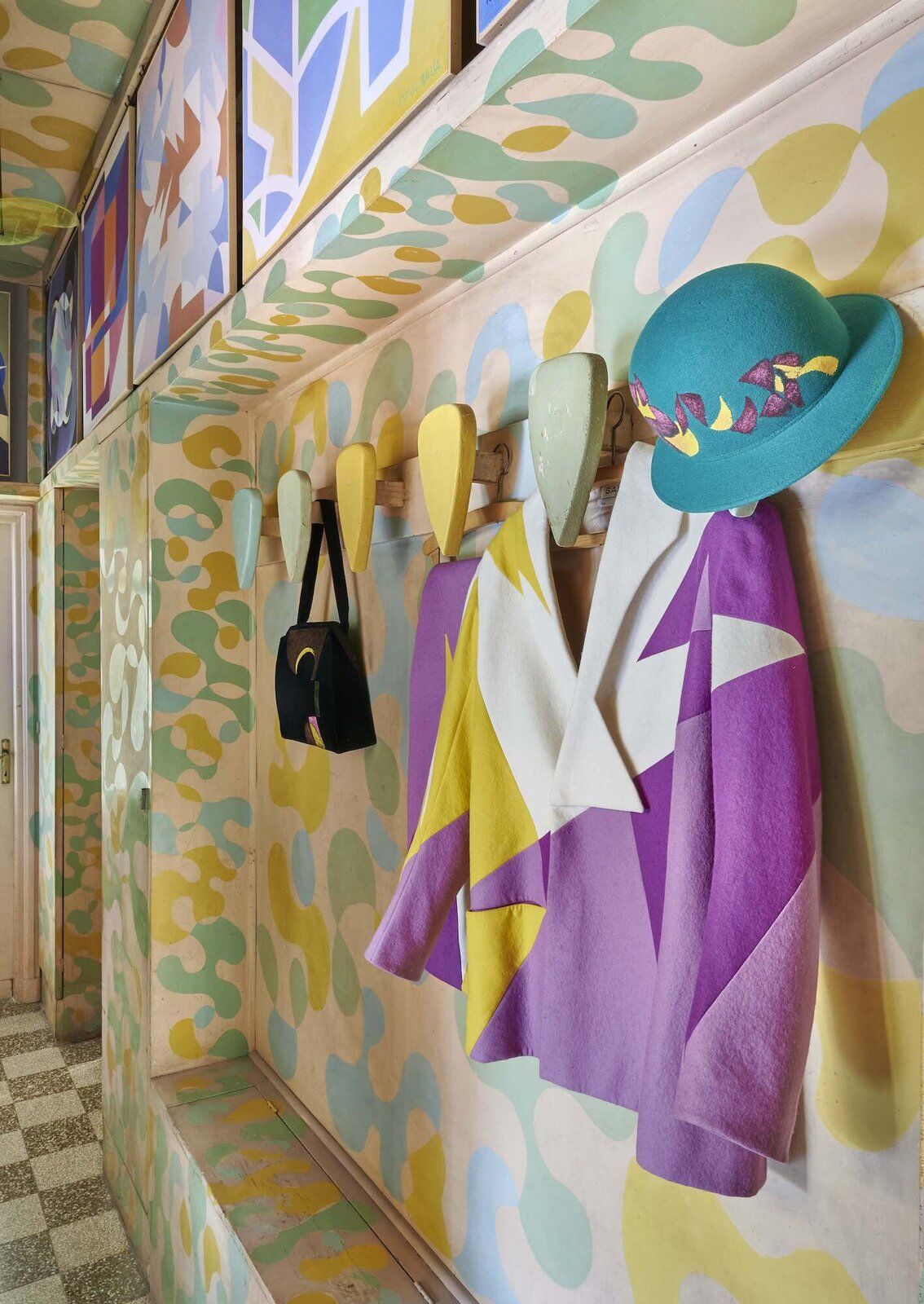


In his quest to achieve a totality of art, Balla rejected the dull everyday clothes of early 20th-century Italy and instead made colorful and asymmetrical fashions.
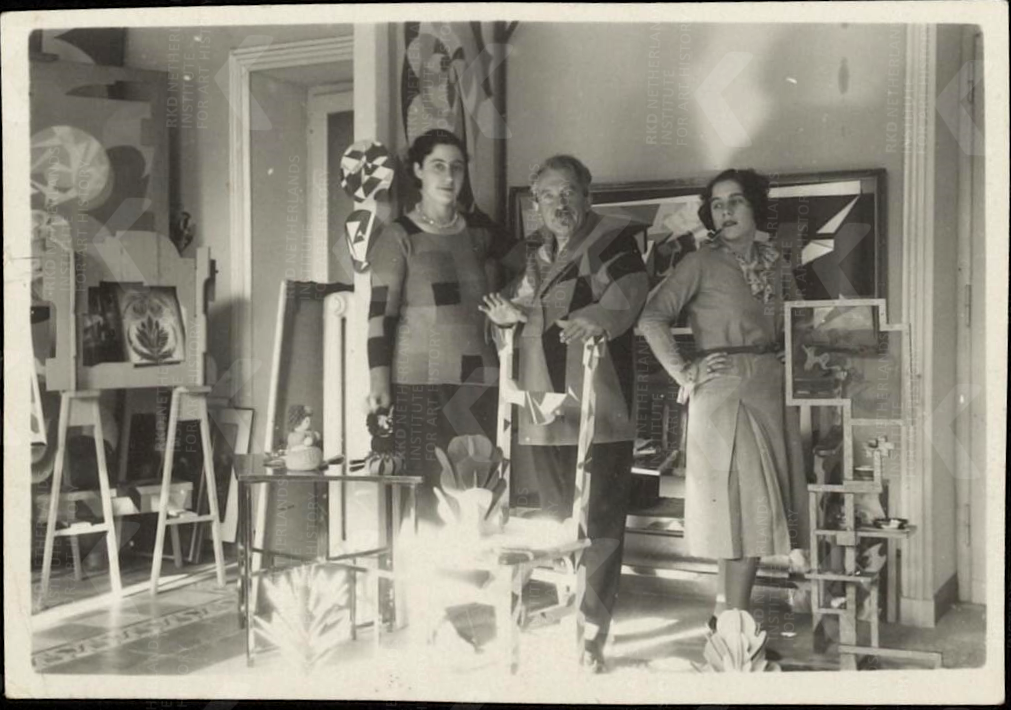


Giacomo Balla lived and worked at the Via Oslavia apartment from 1929 until his death in 1958. His daughters Luce and Elica (left to right) continued to look after Casa Balla until the early 1990s. In 2004, Rome’s Special Superintendence of Archeology, Fine Arts and Landscape acquired the apartment for a careful restoration.

AI Disclaimer: An advanced artificial intelligence (AI) system generated the content of this page on its own. This innovative technology conducts extensive research from a variety of reliable sources, performs rigorous fact-checking and verification, cleans up and balances biased or manipulated content, and presents a minimal factual summary that is just enough yet essential for you to function as an informed and educated citizen. Please keep in mind, however, that this system is an evolving technology, and as a result, the article may contain accidental inaccuracies or errors. We urge you to help us improve our site by reporting any inaccuracies you find using the "Contact Us" link at the bottom of this page. Your helpful feedback helps us improve our system and deliver more precise content. When you find an article of interest here, please look for the full and extensive coverage of this topic in traditional news sources, as they are written by professional journalists that we try to support, not replace. We appreciate your understanding and assistance.
Newsletter

Related Articles

0:00
0:00
Close
Russia’s A7 Builds a State-Linked Payments Network Beyond Western Sanctions
AI’s Next Bottleneck Is Power, Not Just Nvidia Chips
Meta Raises AI Spending Target to as Much as $145bn Despite Pressure Over Returns
Danube Drought Exposes Nazi Wrecks and Pushes Central Europe’s Power System to the Brink
Joe Biden’s Cancer Has Spread Beyond His Bones, Hunter Biden Says
Why 2027 Could Be a Strong Year for Stocks—and Why the Forecast Is Fragile
Why Markets May Look Quiet in August After Big Tech Earnings
UK Drought Cuts Harvests and Raises Food-Security Fears
UFO: Pentagon Releases Video of Unidentified Object Tracked Over Middle East
Ukraine Tells Senate Republicans Its Drone War Offers a Blueprint for America
Weight-Loss Drug Boom Tests the Limits of Prescription Advertising Rules
Senate Scrutinises AI-Driven Personalised Pricing
Spain Seeks Mainland Transfers for 1,100 Children Stranded in Ceuta
Spain and Morocco Trade Blame After 72,000 Migrants Enter Ceuta
AI Is Remaking the US Economy, From GDP Growth to iPhone Prices
Europe’s Heat and Drought Are Now Disrupting Power, Shipping and Tourism
Europe’s Drying Rivers Trigger Power Cuts, Factory Shutdowns and Wildfire Emergencies
Record-Low Danube Forces Nuclear Cuts and Emergency Power Curbs
Danube Drought Forces Hungary’s Paks Nuclear Plant Into Full Shutdown
Ceuta Death Toll Rises as Spain and Europe Clash Over Border Response
Valued at $109 Million: F-35B Fighter Jet Crashes in Southern California
Record-Low Danube Exposes Probable Mammoth Remains in Bulgaria
US Says It Has Carried Out Heavy Strikes on Iran After Attempted Attacks on Its Forces
The AI User Nightmare: Private Claude Conversations Leaked to the Internet
Over 24 Hours in the Air: Qantas Airbus Completes Record-Breaking Test Flight
Massive Wildfires Ravage Southern Europe: Fatalities in Greece and Evacuations Across France, Spain, and Turkey
Nvidia Reportedly Takes Vast Texas Data-Centre Lease to Underwrite AI Expansion
FIFA’s Private-Investment Plan for World Cup Rights Draws European Revolt
Apple Briefly Crosses Five Trillion Dollar Valuation as Investors Retreat From AI Bets
Fresh Heatwave Threatens to Rekindle France’s Historic Wildfire Crisis
Following OpenAI's Cyberattack: 'Most Companies Still Do Not Understand What Is Coming'
OpenAI Sued After ChatGPT Allegedly Discouraged Emergency Care Before Near-Fatal Embolism
Miliband Sets Climate and International Law at Centre of UK Diplomacy
Czech Central Bank Governor Rejects Early Euro Entry and Rate-Cut Pressure
Trump Readies New Tariffs as Temporary Global Levy Nears Expiry
Vivienne Westwood Casts Cicciolina, 74, in Its New Autumn Campaign
Dejavu: Germany’s Military Expansion Reshapes Europe’s Strategic Balance With France
Morgan Stanley Builds a Wall Street Lead in AI Infrastructure Finance
High Prices Push Coffee Drinkers Toward Whole Beans and Home Brewing
Trump Draws Boos and Podium Scrutiny at Spain’s World Cup Triumph
Brilliant move: Péter Magyar Moves to Nominate Chess Grandmaster Judit Polgár as Hungary’s President
Spain Defeats Argentina in Extra Time to Win Second World Cup
Current AI Seeks to Build an Open Global AI Infrastructure Outside Big Tech Control
Germany’s Economic Malaise Reopens the Sunday Shopping Debate
Proposed U.S.-Saudi Nuclear Pact Could Permit Limited Uranium Enrichment Under International Safeguards
Netherlands Declares Water Shortage Emergency After Drought Pushes Rivers to Historic Lows
Why Kentucky Fried Chicken Became KFC—and Why the False Explanations Persist
Ukrainian Drones Strike Wildberries Warehouses Deep Inside Russia
Reported CIA Mission Helped Clear the UAE’s Path to Advanced US AI Chips
Artificial Intelligence Capital Fuels Markets While Governments and Regulators Face Mounting Strategic Tests
×