Budapest Post

Cum Deo pro Patria et Libertate
Budapest, Europe and world news

Why is Greenpeace dropping boulders off the UK coast?

Why is Greenpeace dropping boulders off the UK coast?

Activists have taken to the sea to implore the government to take action on harmful fishing practices.

Activists on a Greenpeace ship have constructed an underwater "boulder barrier" to stop harmful fishing practices in one of UK’s Marine Protected areas.

The environmental group completed the barrier in secret last week. It aims to close off 55 square miles of offshore Brighton, one fifth of its total area, because of threats from destructive bottom trawling. It is hoped that it will obstruct nets from reaching the sea bed and impacting other ocean life.

A previous attempt at a similar boulder barrier protest implored the UK government to close off Dogger Bank and South Dorset’s offshore areas to the harmful fishing practice. At present, the UK government has left 97 per cent of national waters open to this process, Greenpeace says.

British celebrities including Thandie Newton, Hugh Fearnley-Whittingstall, Paloma Faith, Jarvis Cocker and Ranulph Fiennes have put their names to some of the large rocks.

Chef and broadcaster, Hugh Fearnley-Whittingstall says he is “proud to have had the chance to put my name on one of these boulders”.
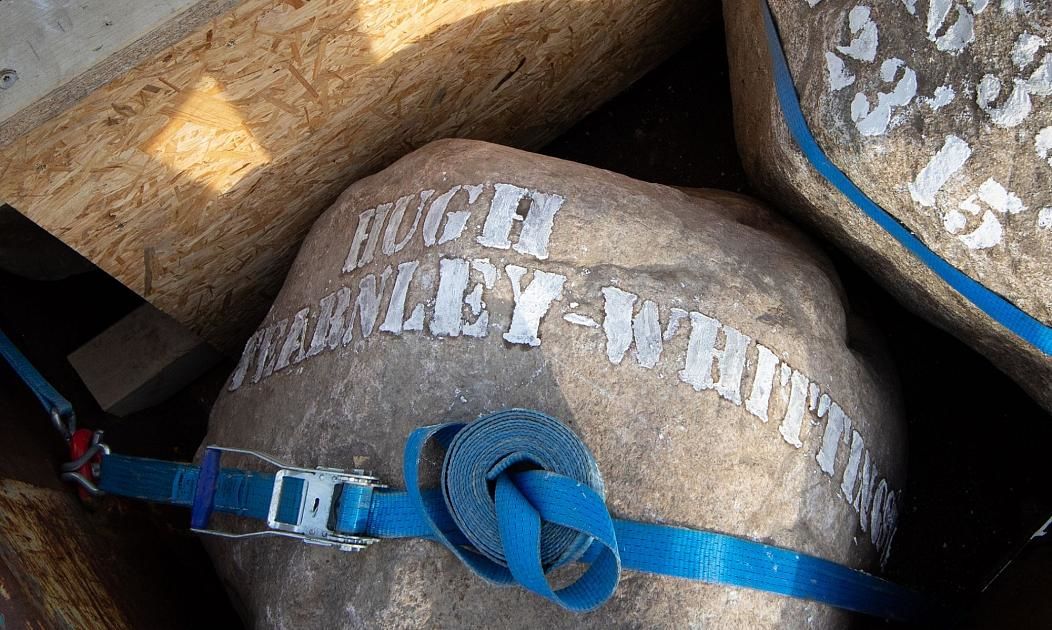
Donor names are painted in chalk ahead of the boulder placement aboard the Greenpeace ship, Esperanza in the English Channel.


“However, this shouldn’t be necessary”, he adds. “Our fervent hope is that our government will now turns words into action, paper parks into real conservation, and properly protects our oceans”.

“The government’s move to properly protect just two of the UK’s protected areas barely touches the tip of the iceberg in terms of what is needed to save our oceans”, says Greenpeace oceans campaigner, Chris Thorne.

“All of the UK’s protected areas need real protection, not just a handful. This government is supposed to be showing global leadership on ocean conservation and fighting for 30 per cent of the world’s oceans to be protected, but it can’t even properly protect 30 per cent of our own waters”.
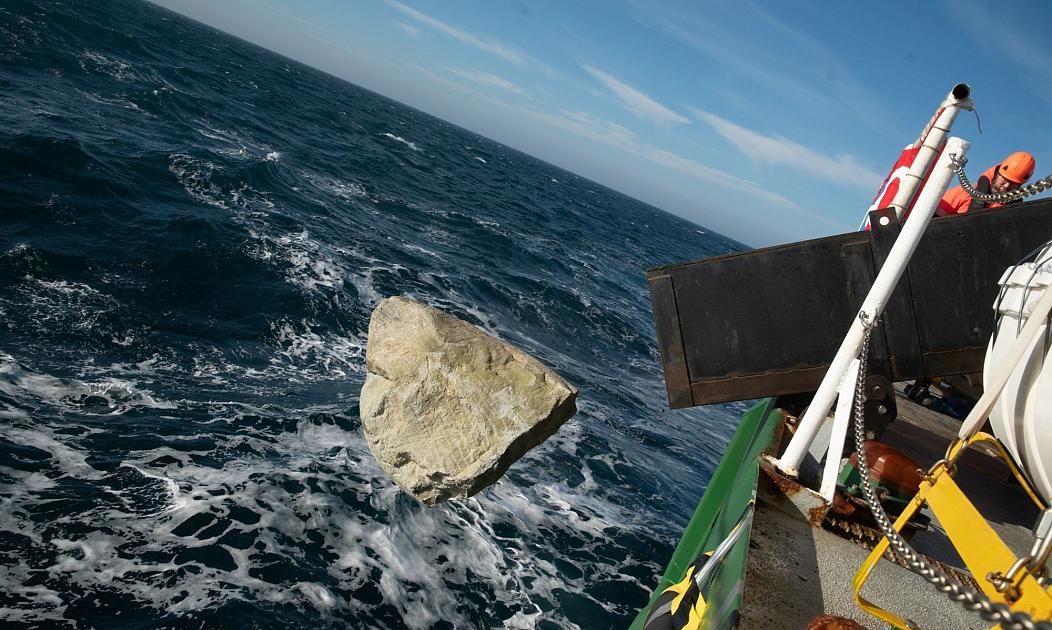
The initiative will help prevent destructive bottom trawling which destroys the Offshore Brighton Marine Protected Area's seabed.

How bottom trawling impacts our oceans


Bottom trawling is a fishing practice that involves dragging heavily weighted nets across the seafloor in order to catch huge quantities of fish. It is used commonly in commercial fishing for this reason. It has been called the sea-equivalent of deforestation.

Greenpeace takes issue with this method because it is “indiscriminate” in what is caught, creating an enormous impact on the biodiversity of oceans.

In warmer countries such as New Zealand, this can have a disproportionate impact on coral and turtle populations. Just last year the New Zealand trawling destroyed up to 3,000 tonnes of deep sea corals.

AI Disclaimer: An advanced artificial intelligence (AI) system generated the content of this page on its own. This innovative technology conducts extensive research from a variety of reliable sources, performs rigorous fact-checking and verification, cleans up and balances biased or manipulated content, and presents a minimal factual summary that is just enough yet essential for you to function as an informed and educated citizen. Please keep in mind, however, that this system is an evolving technology, and as a result, the article may contain accidental inaccuracies or errors. We urge you to help us improve our site by reporting any inaccuracies you find using the "Contact Us" link at the bottom of this page. Your helpful feedback helps us improve our system and deliver more precise content. When you find an article of interest here, please look for the full and extensive coverage of this topic in traditional news sources, as they are written by professional journalists that we try to support, not replace. We appreciate your understanding and assistance.
Newsletter

Related Articles

0:00
0:00
Close
Russia’s A7 Builds a State-Linked Payments Network Beyond Western Sanctions
AI’s Next Bottleneck Is Power, Not Just Nvidia Chips
Meta Raises AI Spending Target to as Much as $145bn Despite Pressure Over Returns
Danube Drought Exposes Nazi Wrecks and Pushes Central Europe’s Power System to the Brink
Joe Biden’s Cancer Has Spread Beyond His Bones, Hunter Biden Says
Why 2027 Could Be a Strong Year for Stocks—and Why the Forecast Is Fragile
Why Markets May Look Quiet in August After Big Tech Earnings
UK Drought Cuts Harvests and Raises Food-Security Fears
UFO: Pentagon Releases Video of Unidentified Object Tracked Over Middle East
Ukraine Tells Senate Republicans Its Drone War Offers a Blueprint for America
Weight-Loss Drug Boom Tests the Limits of Prescription Advertising Rules
Senate Scrutinises AI-Driven Personalised Pricing
Spain Seeks Mainland Transfers for 1,100 Children Stranded in Ceuta
Spain and Morocco Trade Blame After 72,000 Migrants Enter Ceuta
AI Is Remaking the US Economy, From GDP Growth to iPhone Prices
Europe’s Heat and Drought Are Now Disrupting Power, Shipping and Tourism
Europe’s Drying Rivers Trigger Power Cuts, Factory Shutdowns and Wildfire Emergencies
Record-Low Danube Forces Nuclear Cuts and Emergency Power Curbs
Danube Drought Forces Hungary’s Paks Nuclear Plant Into Full Shutdown
Ceuta Death Toll Rises as Spain and Europe Clash Over Border Response
Valued at $109 Million: F-35B Fighter Jet Crashes in Southern California
Record-Low Danube Exposes Probable Mammoth Remains in Bulgaria
US Says It Has Carried Out Heavy Strikes on Iran After Attempted Attacks on Its Forces
The AI User Nightmare: Private Claude Conversations Leaked to the Internet
Over 24 Hours in the Air: Qantas Airbus Completes Record-Breaking Test Flight
Massive Wildfires Ravage Southern Europe: Fatalities in Greece and Evacuations Across France, Spain, and Turkey
Nvidia Reportedly Takes Vast Texas Data-Centre Lease to Underwrite AI Expansion
FIFA’s Private-Investment Plan for World Cup Rights Draws European Revolt
Apple Briefly Crosses Five Trillion Dollar Valuation as Investors Retreat From AI Bets
Fresh Heatwave Threatens to Rekindle France’s Historic Wildfire Crisis
Following OpenAI's Cyberattack: 'Most Companies Still Do Not Understand What Is Coming'
OpenAI Sued After ChatGPT Allegedly Discouraged Emergency Care Before Near-Fatal Embolism
Miliband Sets Climate and International Law at Centre of UK Diplomacy
Czech Central Bank Governor Rejects Early Euro Entry and Rate-Cut Pressure
Trump Readies New Tariffs as Temporary Global Levy Nears Expiry
Vivienne Westwood Casts Cicciolina, 74, in Its New Autumn Campaign
Dejavu: Germany’s Military Expansion Reshapes Europe’s Strategic Balance With France
Morgan Stanley Builds a Wall Street Lead in AI Infrastructure Finance
High Prices Push Coffee Drinkers Toward Whole Beans and Home Brewing
Trump Draws Boos and Podium Scrutiny at Spain’s World Cup Triumph
Brilliant move: Péter Magyar Moves to Nominate Chess Grandmaster Judit Polgár as Hungary’s President
Spain Defeats Argentina in Extra Time to Win Second World Cup
Current AI Seeks to Build an Open Global AI Infrastructure Outside Big Tech Control
Germany’s Economic Malaise Reopens the Sunday Shopping Debate
Proposed U.S.-Saudi Nuclear Pact Could Permit Limited Uranium Enrichment Under International Safeguards
Netherlands Declares Water Shortage Emergency After Drought Pushes Rivers to Historic Lows
Why Kentucky Fried Chicken Became KFC—and Why the False Explanations Persist
Ukrainian Drones Strike Wildberries Warehouses Deep Inside Russia
Reported CIA Mission Helped Clear the UAE’s Path to Advanced US AI Chips
Artificial Intelligence Capital Fuels Markets While Governments and Regulators Face Mounting Strategic Tests
×