Budapest Post

Cum Deo pro Patria et Libertate
Budapest, Europe and world news

US raises interest rates despite banking turmoil

US raises interest rates despite banking turmoil

The US central bank has raised interest rates again, despite fears that the move could add to financial turmoil after a string of bank failures.

The Federal Reserve increased its key rate by 0.25 percentage points, calling the banking system "sound and resilient".

But it also warned that fallout from the bank failures may hurt economic growth in the months ahead.

The Fed has been raising borrowing costs in a bid to stabilise prices.

But the sharp increase in interest rates since last year has led to strains in the banking system.

Two US banks - Silicon Valley Bank and Signature Bank - collapsed this month, buckling in part due to problems caused by higher interest rates.

There are concerns about the value of bonds held by banks as rising interest rates may make those bonds less valuable.

Banks tend to hold large portfolios of bonds and as a result are sitting on significant potential losses. Falls in the value of bonds held by banks are not necessarily a problem unless they are forced to sell them.

Authorities around the world have said they do not think the failures threaten widespread financial stability and need to distract from efforts to bring inflation under control.

Last week, the European Central Bank raised its key interest rate by 0.5 percentage points.

The Bank of England is due to make its own interest rate decision on Thursday, a day after official figures showed that inflation unexpectedly shot up in February to 10.4%.

Federal Reserve chairman Jerome Powell said the Fed remained focused on its inflation fight. He described Silicon Valley bank as an "outlier" in an otherwise strong financial system.

But he acknowledged that the recent turmoil was likely to drag on growth, with the full impact still unclear.


Economic impact


Forecasts released by the bank show officials expect the economy to grow just 0.4% this year and 1.2% in 2024, a sharp slowdown from the norm - and less than officials projected in December.

The announcement from the Fed also toned down earlier statements which had said "ongoing" increases in interest rates would be needed in the months ahead.

Instead, the Fed said: "Some additional policy firming may be appropriate".

The moves "signal clearly that the Fed is nervous", said Ian Shepherdson, chief economist at Pantheon Macroeconomics.
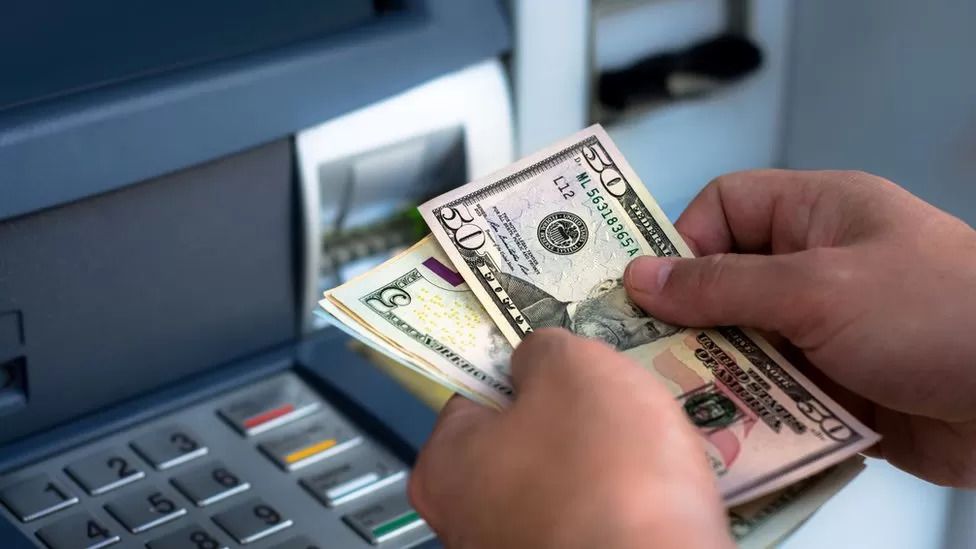

Wednesday's rate rise is the ninth in a row by the Fed. It lifts its key interest rate to 4.75%-5%, up from near zero a year ago - the highest level since 2007.

Higher interest rates mean the cost to buy a home, borrow to expand a business or take on other debt goes up.

By making such activity more expensive, the Fed expects demand to fall, cooling prices.

That has started to happen in the US housing market, where purchases have slowed sharply over the last year and the median sales price in February was lower than it was a year ago - the first such decline in more than a decade.

But overall the economy has held up better than expected and prices continue to climb faster than the 2% rate considered healthy.

Inflation, the rate at which prices climb, jumped 6% in the 12 months to February. The cost of some items, including food and airfare, is surging even faster.

Before the bank failures, Mr Powell had warned that officials might need to push interest rates higher than expected to bring the situation under control.

The bank projections show policymakers expect inflation to fall this year - but less than expected a few months ago.

Still, they forecast interest rates of roughly 5.1% at the end of 2023 - unchanged since December - implying the Fed is poised to stop raising rates soon.

Mr Powell described the effect of the recent turmoil as the "equivalent of a rate hike".

He said the Fed may be able raise its key rate less aggressively, if the turmoil in the financial system prompts banks to limit lending, and the economy to slow more quickly.

But he repeated that the Fed would not shy away from its inflation fight.

"We have to bring down inflation down to 2%," he said. "There are real costs to bringing it down to 2% but the costs of failing are much higher."

AI Disclaimer: An advanced artificial intelligence (AI) system generated the content of this page on its own. This innovative technology conducts extensive research from a variety of reliable sources, performs rigorous fact-checking and verification, cleans up and balances biased or manipulated content, and presents a minimal factual summary that is just enough yet essential for you to function as an informed and educated citizen. Please keep in mind, however, that this system is an evolving technology, and as a result, the article may contain accidental inaccuracies or errors. We urge you to help us improve our site by reporting any inaccuracies you find using the "Contact Us" link at the bottom of this page. Your helpful feedback helps us improve our system and deliver more precise content. When you find an article of interest here, please look for the full and extensive coverage of this topic in traditional news sources, as they are written by professional journalists that we try to support, not replace. We appreciate your understanding and assistance.
Newsletter

Related Articles

0:00
0:00
Close
Spain and Morocco Trade Blame After 72,000 Migrants Enter Ceuta
AI Is Remaking the US Economy, From GDP Growth to iPhone Prices
Europe’s Heat and Drought Are Now Disrupting Power, Shipping and Tourism
Europe’s Drying Rivers Trigger Power Cuts, Factory Shutdowns and Wildfire Emergencies
Record-Low Danube Forces Nuclear Cuts and Emergency Power Curbs
Danube Drought Forces Hungary’s Paks Nuclear Plant Into Full Shutdown
Ceuta Death Toll Rises as Spain and Europe Clash Over Border Response
Valued at $109 Million: F-35B Fighter Jet Crashes in Southern California
Record-Low Danube Exposes Probable Mammoth Remains in Bulgaria
US Says It Has Carried Out Heavy Strikes on Iran After Attempted Attacks on Its Forces
The AI User Nightmare: Private Claude Conversations Leaked to the Internet
Over 24 Hours in the Air: Qantas Airbus Completes Record-Breaking Test Flight
Massive Wildfires Ravage Southern Europe: Fatalities in Greece and Evacuations Across France, Spain, and Turkey
Nvidia Reportedly Takes Vast Texas Data-Centre Lease to Underwrite AI Expansion
FIFA’s Private-Investment Plan for World Cup Rights Draws European Revolt
Apple Briefly Crosses Five Trillion Dollar Valuation as Investors Retreat From AI Bets
Fresh Heatwave Threatens to Rekindle France’s Historic Wildfire Crisis
Following OpenAI's Cyberattack: 'Most Companies Still Do Not Understand What Is Coming'
OpenAI Sued After ChatGPT Allegedly Discouraged Emergency Care Before Near-Fatal Embolism
Miliband Sets Climate and International Law at Centre of UK Diplomacy
Czech Central Bank Governor Rejects Early Euro Entry and Rate-Cut Pressure
Trump Readies New Tariffs as Temporary Global Levy Nears Expiry
Vivienne Westwood Casts Cicciolina, 74, in Its New Autumn Campaign
Dejavu: Germany’s Military Expansion Reshapes Europe’s Strategic Balance With France
Morgan Stanley Builds a Wall Street Lead in AI Infrastructure Finance
High Prices Push Coffee Drinkers Toward Whole Beans and Home Brewing
Trump Draws Boos and Podium Scrutiny at Spain’s World Cup Triumph
Brilliant move: Péter Magyar Moves to Nominate Chess Grandmaster Judit Polgár as Hungary’s President
Spain Defeats Argentina in Extra Time to Win Second World Cup
Current AI Seeks to Build an Open Global AI Infrastructure Outside Big Tech Control
Germany’s Economic Malaise Reopens the Sunday Shopping Debate
Proposed U.S.-Saudi Nuclear Pact Could Permit Limited Uranium Enrichment Under International Safeguards
Netherlands Declares Water Shortage Emergency After Drought Pushes Rivers to Historic Lows
Why Kentucky Fried Chicken Became KFC—and Why the False Explanations Persist
Ukrainian Drones Strike Wildberries Warehouses Deep Inside Russia
Reported CIA Mission Helped Clear the UAE’s Path to Advanced US AI Chips
Artificial Intelligence Capital Fuels Markets While Governments and Regulators Face Mounting Strategic Tests
China’s Moonshot’s Kimi K3 Narrows the Gap With Anthropic Through Scale, Openness and Lower Cost
The Ledger Will Not Trust on Faith
Trump Administration Pressures Banks to Restrict Financial Access for Undocumented Immigrants
Passenger Bound for Germany Refused to Sit Beside a Woman on a Plane — Then Slapped a Flight Attendant
Ukraine’s Leadership Rift Spills Into the Streets as Protesters Target Army Chief
Ukrainian Drone Barrage Kills Eight and Strikes Russian Logistics Network
The Ten World Cup Finals That Defined Football History
Smartphones Are Getting More Expensive, Sales Are Collapsing, and Even Apple Admits: "Prices Will Rise"
The Monaco Bombing Has Become a Test of Ukraine’s Intelligence Accountability
Leadership Change and Strategic Rivalry Redraw the Political Map
The AI Race Enters Its Infrastructure Era
Britain Nationalises British Steel to Protect Scunthorpe Production and Strategic Supply
French National Assembly Overrides Senate to Pass Historic Assisted-Dying Legislation
×